

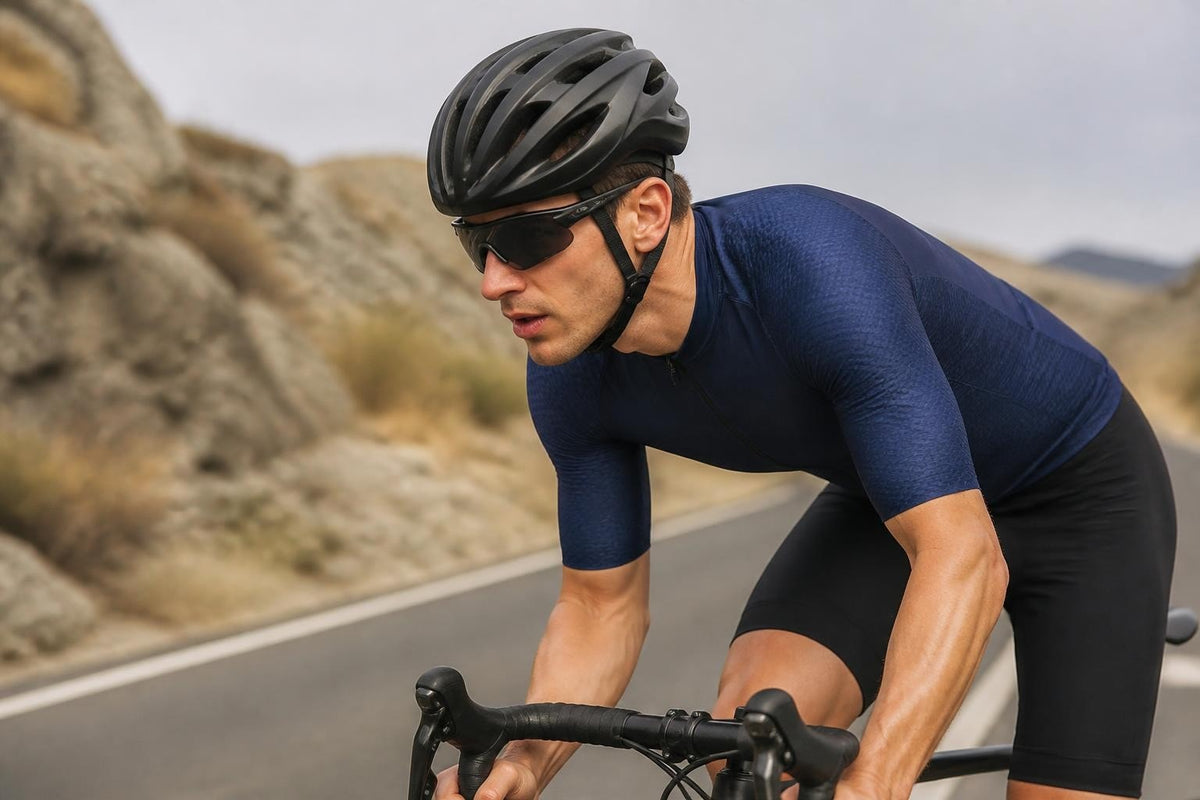
Competitive cyclists constantly search for marginal gains that translate into measurable performance improvements. Among the most impactful equipment choices is the aerodynamic cycling jersey, a specialized garment engineered to minimize wind resistance and maximize speed. Unlike traditional cycling apparel, these jerseys incorporate advanced fabric technologies, strategically placed textures, and race-focused cuts that work together to reduce drag forces acting on the rider. As wind tunnel testing becomes more accessible and computational fluid dynamics models grow more sophisticated, manufacturers now understand exactly how fabric choice, seam placement, and fit interact with airflow to either slow a rider down or help them slice through the wind with minimal resistance.
Understanding Aerodynamic Drag in Cycling
Aerodynamic drag accounts for approximately 70 to 90 percent of total resistance a cyclist faces at racing speeds. This force increases exponentially with velocity, meaning small reductions in drag coefficient yield disproportionately large time savings over race distances.
The drag equation demonstrates why apparel matters so much. Total drag force depends on air density, frontal area, velocity squared, and the drag coefficient. While riders have limited control over air density and can only slightly reduce frontal area through position, the drag coefficient can be meaningfully improved through equipment choices, particularly clothing.
The Science of Fabric Roughness
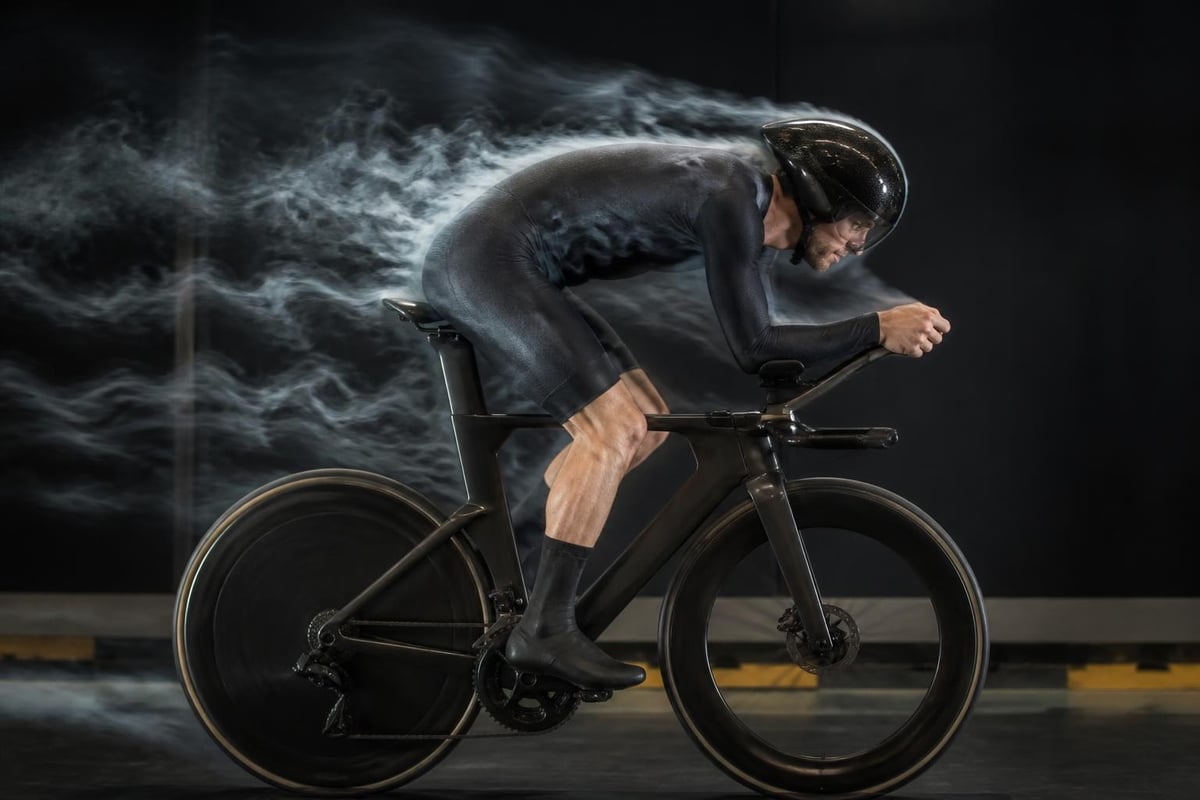
Recent research on knitted jersey fabric properties has revealed that surface topography, porosity, and stretch characteristics all influence aerodynamic performance. Counter-intuitively, perfectly smooth fabrics do not always produce the lowest drag. Controlled surface roughness can actually trigger earlier boundary layer transition from laminar to turbulent flow, keeping air attached to the body longer and reducing the size of the low-pressure wake behind the rider.
This phenomenon, known as the "golf ball effect," explains why many aerodynamic cycling jersey designs incorporate textured zones on the arms and specific body areas. The micro-roughness delays flow separation, which decreases form drag even though skin friction increases slightly.
Key fabric considerations include:
- Weave density: Tighter knits reduce porosity and air penetration
- Surface texture: Dimples, ridges, or raised patterns in strategic zones
- Elasticity: Fabrics that maintain tension without wrinkles
- Thread thickness: Finer yarns create smoother transitions
Wind Tunnel Testing and Real-World Validation
Professional development of an aerodynamic cycling jersey typically involves extensive wind tunnel testing protocols. Manufacturers position mannequins or live riders in controlled airflow environments, measuring drag forces at speeds between 40 and 50 kilometers per hour, the range most relevant for time trials and breakaways.
Systematic CFD and wind tunnel research has validated that surface roughness and turbulence modeling significantly affect cyclist aerodynamics. These studies use particle image velocimetry and pressure-sensitive paint to visualize exactly where flow separates and how different fabric textures modify wake structure.
| Testing Method | Advantages | Limitations |
|---|---|---|
| Wind Tunnel | Precise force measurement, controlled conditions | Expensive, may not capture all real-world variables |
| CFD Simulation | Cost-effective, rapid iteration | Requires validation, turbulence model accuracy varies |
| On-Road Testing | Real conditions, rider feedback | Difficult to isolate variables, weather dependent |
| Velodrome Testing | Controlled environment, repeatable | Limited speed range, no wind effects |
Third-party validation provides credibility for manufacturer claims. Independent reviews of modern aero jerseys report wind tunnel data suggesting drag reductions between 5 and 15 watts at race speeds compared to standard jerseys, though actual savings depend heavily on rider position, speed, and conditions.
Fabric Technologies and Construction Methods
The choice of base fabric fundamentally determines an aerodynamic cycling jersey's performance ceiling. Modern race jerseys predominantly use polyester or polyamide blends with elastane for stretch recovery.
Sublimation printing, the process used by manufacturers including those producing custom cycling apparel, embeds designs directly into fabric fibers rather than layering ink on top. This technique maintains the fabric's aerodynamic properties while allowing unlimited design complexity. The result is a smooth surface without the raised edges that screen printing or heat transfers would create, which could disrupt airflow.
Body-Mapped Fabric Zones
Premium aerodynamic jerseys employ different fabrics in specific body zones to balance drag reduction, thermal management, and comfort:
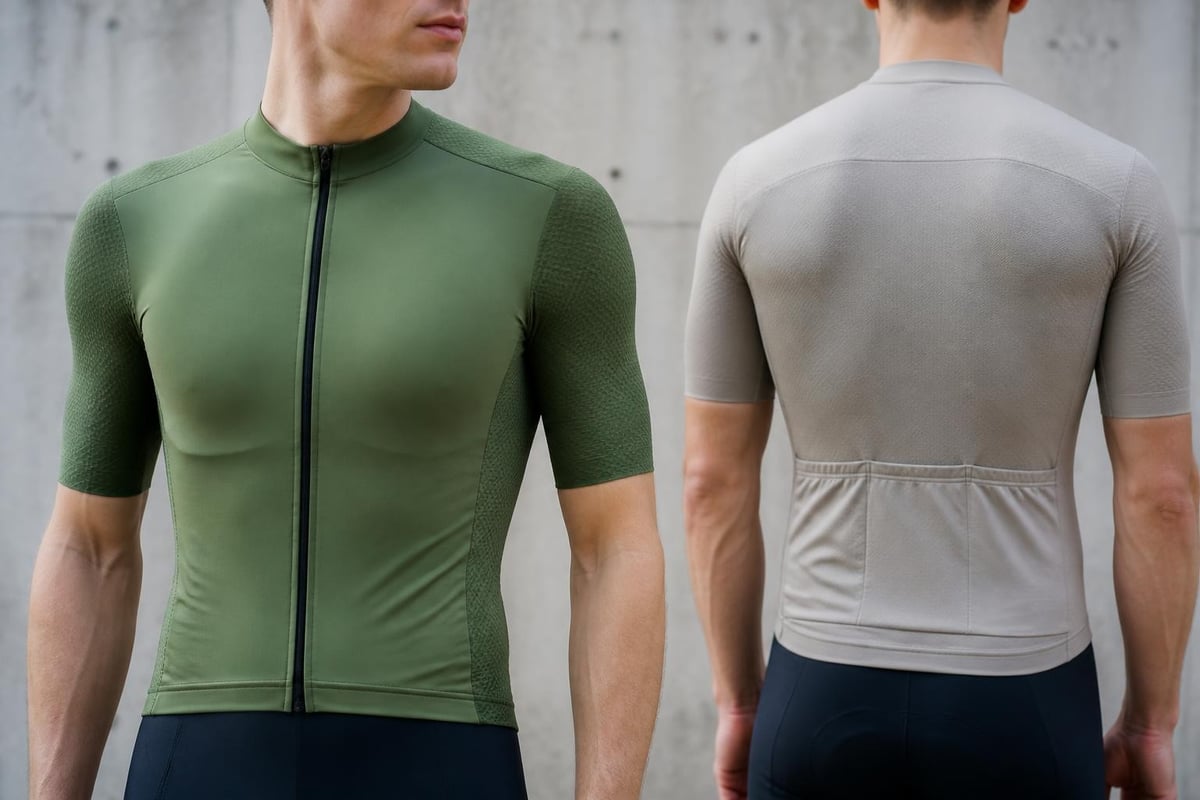
- Arms and shoulders: Textured or ribbed fabrics to trip boundary layer
- Front torso: Smooth, tightly-woven material in high-pressure zone
- Back and sides: Breathable mesh panels for heat dissipation
- Collar area: Low-profile construction to reduce frontal area
This zone-specific approach recognizes that not all body areas contribute equally to drag. The arms and upper back experience the most significant airflow, making fabric choice in these regions particularly critical.
Fit Optimization and Sizing Considerations
An aerodynamic cycling jersey must fit with race-specific tightness to eliminate fabric flutter and maintain consistent surface tension. Loose material creates turbulent pockets and increases drag significantly, negating any benefit from advanced fabrics.
Fit requirements for optimal aerodynamics:
- Sleeves should end mid-bicep with minimal excess material
- Torso length must be adequate in riding position, not standing
- No wrinkles or bunching across shoulders or chest
- Waist band should sit snug without elastic pressure points
The challenge lies in achieving this tight fit while maintaining comfort over multi-hour efforts. Riders seeking men's jerseys or women's jerseys designed for racing must often size down compared to recreational cycling apparel, accepting the trade-off between absolute comfort and aerodynamic efficiency.
Elite cyclists frequently have custom-fitted aerodynamic jerseys tailored to their specific body measurements and riding positions. This customization ensures the fabric maintains optimal tension across all body zones without restricting breathing or shoulder rotation.
Regulatory Framework and Competition Rules
The Union Cycliste Internationale (UCI) maintains strict technical regulations governing apparel used in sanctioned competition. Official UCI equipment rules specify acceptable materials, construction methods, and prohibit certain aerodynamic aids.
These regulations aim to prevent equipment from becoming the sole determinant of competitive outcomes. Notably, the UCI prohibits non-uniform surface textures beyond certain thresholds and requires apparel to be commercially available rather than one-off prototypes.
Recent UCI statements on equipment changes emphasize the governing body's commitment to balancing innovation with fairness and safety. While aerodynamic cycling jersey development continues to advance, designers must work within these parameters to create competition-legal garments.
Time Trial Versus Road Race Applications
Aerodynamic priorities differ between disciplines:
| Discipline | Primary Concern | Jersey Characteristics |
|---|---|---|
| Time Trial | Maximum drag reduction | Skinsuits, aggressive textures, minimal pockets |
| Road Race | Balance aero/ventilation | Moderate fit, functional pockets, breathability |
| Track Sprint | Ultra-low drag | Seamless construction, no pockets |
| Gran Fondo | Comfort over aero | Relaxed fit, multiple pockets, sun protection |
Most amateur competitors benefit more from an aerodynamic cycling jersey in time trial events where they maintain steady, high speeds in aggressive positions. Mass-start road races involve more variable pacing and drafting, reducing the relative importance of individual clothing aerodynamics.
Thermal Management and Practical Trade-offs
Pure aerodynamic optimization would suggest completely smooth, non-breathable fabrics in the tightest possible fit. Reality requires compromise. Cyclists generate enormous heat during sustained efforts, and inadequate ventilation leads to overheating, dehydration, and performance collapse long before aerodynamic gains matter.
Modern designs incorporate strategically placed mesh panels that provide necessary airflow while minimizing drag penalties. Computational modeling helps identify low-pressure zones on the body where ventilation openings create minimal aerodynamic cost.
Balancing considerations:
- Mesh panels on lower back and underarms for heat escape
- Moisture-wicking base layers to move sweat away from skin
- Zippered fronts offering variable ventilation control
- Darker colors that absorb solar radiation versus light colors that reflect it
Current aero tech trends in cycling show increasing sophistication in managing these trade-offs. Manufacturers now use computational models to predict both drag reduction and thermal load, optimizing the balance for specific race durations and expected conditions.
Climate and race duration significantly affect optimal jersey choice. A 10-kilometer time trial in cool conditions favors maximum aerodynamic optimization, while a four-hour road race in summer heat requires more ventilation despite slightly higher drag.
Manufacturing Quality and Durability
The performance benefits of an aerodynamic cycling jersey depend on maintaining design specifications through repeated use and washing. Poor construction leads to fabric stretching, seam failure, and loss of surface texture, all of which degrade aerodynamic properties.
Quality manufacturers implement rigorous testing protocols including wash cycle simulation, UV exposure aging, and mechanical stress testing. Sublimation dyeing provides inherent durability since colors penetrate the fiber rather than sitting on the surface, preventing fading or cracking that would alter fabric texture.
Premium aerodynamic jerseys feature flatlock or bonded seams that create smooth transitions and resist unraveling. Lower-quality alternatives use standard stitching that creates raised ridges disrupting airflow and fails more readily under tension.
At facilities like those operated by manufacturers with extensive sublimation experience, quality control processes verify that each jersey meets specifications for fit, fabric tension, and surface characteristics before shipping. This attention to detail ensures the performance promised in wind tunnel testing translates to the actual product riders receive.
Measuring Performance Gains
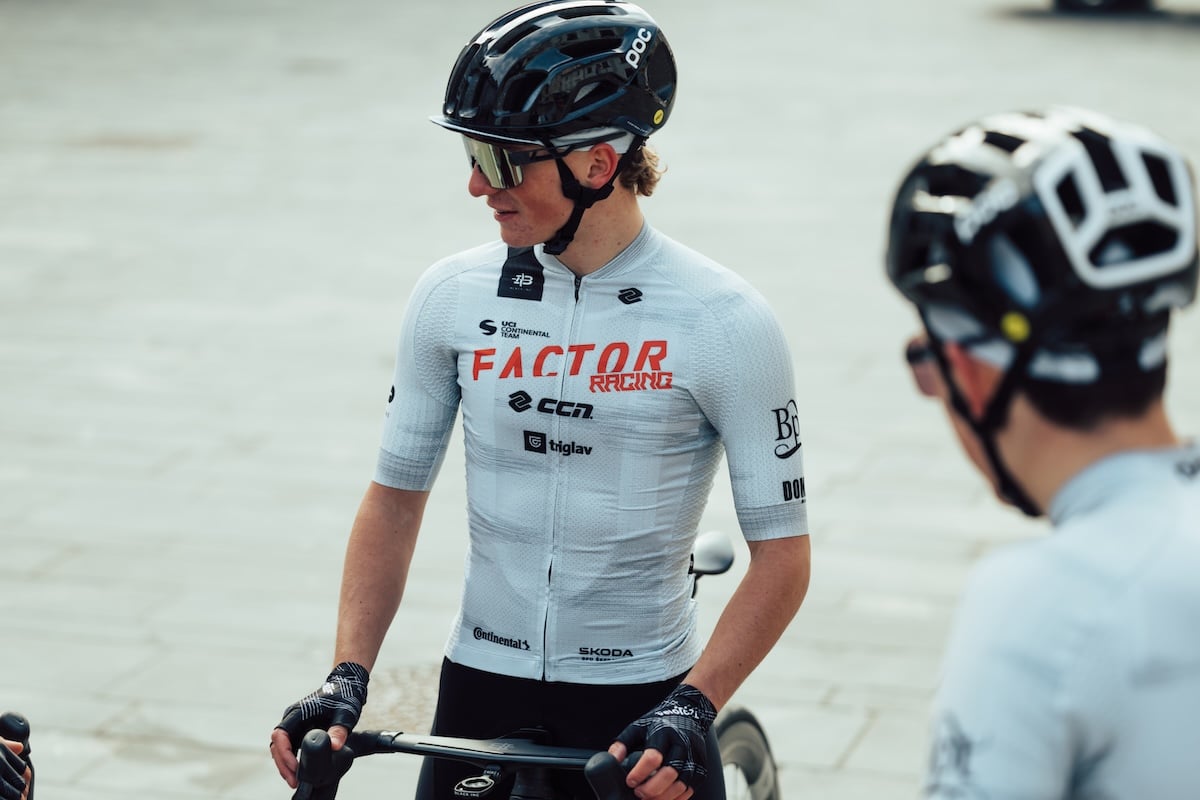
Quantifying the real-world benefit of an aerodynamic cycling jersey requires careful testing methodology. Media coverage of wind tunnel claims often reports dramatic watt savings, but translating these numbers into race results depends on many variables.
A commonly cited figure suggests that saving 10 watts of drag at 40 kilometers per hour yields approximately 30 seconds over a 40-kilometer time trial. For context, an aerodynamic cycling jersey might realistically save 5 to 8 watts compared to a standard race jersey at that speed, translating to 15 to 25 seconds over the distance.
Practical Testing Approaches
Riders can validate aerodynamic improvements through several methods:
- Power meter comparison: Ride identical efforts in different jerseys, comparing required power
- Velodrome timing: Controlled environment eliminates wind variables
- Coast-down testing: Measure deceleration rates on known gradients
- Partner drafting: Perceived effort when drafting remains constant if drag reduces
These field tests lack the precision of wind tunnel measurement but provide riders with confidence that their equipment choices deliver tangible benefits. The psychological value of knowing you have optimized equipment should not be underestimated, as confidence affects pacing and effort sustainability.
Design Customization for Teams and Clubs
While off-the-shelf aerodynamic cycling jerseys offer proven performance, custom team apparel allows clubs to access similar technologies with personalized branding. Organizations seeking low minimum custom cycling jerseys can now obtain race-quality garments in small quantities.
Custom designs should prioritize function over pure aesthetics when aerodynamic performance matters. Designers must consider how graphic elements interact with fabric texture zones and whether bold patterns create visual distraction for competitors.
The sublimation process enables full-color, photographically-detailed graphics without compromising the smooth surface critical for aerodynamics. Unlike embroidery or appliqué logos that create raised surfaces, sublimated designs maintain fabric uniformity.
Custom design best practices:
- Align bold graphics with low-drag body zones
- Use darker colors on high-pressure front surfaces
- Maintain consistent color saturation for professional appearance
- Test samples in riding position before full production
Teams investing in custom aerodynamic apparel should work with manufacturers who understand both the technical performance requirements and the branding objectives. The newest collections from experienced manufacturers demonstrate how these priorities can coexist.
Care and Maintenance for Longevity
Preserving the aerodynamic properties of a racing jersey requires proper care protocols. Harsh detergents, excessive heat, and mechanical abrasion all degrade fabric structure and surface characteristics.
Recommended care procedures:
- Wash in cold water with mild, sport-specific detergent
- Air dry or use lowest tumble dryer heat setting
- Avoid fabric softeners that coat fibers and alter texture
- Store hanging or flat, not compressed in bags
- Inspect regularly for seam integrity and fabric damage
Proper care extends jersey lifespan significantly. A well-maintained aerodynamic cycling jersey should retain performance characteristics through 50 to 100 wash cycles, though competitive athletes often replace race-day jerseys annually to ensure peak performance.
Minor damage like small tears or separated seams can sometimes be repaired, but repairs alter aerodynamic properties in unpredictable ways. For critical races, riders should use jerseys in known, tested condition rather than recently repaired garments.
Future Directions in Aerodynamic Apparel
Ongoing research continues to refine understanding of cyclist aerodynamics. Studies investigating macro and micro-roughness combinations using particle image velocimetry reveal increasingly subtle ways to optimize drag reduction through fabric engineering.
Emerging technologies being explored include phase-change materials that actively manage temperature, integrated sensors monitoring fit and fabric tension, and even active surface textures that adapt to changing wind conditions. While these innovations remain largely experimental in 2026, they suggest the evolution of the aerodynamic cycling jersey continues.
Computational power increases enable more sophisticated simulations that account for fabric movement, variable body positions, and environmental factors simultaneously. This modeling allows designers to optimize jerseys for specific race scenarios rather than generic wind tunnel conditions.
Sustainability considerations increasingly influence development as well. Manufacturers explore recycled fibers and closed-loop production systems that maintain performance while reducing environmental impact, recognizing that cyclists care deeply about preserving the landscapes they ride through.
An aerodynamic cycling jersey represents a proven investment for competitive cyclists seeking measurable performance improvements through equipment optimization. By understanding fabric technologies, fit requirements, and the science of drag reduction, riders can make informed decisions about race-day apparel. Whether you need a single custom design or outfitting an entire team, CCN Sport combines over 20 years of sublimation expertise with precision manufacturing to deliver aerodynamic cycling apparel that performs exactly as designed. Our advanced fabric selection and meticulous construction ensure your jersey contributes to faster times rather than holding you back.

Share:
Custom Teamwear Results That Win Race Days
Club Kit Fundraising Example That Riders Back