

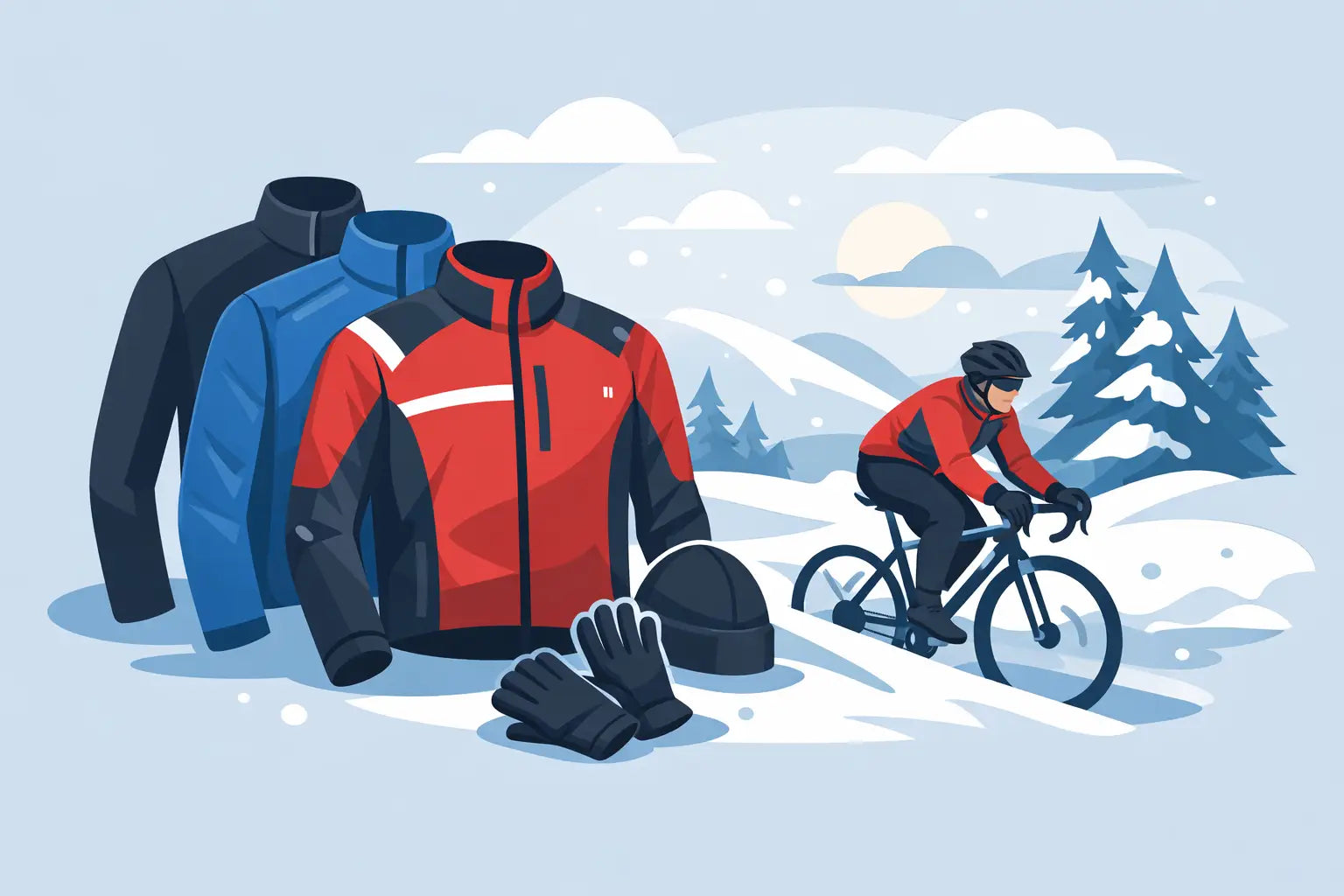
Cold-weather rides usually go wrong before the first mile. You roll out slightly chilled, try to trust the warm-up, then 20 minutes later you're sweating into a jacket that suddenly feels too heavy. A smart winter cycling jacket layering guide fixes that problem by treating your kit as a system, not a pile of warm clothes.
The goal is not to wear the thickest setup possible. The goal is to stay dry enough, warm enough, and mobile enough to keep producing power. That means balancing insulation, breathability, wind protection, and fit based on how hard you're riding and what the weather is actually doing.
What a winter cycling jacket layering guide should solve
Winter layering is about moisture management first, insulation second. If sweat gets trapped, your temperature drops the moment the pace eases, the road tilts downhill, or the wind picks up. Riders often blame the jacket, but the real issue is usually the full system under it.
A good setup has three jobs. The base layer moves moisture off the skin. The mid-layer adds insulation when needed. The outer layer blocks wind and weather without turning into a greenhouse. Miss one of those jobs, and comfort falls apart fast.
This is why one jacket cannot cover every winter ride. A hard interval session at 38 degrees needs a different approach than a steady endurance ride at 38 degrees, and both are different again in cold rain. Effort level changes the layering decision as much as temperature does.
Start with the base layer, not the jacket
If the base layer is wrong, everything above it works harder than it should. Cotton is out. You want a cycling-specific fabric that pulls sweat away from the skin and keeps a close, stable fit while you're in riding position.
For cool to moderately cold conditions, a lightweight or midweight synthetic or merino base layer is usually enough under a winter jacket. Lightweight works well for higher-intensity rides because it manages sweat without adding too much insulation. Midweight makes more sense for lower-intensity riding, long endurance days, or riders who simply run cold.
Fit matters here. A loose base layer traps moisture and shifts under the jersey or jacket. A close fit improves transfer and helps the outer layers do their job. It should feel next-to-skin, not restrictive.
Merino and synthetic both have strengths. Merino handles odor well and feels comfortable across a wider range of conditions. Synthetic usually dries faster and can feel better during repeated high-output efforts. Neither is automatically better. It depends on your ride type and how much you sweat.
The mid-layer is optional, not automatic
A common mistake in any winter cycling jacket layering guide is treating the mid-layer as mandatory. It is not. In many conditions, especially when riding hard, a thermal jacket over the right base layer is enough.
The mid-layer earns its place when the temperature drops further, when the ride is long and steady, or when your outer jacket is more weather-focused than insulated. A thermal jersey or lightly brushed long-sleeve layer can bridge that gap without creating bulk.
Bulk is the enemy. Too much fabric across the chest and shoulders reduces mobility, compresses insulation, and can make a performance-fit jacket feel tight in the riding position. If your jacket starts to pull across the upper back or bunch at the elbows, the system is overloaded.
Think of the mid-layer as a precision tool. Add it when your expected effort and weather justify it. Leave it out when it only increases sweat buildup.
Choosing the right winter jacket
Not all winter jackets are built the same. Some are primarily thermal pieces with moderate wind resistance. Others are highly protective softshell designs meant for colder air and rougher weather. Some are closer to rain shells, intended to block the elements while relying on lower layers for warmth.
For most winter road riding, the best jacket is one that blocks wind at the front, breathes well through heat zones, and maintains an on-bike fit. Windproofing matters most on the chest, shoulders, and arms. Breathability matters on the back and side panels, where excess heat needs to escape.
A jacket that is fully sealed and heavily insulated can feel impressive in the parking lot but overbuilt once the ride settles in. Unless conditions are very cold or very wet, riders often perform better in a more breathable thermal jacket paired with the right base layer.
Fit should stay close to the body without limiting movement. A race-ready cut reduces fabric flap, holds insulation where it works best, and layers more cleanly under a vest or shell if conditions shift. That matters for club riders and racers alike. Efficient layering is part of performance.
How to layer by temperature and ride intensity
This is where theory becomes practical. Temperature alone is not enough. Wind, precipitation, sun, and effort all change what works.
In the mid-40s to low-50s, many riders are best served by a lightweight or midweight base layer and a breathable thermal jacket. If the ride includes repeated hard efforts, this setup often feels better than adding more insulation. You may start cool, but that is usually the right call.
In the upper 30s to low 40s, the same setup can still work for high-intensity riding, but endurance pace usually benefits from either a warmer base layer or a light mid-layer. This is the range where personal preference shows up most clearly. Riders who run hot can get away with less. Riders who lose heat quickly should build a little more insulation into the system.
Once temperatures move toward freezing, layering needs to be more deliberate. A thermal base layer, an insulating mid-layer if needed, and a more protective winter jacket become the safer choice, especially on long rides or exposed roads. You still want breathability, but weather protection takes a bigger role.
Rain changes everything. Wet cold strips heat fast, so your outer layer needs enough weather resistance to keep the insulation underneath functional. In damp conditions, avoid overbuilding the inner layers. If the shell traps too much sweat, you can end up just as wet from the inside.
Venting is part of the system
The best winter setup is not static. It needs to adapt while you ride.
A two-way zipper, easy-access front zip, or jacket with well-placed breathable panels gives you a wider comfort range. That matters during long climbs, pace changes, or shifts in wind direction. If your only temperature control is stopping to remove layers, the setup is too rigid.
This is one reason cyclists often prefer fewer, better-chosen layers over stacking multiple heavy pieces. A clean system with active venting usually performs better than a bulky one that only works at one exact temperature.
Common layering mistakes
The biggest mistake is dressing for the first 10 minutes instead of the full ride. You should feel slightly cool at rollout. Not cold to the point of shivering, but not fully comfortable either. Once effort builds, the system should settle in.
The second mistake is doubling up on insulation where you really need breathability. A heavy base layer, thermal jersey, and insulated jacket can work for easy riding in very low temperatures, but for many winter training rides it is simply too much.
The third mistake is ignoring fit across the full kit. Every layer should work in a riding position, not just while standing indoors. If the collar chokes, the cuffs gap, or the hem rides up, small issues become big ones after two hours in the wind.
Finally, riders sometimes forget that winter comfort is not just torso-deep. If your core is layered correctly but your hands, feet, or head are underdressed, the whole ride still feels cold. A complete system matters.
Build a kit system, not a single outfit
The strongest winter wardrobes are modular. One or two base layer weights, a thermal jersey, a reliable winter jacket, and a weather shell can cover a wide range of conditions more effectively than one ultra-heavy piece. That approach also gives clubs and teams more flexibility when choosing cold-weather apparel that works across different riders, climates, and training demands.
At CCN Sport, performance apparel is built around that idea - precise fit, technical fabrics, and dependable layering that holds up under real ride conditions. For individual riders and organized teams, the value is the same: gear should work together, not fight itself.
A winter ride always asks the same question. Can your kit protect you without slowing you down? Get the layering right, and cold weather stops feeling like a compromise. It starts feeling like another advantage.

Share:
Women’s Race Cut Cycling Jersey Fit Guide
Custom Triathlon Suits for Teams That Perform