

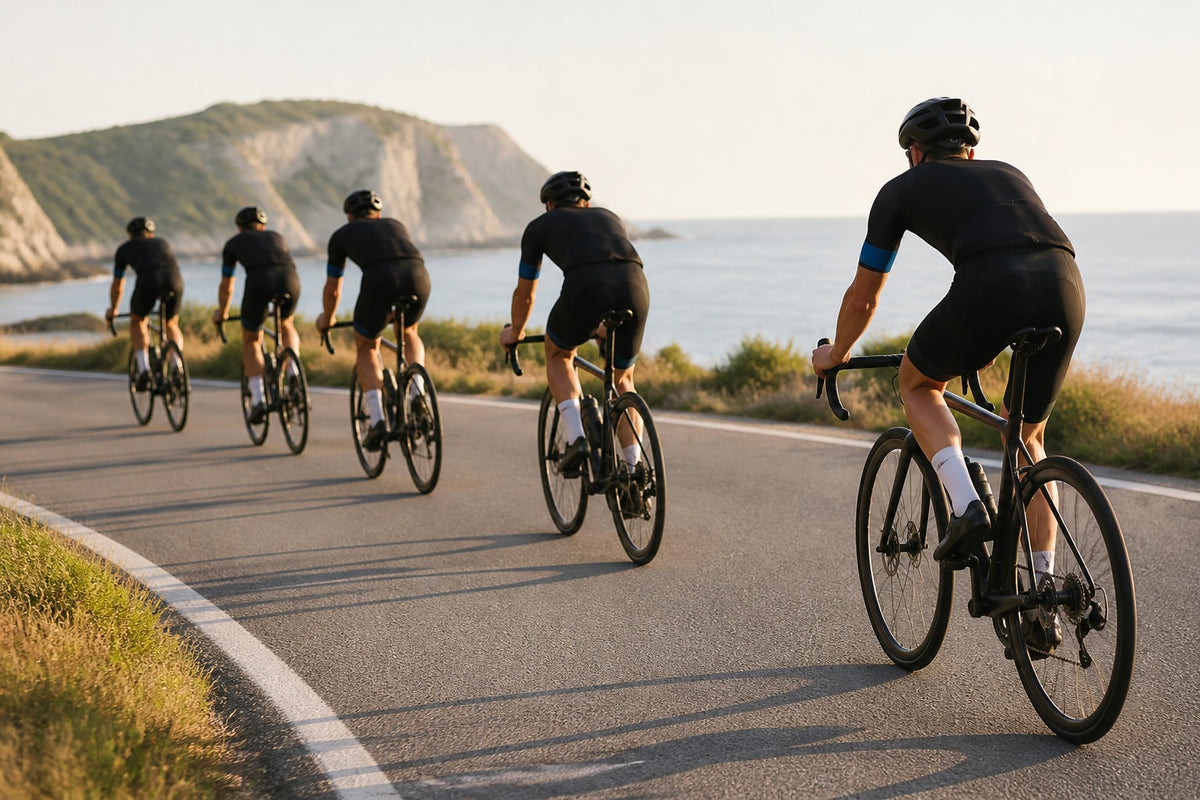
Cycling attire is the set of technical clothing and protective gear a rider wears to stay comfortable, safe and efficient: a padded short or bib, a fitted jersey, layers matched to the weather, gloves, a helmet and shoes. The right combination depends on temperature, ride length and visibility conditions, and for a team or club it also has to look consistent from rider to rider.
This guide starts with the core pieces, moves through weather-based layering, covers safety and fit, and finishes with how teams plan matching race kits.
What Does Core Cycling Attire Include?
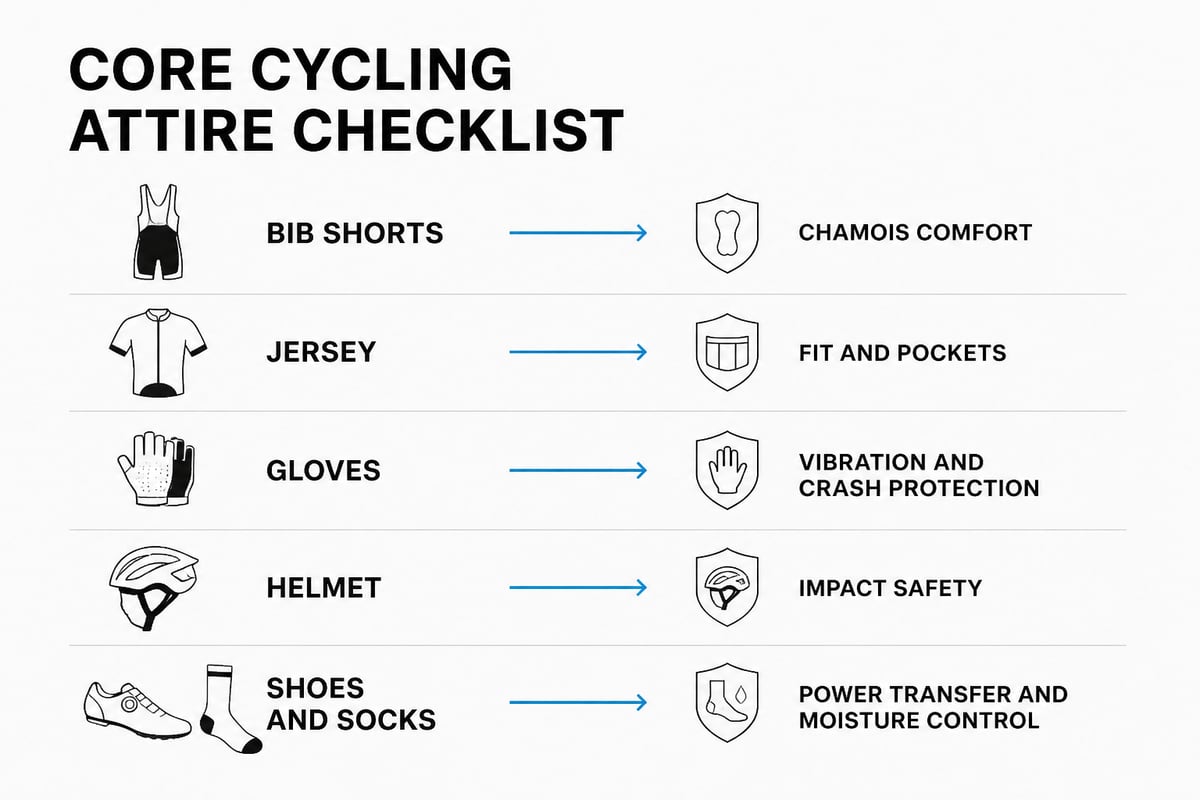
Core cycling attire consists of five pieces: bib shorts or shorts with a chamois, a jersey, gloves, a helmet and cycling shoes, with socks and eyewear completing the set.
Each piece solves a specific problem that everyday clothing does not.
- Shorts or bibs: A padded chamois reduces pressure and friction over long hours. Bibs use straps instead of a waistband, which removes pressure on the abdomen and keeps the garment in place.
- Jersey: Cut longer at the back, with rear pockets and a close fit that stops fabric from flapping in the wind.
- Gloves: Padding at the palm absorbs road vibration and protects hands in a fall.
- Helmet: Non-negotiable for group riding and most race events.
- Shoes and socks: Stiff soles transfer power to the pedals, and thin technical socks manage moisture.
If you want a deeper look at the padding itself, CCN Sport's cycling chamois guide explains how density and shape affect comfort over distance.
How Should You Choose Shorts and Bibs?
Choose shorts or bibs by the length of your typical ride, the shape of the chamois and how the garment holds its position when you are in the saddle.
Bibs are the standard for road racing and long training rides because they stay put without a restrictive waistband. Shorts with a drawcord waist suit shorter rides and riders who prefer easier bathroom stops. Look for flat seams, a leg gripper that holds without squeezing, and fabric with enough compression to reduce muscle fatigue without restricting movement.
Chamois quality matters more than most buyers expect. A pad that is too thick can cause pressure points, while one that is too thin loses its benefit after two hours. For race programs, a mid-density multi-panel pad is a common starting point, then riders adjust based on feedback from the first few weeks of use.
What Should You Look for in a Cycling Jersey?
A good cycling jersey fits close without binding, moves moisture away from the skin and carries gear in three rear pockets without sagging.
Fabric weight is the main variable. Lightweight, open-knit fabrics suit summer riding, while thermal or brushed fabrics belong in cooler months. Check the collar height, the silicone gripper at the hem, and whether the zipper runs smoothly in a crouched position. Race-cut jerseys use a tighter fit for aerodynamics, and club-cut jerseys give a little more room through the torso.
For a detailed breakdown of cuts and fabrics, see CCN Sport's article on the road cycling jersey.
What Cycling Attire Works in Hot Weather?
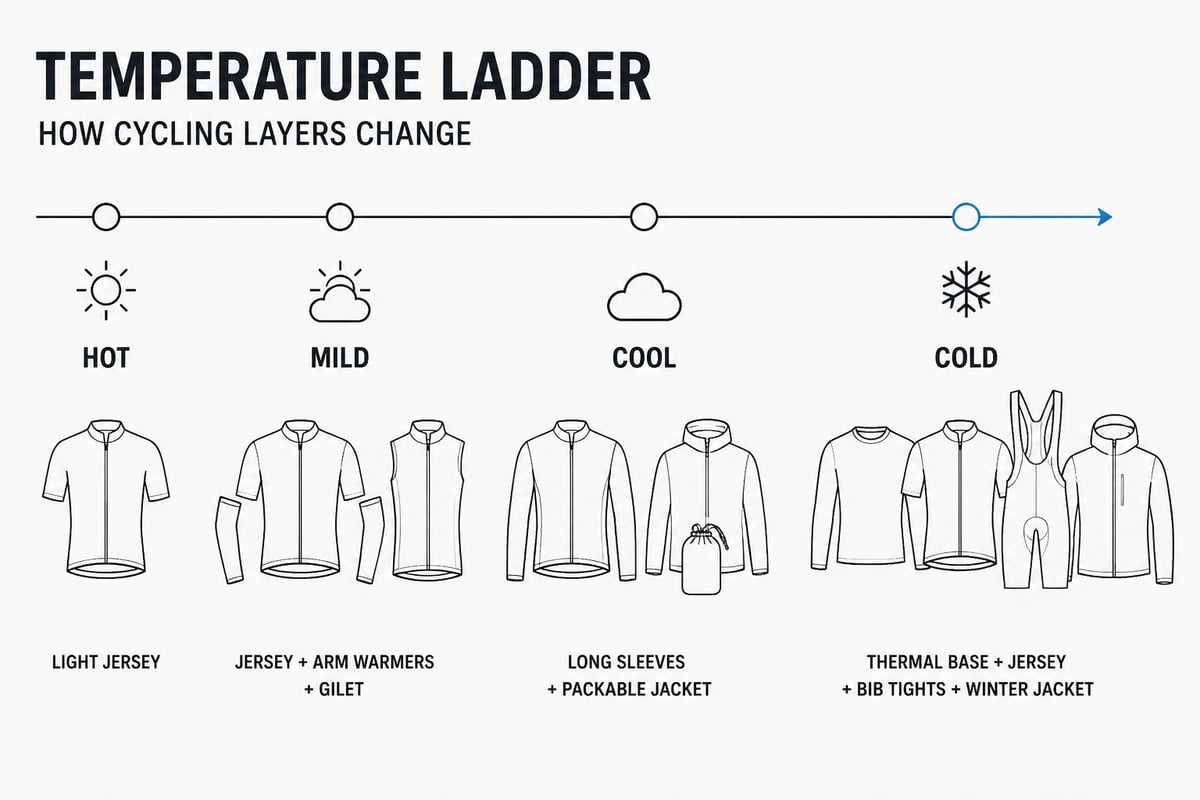
In hot weather, wear a lightweight, breathable jersey, light-colored fabrics, a thin base layer or none, and sun protection for your skin.
Cyclingnews recommends lightweight cycling gear for rides above 30°C (86°F). In practice, that means mesh-panel jerseys, short sleeves, and summer-weight bibs with a breathable chamois. Light colors can help reflect heat, and a UV-rated fabric helps protect skin on long exposed stretches.
A few other points matter in heat:
- Carry extra fluid, since sweat rate tends to rise in hot conditions.
- Wear a vented helmet and a cycling cap with a short peak to shade your eyes.
- Consider lightweight sun sleeves for long rides in direct sun, since they can be pulled off and stowed.
How Do You Dress for Cold-Weather Cycling?
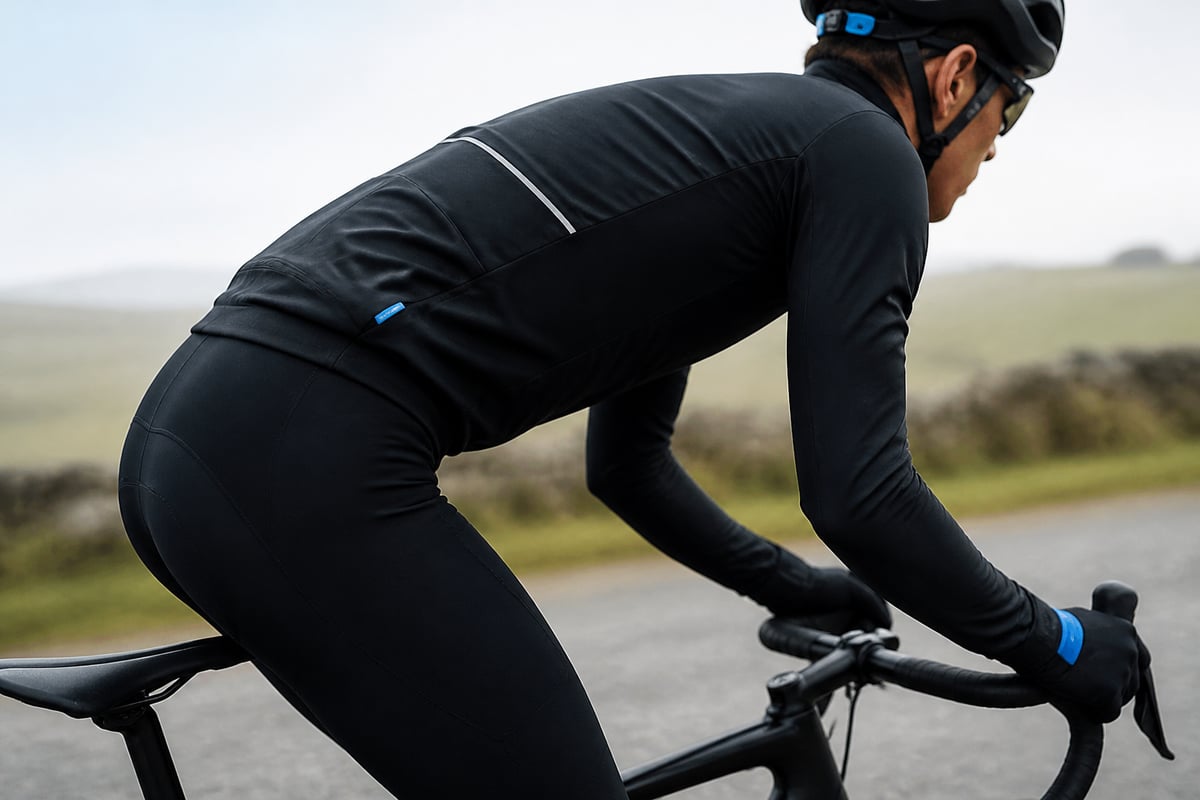
For cold rides, use a three-layer system: a moisture-wicking base layer, an insulating mid layer and a wind- or water-resistant outer shell.
Bicycling describes the three-layer approach as a way to move moisture away from the skin, retain warmth and protect against the elements while allowing vapor to escape. The goal is to avoid overheating early in the ride, because sweat that cannot escape will chill you on descents.
Cyclingnews recommends bib tights and a long-sleeve jersey as staple winter layers, with a winter jacket over them. Add thermal gloves, a thin skull cap under the helmet, overshoes and wool-blend socks for the extremities, which lose heat fastest.
What Is the Best Setup for Mild and Changing Conditions?
For mild or unpredictable conditions, wear adaptable pieces such as arm warmers, leg warmers, a gilet and a packable jacket that you can add or remove without stopping for long.
Spring and autumn are where riders most often misjudge their kit. Mornings can start near freezing and finish warm. A short-sleeve jersey with arm warmers and a vest covers a wide range, and everything folds into a rear pocket. Cycling Weekly's temperature-by-temperature dress guide is a useful reference for choosing pieces for each band.
| Condition | Base | Main layer | Extras |
|---|---|---|---|
| Hot (above 30°C / 86°F) | Optional light mesh | Lightweight short-sleeve jersey, summer bibs | Sun sleeves, vented helmet |
| Mild (12 to 20°C / 54 to 68°F) | Light base layer | Short-sleeve jersey | Arm warmers, gilet |
| Cool (5 to 12°C / 41 to 54°F) | Long-sleeve base | Long-sleeve jersey, bib shorts with leg warmers | Packable jacket, light gloves |
| Cold (below 5°C / 41°F) | Thermal base | Thermal jersey, bib tights | Winter jacket, thermal gloves, overshoes |
How Do You Stay Visible and Safe on the Road?
Stay visible with bright or reflective clothing, avoid loose fabric that can snag, and fit your helmet correctly every ride.
The UK Highway Code, Rule 59 advises avoiding clothing that could catch in the chain or wheels or obscure lights. It also notes that light or fluorescent clothing helps visibility in daylight and poor light, while reflective clothing or accessories improve visibility in darkness. Alberta.ca similarly recommends brightly colored or reflective clothing, weather-appropriate warm and dry layers, and gloves to protect hands from dirt and debris.
Helmet fit is the point most riders get slightly wrong. The NSW Government says the front of the helmet should sit two fingers above the bridge of the nose, with snug straps and one finger fitting between the buckle and chin.
Practical visibility tips for training and racing:
- Choose a kit design with high-contrast panels on the sleeves and back, where drivers see movement first.
- Add reflective piping or trim on the lower back and legs.
- Use a rear light even in daylight on open roads.
Which Accessories Complete a Cycling Kit?
The accessories that complete a kit are gloves, a cap, socks, eyewear and weather-specific items like shoe covers and warmers.
Gloves protect your palms and reduce hand fatigue. Aero-cut options with minimal seams suit race use, and CCN Sport's Swift Dark Grey Aero Cycling Gloves are one example of the style. A cycling cap under the helmet absorbs sweat and shades the eyes, and the Factor Cycling Cap shows how a simple accessory can carry team colors.
Socks are often ignored until blisters appear. Choose a moisture-wicking blend with a height that matches the team's style, and keep a spare pair in the support car or bag for wet days.
How Do Teams Plan Matching Custom Race Kits?
Teams plan matching custom kits by fixing the design, sizing the roster, choosing fabrics by season and confirming the order before production, since custom pieces are made to order.
A coherent kit does more than look professional. It makes riders easy to identify in a bunch, reinforces sponsor placement and ensures every rider has the same fabric weight and cut. A sensible planning order looks like this:
- Set the brief. Decide the racing discipline, the climate you will ride in and the sponsor logos that need space.
- Choose fabrics by season. Build a lightweight summer kit and a thermal winter set that share the same visual design.
- Collect rider sizes early. Mixed fits across a roster cause the most reorders.
- Approve proofs carefully. Check logo placement, color accuracy and panel alignment before production starts.
- Plan for replacements. Crashes and roster changes happen mid-season.
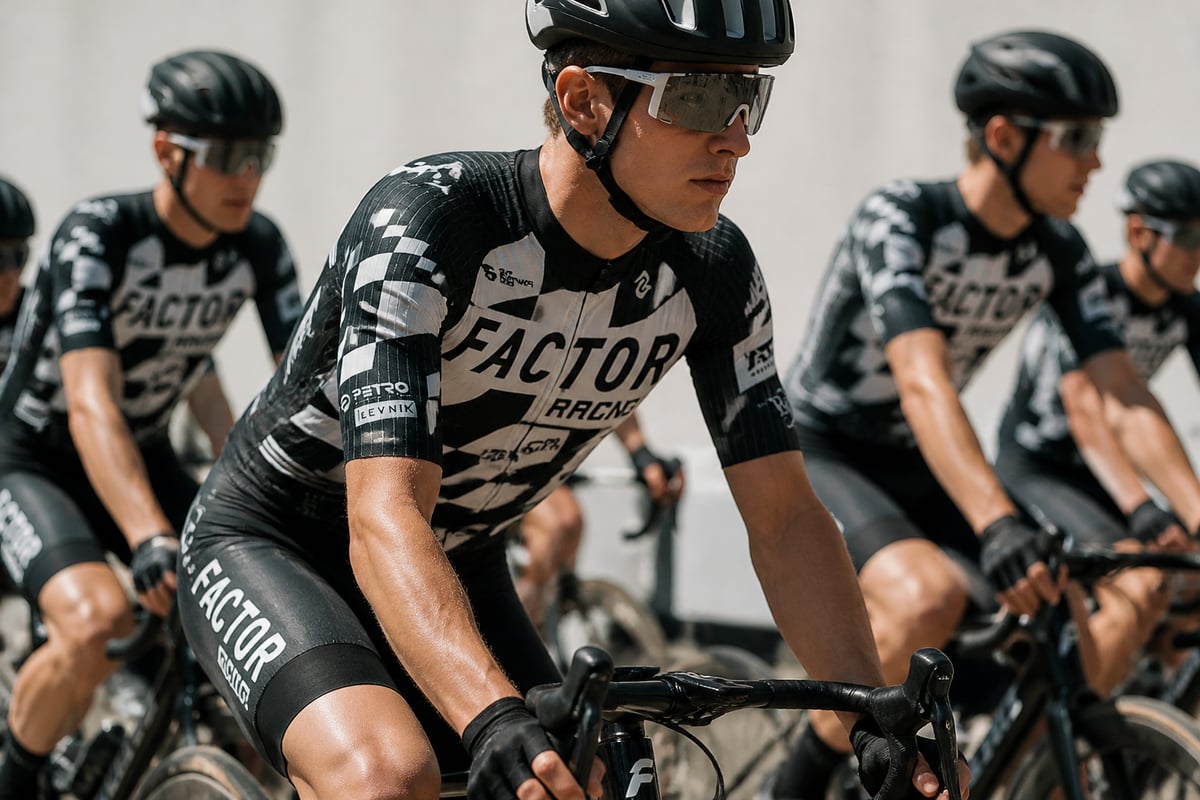
CCN Sport's custom cycling apparel service supports this process with an in-house design team and sublimation printing, and orders can start from as few as 5 main pieces, which suits smaller clubs and developing national squads. Production takes place in the company's own factories in Shenzhen, China and Dasmarinas, Philippines, with a limited lifetime warranty on its products. A crash reorder is available at 30% less than retail price, and a size reorder program gives the same 30% saving. Confirm sizing and designs carefully before approving an order. For current details on fabrics and timelines, check the product pages or contact the team directly.
CCN Sport has worked in custom cycling apparel since 2005, and its gear is used by more than a dozen pro teams, national programs and elite clubs each season. For a national-level example, see how Sweden presented its 2027 road cycling national team programme.
How Do You Get the Right Fit Across a Whole Team?
Get the right fit across a team by measuring every rider individually, using a consistent sizing chart and testing a sample set before committing to a full order.
Race cuts are designed to be snug, so a size too large will flap and add drag, while a size too small restricts breathing and cramps the chamois. Ask riders to measure chest, waist, hip and inseam, then compare against the supplier's size chart rather than guessing from other brands. Where riders fall between sizes, prefer the one that fits properly when they are in the riding position, not standing upright.
Fit checks worth running on a sample:
- Sit in a riding posture on the bike and check for fabric bunching at the stomach.
- Confirm the jersey does not ride up at the back when you reach for the bars.
- Check that leg grippers do not leave deep marks after an hour.
CCN Sport's article on men's cycling attire and its overview of breathable, lightweight cycling clothing offer more background on fabric and cut choices.
How Do You Care for Cycling Clothing So It Lasts?
Care for cycling clothing by washing it cold, avoiding fabric softener, air drying and storing it flat or hung away from direct heat.
Fabric softener coats technical fibers and reduces their ability to wick moisture. Hot dryers can damage elastic, chamois padding and sublimated graphics. Rinse kit soon after a ride, because salt and sweat degrade fibers over time, and wash zipped garments with the zip closed to protect the teeth and the fabric.
Sublimated designs are dyed into the fabric rather than layered on top, so they resist cracking and peeling when treated properly. Following the care label will keep the colors sharp across a full season of racing and training, which matters when every rider on the team needs to look uniform at the start line.
Your next step is to list every rider on your roster with their measurements and your discipline, climate and sponsor requirements, so you can brief a designer with complete information. With that in hand, CCN Sport can help you start your custom kit, with a design team, in-house sublimation and factory-direct pricing behind each order. Review the Custom Cycling Apparel service page first to see what is available, then reach out with your plans.

Share:
Types of Cycling Clothing Every Rider Should Own
Cycling Kit Warranties Riders Should Understand