

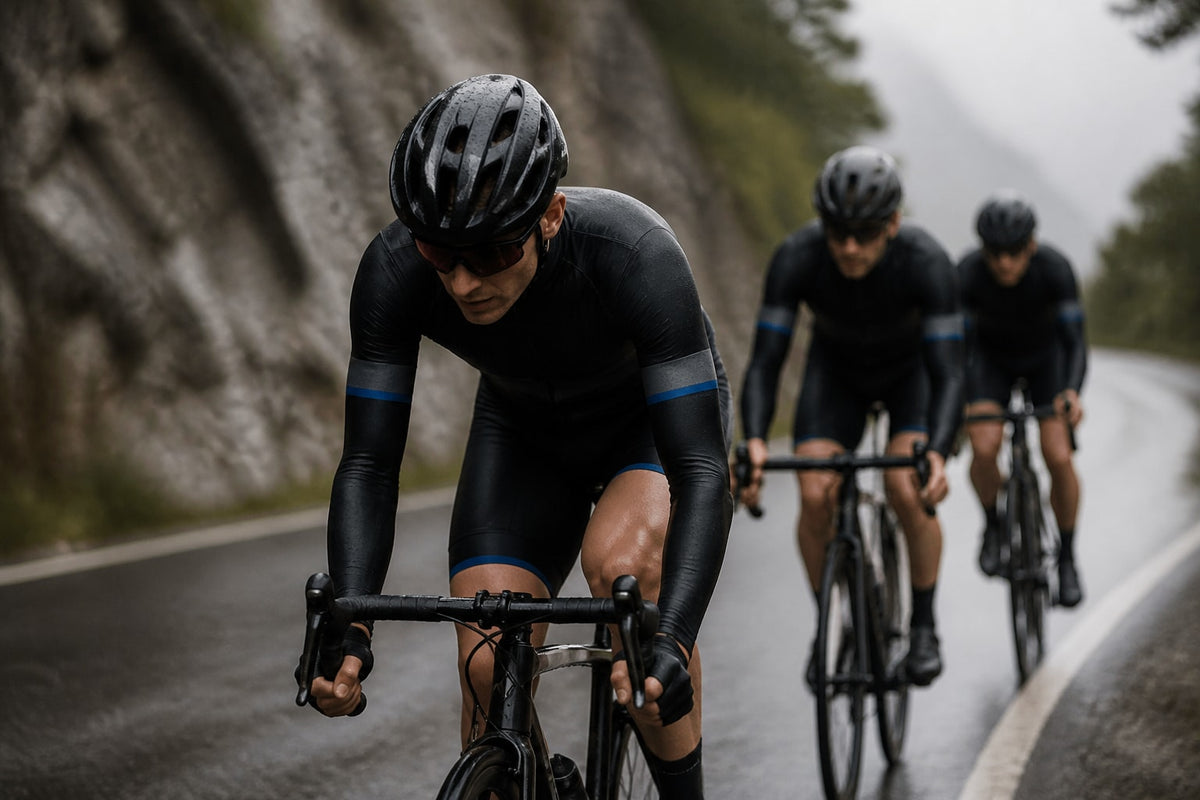
Bicycle attire is the set of purpose-built clothing that keeps a rider comfortable, visible and efficient: a fitted jersey, padded bib shorts or shorts, a helmet, gloves, cycling shoes and weather layers chosen for the day. For teams and clubs, the same garments also serve a second job, since matching race kits identify riders in a bunch and present a unified look at events. This guide covers each piece, how to dress for changing conditions, and how to plan a team order.
What Does a Complete Set of Bicycle Attire Include?
A complete setup covers six zones: torso, legs, head, hands, feet and accessories. Each zone solves a specific problem, such as moisture, friction, impact or visibility, and none of them is interchangeable with everyday clothing.
- Torso: jersey, base layer, and an outer layer such as a vest or jacket
- Legs: bib shorts, shorts, tights or knee and leg warmers
- Head: a helmet, plus a cap or skullcap under it in cooler weather
- Hands: padded gloves for short rides, thermal gloves for cold ones
- Feet: cycling shoes, socks and shoe covers
- Accessories: eyewear, arm warmers, reflective items and lights
Think of the list as a system. A premium jersey over a poor base layer, or excellent bibs with worn-out socks, leaves a weak link that shows up around the second hour.
What Is a Bicycle Kit?
A bicycle kit is a matching set of cycling clothing, usually a jersey and bib shorts, designed to be worn together and often carrying a team, club or sponsor design. The term is common in road racing and club cycling, where "kit" implies a coordinated uniform rather than separate pieces bought at random.
For a club, the kit is also a logistical item. Riders need consistent colors, consistent sizing across the roster and the ability to reorder when members join or crash. Those ordering questions matter more than the fabric choice for many team managers, and they are covered later in this guide.
Which Jersey Should You Wear?
Choose a jersey by fit, fabric and pocket layout, in that order. A race-cut jersey is close to the body to cut flutter at speed, while a club or relaxed cut gives more room for long days and mixed fitness levels.
Look for these features:
- Moisture-wicking fabric that moves sweat off the skin instead of holding it
- Three rear pockets sized for food, a phone and a spare layer
- A full-length zipper so riders can vent on climbs
- Silicone or gripper hems that keep the jersey from riding up
- Sublimated graphics that resist fading, since printed designs are part of the point for teams
Short-sleeve jerseys cover most of the season. Long-sleeve versions suit shoulder seasons, and a thermal option such as the Factor Racing thermal fleece jacket handles colder starts. Riders who prefer a plain, easy-to-pair cut can look at the Swift men's jersey range. For more on how jersey styles differ, see this overview of bicycle riding jerseys.
Why Do Bib Shorts Matter More Than Any Other Piece?
Bib shorts matter most because the chamois pad is the only item that sits between the rider and the saddle for hours. Poor padding or seams cause chafing and saddle sores, and no jersey can compensate for that.
Bibs beat waist-band shorts for most serious riding because the straps hold the pad in place and remove pressure around the abdomen. Check three things: pad density suited to your typical ride length, flat seams, and leg grippers that hold without squeezing. Seamless construction, as seen in the Sewfree bib short, reduces pressure points on long days.
Fit deserves care. A bib that is too loose bunches the pad, and one that is too tight restricts breathing in the hip flexors. For teams, a size reorder program is useful because riders rarely stay the same size across a multi-year kit cycle.
What Should You Wear in Hot Weather?
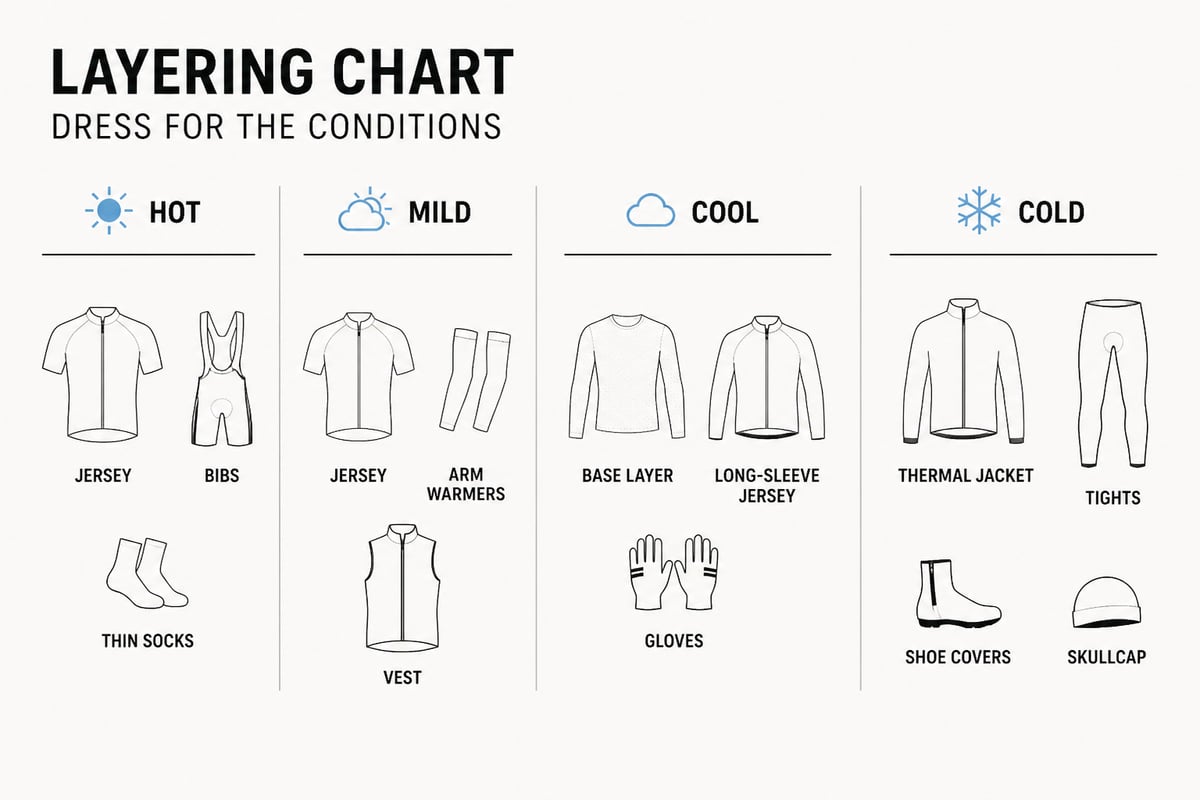
In hot weather, wear lightweight, breathable, light-colored clothing with a close but non-restrictive fit. Cycling UK recommends lightweight garments, such as loose-fitting pieces or technical gear with sweat-wicking properties or UV protection, for hot rides.
The same source suggests thin socks and vented shoes to keep feet cool. Add these small adjustments:
- Open the jersey zipper on climbs and close it on descents to manage airflow
- Choose a sleeveless base layer to wick sweat without adding warmth, such as a sleeveless base layer
- Use arm covers with UV protection for long exposed stretches instead of switching to a long-sleeve jersey
For race kits, light base colors reflect heat better than black, though team branding often dictates the palette. A designer can often place darker brand colors on side panels and keep the large torso areas lighter.
How Do You Layer for Cold and Wet Rides?
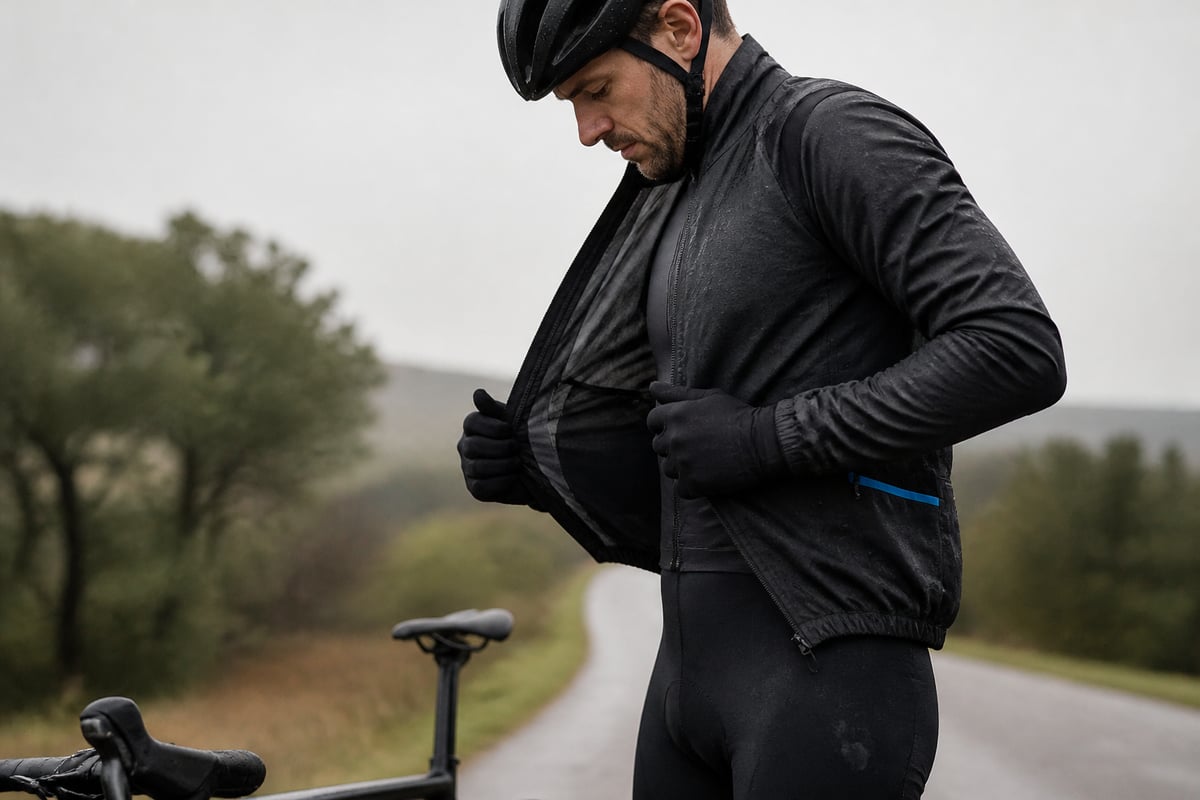
Layer in three parts: a wicking base, an insulating middle and a wind or water-resistant outer. The base moves sweat away, the middle traps warmth, and the outer blocks wind that would otherwise strip heat at speed.
A practical cold-weather stack looks like this:
- Long-sleeve base layer
- Thermal or long-sleeve jersey
- Windproof vest or jacket, such as a thermo wind vest
- Tights or leg warmers over bibs
- Thermal gloves, a skullcap and shoe covers
Shoe covers deserve special attention because wet, cold feet end rides faster than almost anything else. Aerodynamic options like pro aero shoe covers add warmth and cut drag in race conditions. Dress slightly cool at the start, since you warm up within ten minutes of riding.
What Should You Wear for Visibility?
Wear bright or light colors by day and reflective or fluorescent items at night or in poor light. Hong Kong's Transport Department recommends bright or light-colored clothing in daylight and reflective and fluorescent clothing after dark or in poor visibility.
Visibility planning matters for teams because group rides often run early or late. A few reliable measures:
- Place reflective elements on moving parts, such as ankles, shoes and arms, since motion helps drivers recognize a cyclist
- Add a reflective vest such as the gradient reflective vest over the kit for training in low light
- Choose a kit design with high-contrast panels that remain legible in bright sun and dusk
Reflective trim can be built into custom designs at the planning stage, which is easier than retrofitting later. Combine clothing with front and rear lights, since attire alone is not enough in the dark.
Do Mountain, Road and Gravel Riders Dress Differently?
Yes. Road riders prioritize aerodynamics and low weight, mountain bikers prioritize durability and freedom of movement, and gravel riders sit between the two with extra storage and abrasion resistance.
| Discipline | Typical top | Typical bottom | Key priority |
|---|---|---|---|
| Road racing | Race-fit jersey | Bib shorts | Aero fit, weight |
| Gravel | Relaxed or semi-race jersey | Bibs or liner shorts | Pockets, comfort |
| Mountain | Loose jersey or tee | Baggy shorts over liner | Durability, movement |
| Track and time trial | Skinsuit or aero jersey | Aero bibs | Drag reduction |
Mountain riders have specific needs around protection and fit, covered in this guide to mountain bike attire. Teams that field riders across disciplines often order a coordinated palette in different cuts, so the club looks unified in road races and off-road events alike. The broader bicycle gear overview helps with planning the non-clothing items.
How Do You Plan Matching Bicycle Attire for a Team or Club?
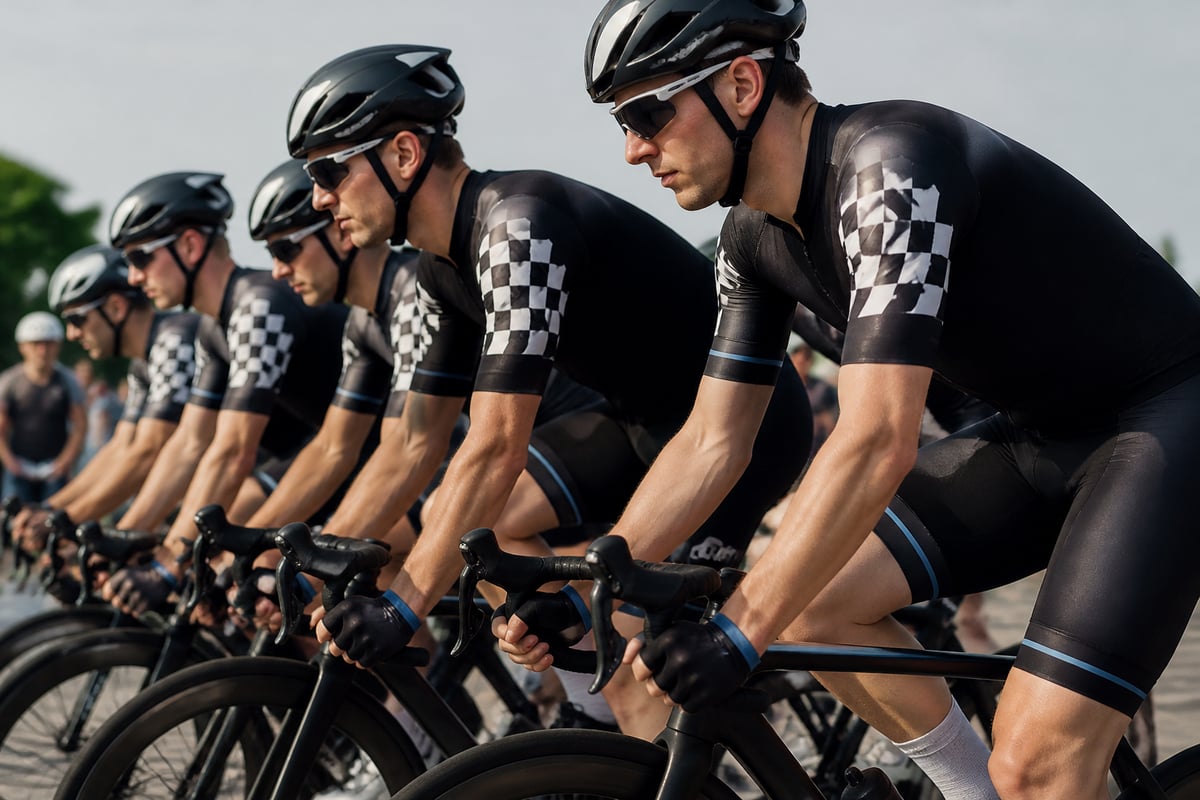
Plan team kit as a project with a fixed sequence: brief, design, size check, order and reorder. Treating it as a one-time purchase usually leads to mismatched colors and missing sizes later.
- Set the brief. Decide the disciplines, seasons and sponsor placements before any artwork starts.
- Approve the design. Confirm logos, color breaks and reflective areas on the full set, not only the jersey.
- Collect sizes. Ask every rider to try a size set, because cuts differ between brands and between men's and women's patterns.
- Order with a buffer. Include spare pieces for new members and replacements.
- Plan reorders. Crashes, wear and roster changes make reorders certain, so know the terms up front.
CCN Sport builds custom kits in its own factories in Shenzhen, China and Dasmarinas, Philippines, with minimum orders starting at 5 main pieces, so small clubs can order without a large commitment. It offers crash and size reorder programs at a reduced price, which helps when a rider changes size or damages a kit. Custom orders are non-refundable, so confirm sizes and artwork carefully before you commit. Specific limits, timelines and pricing are on the product pages and the contact page.
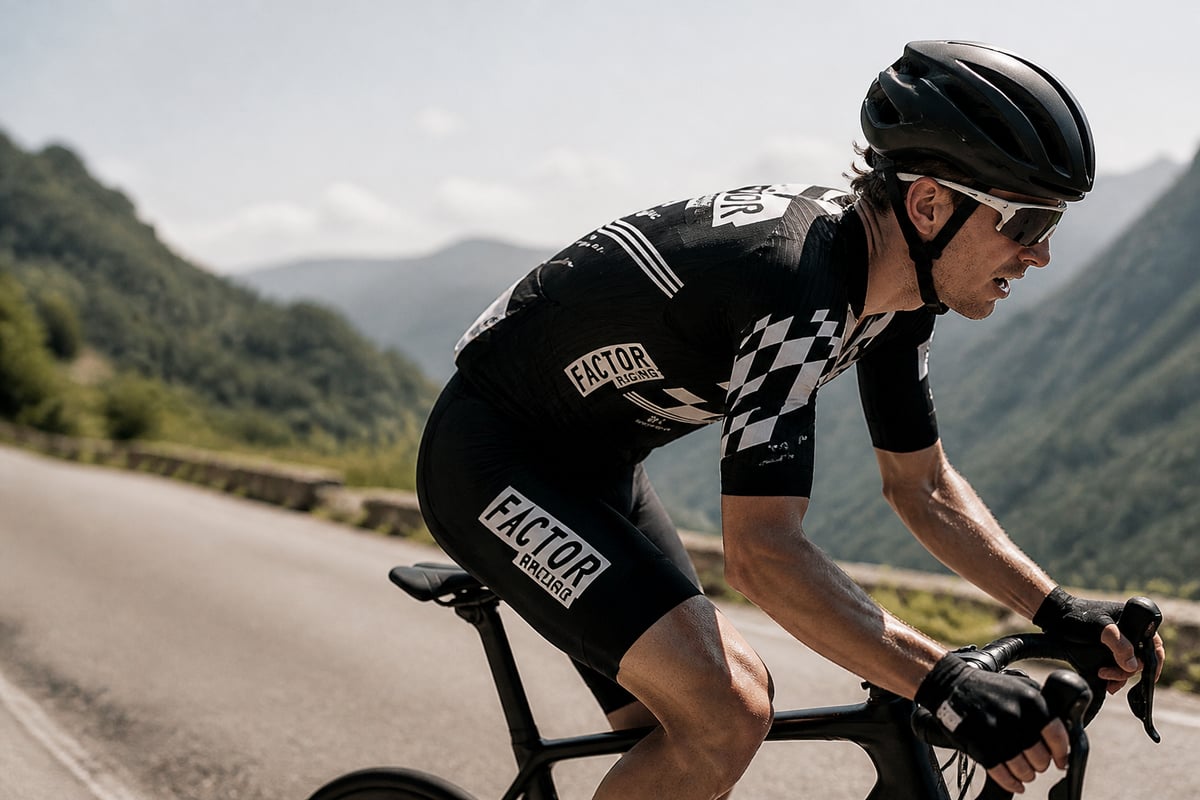
The Factor Racing Team Kit shows what a race-tuned team set looks like in practice, with a UCI-style jersey built around a race fit and lightweight breathable fabric.
What Matters in Fabric, Printing and Build Quality?
Fabric performance, print durability and seam construction decide whether a kit still looks and feels right after a season of washing. Cheap sublimation can fade or crack, while good sublimation bonds the dye into the fabric so graphics last.
Check these points when comparing suppliers:
- Fabric weight and stretch recovery, which determine whether the kit holds its shape
- Sublimation quality, meaning color depth and resistance to fading
- Seam placement, since flat or bonded seams reduce chafing
- Pro-tested fit, which indicates patterns have been checked on real riders in race positions
- Warranty terms, such as the limited lifetime warranty CCN Sport lists on its products
Ask for a sample or a fabric swatch where possible, and wash-test it before approving a full run.
Where Can You Find Discounted Bike Gear?
Discounted bike gear is most often found through factory-direct pricing, end-of-season clearances and reorder programs. For teams, factory-direct custom orders usually beat retail markups on matching items, and reorder discounts lower the cost of replacing damaged pieces.
Practical ways to cut costs without lowering quality:
- Order a full season's needs at once to benefit from volume pricing
- Use size and crash reorder programs instead of repurchasing at retail
- Standardize one design for multiple seasons so you are not paying for new artwork yearly
- Buy accessories such as socks, caps and arm covers alongside the main kit order
FAQ
What are the most popular cycling brands?
Popular brands vary by category, and lists change with each season's releases. For team purposes, brand name matters less than fit consistency, fabric quality and the ability to match colors across reorders. Compare suppliers on those criteria and request samples before committing.
How often should cycling attire be replaced?
Replace bib shorts when the chamois compresses or the elastic loses grip, which depends on how heavily they are used. Jerseys last longer, though faded graphics or stretched fabric mark the end. Teams should plan a periodic refresh so riders stay uniform.
Can you wear regular clothing for cycling?
Short, slow rides are possible in everyday clothes, but they lack the padding, moisture control and fit that longer riding needs. Cotton holds sweat and seams can chafe on extended rides. Purpose-built bicycle attire is better for training, racing and group rides.
Start by listing every rider on your roster with their sizes and the disciplines you race, since that single sheet drives the entire kit plan. From there, CCN Sport can turn that list into a finished set, with in-house production, pro-tested fit and sublimated designs built to last, and its Factor Racing Team Kit is a good reference for what a race-tuned team set can look like. When you are ready to put your club or program in matching colors, start your custom kit with CCN Sport and see how a custom cycling apparel maker can bring your design from concept to finished garments.

Share:
Bike Riding Jerseys: How to Choose the Right One
Cycling Rainwear That Performs When Weather Turns