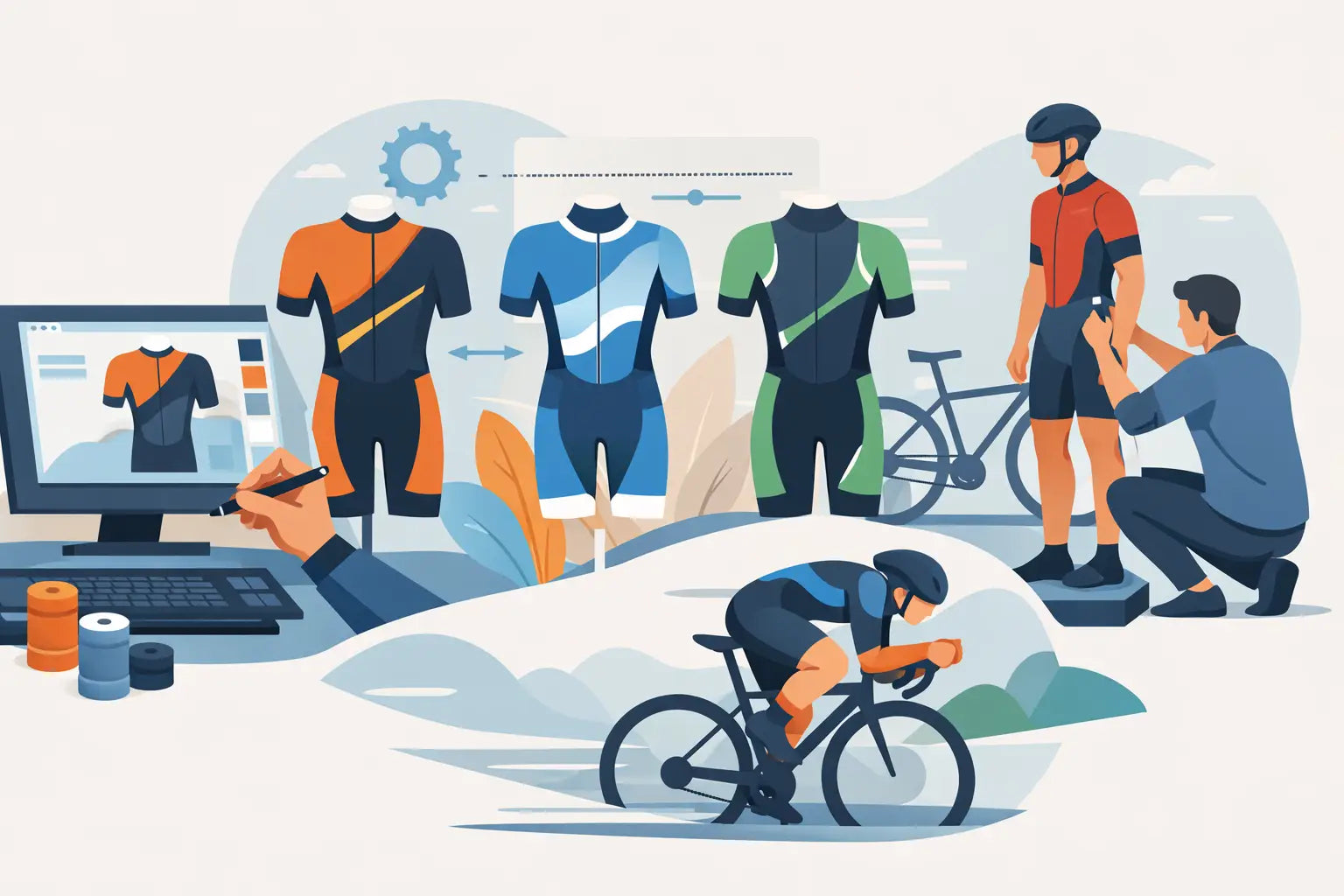
A skinsuit can win you free speed, but only if the fit, pattern, and production details are right. If you're figuring out how to order custom skinsuits for a team, club, brand, or race program, the process should start long before you approve artwork. The fastest suit on paper can still miss the mark if the sizing is inconsistent, the chamois is wrong for your event, or the delivery window doesn't line up with race day.
Custom skinsuits sit at the intersection of aerodynamics, comfort, and identity. They have to perform under load, stay stable in an aggressive position, and still carry your colors cleanly. That means ordering well is less about picking a design and more about making good decisions in the right sequence.
How to order custom skinsuits without costly mistakes
The first step is defining exactly how the skinsuit will be used. A road race skinsuit is not the same as a time trial suit, and a triathlon suit solves a different set of problems altogether. Even within cycling, the demands shift depending on whether your riders need all-out aero efficiency, long-duration comfort, quick restroom breaks, or a balance of race performance and everyday usability.
That use case shapes almost everything that follows. Sleeve construction, zipper length, pocket configuration, fabric mapping, and pad choice all depend on the event and the rider's position on the bike. If you skip this step and jump straight to logos and colors, you usually end up revisiting the spec later, which slows the whole project down.
For team managers, this is the point where alignment matters most. Decide whether you need one suit for everyone or a couple of versions for different rider groups. A masters road team, a junior development squad, and a triathlon club may share branding, but they rarely have identical performance needs.
Start with fit, not graphics
Most problems with custom apparel come back to fit. Skinsuits are especially unforgiving because they are built to sit close to the body, reduce drag, and stay stable through movement. If the suit is too loose, you lose aerodynamic benefit and risk fabric movement. If it's too tight in the wrong areas, riders feel restricted, overheat faster, or fight discomfort for the entire event.
That is why sizing should never be treated as a formality. A good custom order starts with a clear size run, real rider measurements when needed, and an honest conversation about fit preference. Some athletes want a true race fit with maximum compression. Others need a slightly more accommodating cut because they are racing long events or ordering for a mixed-ability club roster.
There is no universal "best" fit. The right answer depends on the rider, the discipline, and how aggressive the pattern is. For a pure race program, a second-skin feel may be exactly right. For a club ordering skinsuits for road events, fondos, and occasional crits, a touch more versatility can make the kit more wearable across the group.
If samples or fit kits are available, use them. That one step can save far more time than it costs.
Why fabric and panel layout matter
Not all custom skinsuits are built from the same materials, and not all fabrics belong in the same place. Aero-textured sleeves, compressive body panels, breathable back sections, and supportive lower fabrics each play a specific role. A strong skinsuit uses the right material in the right zone.
This is where technical guidance matters. A suit that looks clean in a mockup still has to handle sweat, movement, and speed. Riders need stretch where they rotate through the hips and shoulders, support where the suit needs to stay anchored, and ventilation where heat builds during hard efforts.
For race buyers, the trade-off is straightforward. More aerodynamic or compressive materials can improve performance, but they may feel more demanding if the event is long or conditions are hot. A balanced build often gives better real-world results than chasing the most aggressive option for every rider.
Build the design around the garment
Artwork should work with the seams, not fight them. That sounds obvious, but it is one of the most common issues in custom kit ordering. Logos, sponsor marks, and color transitions can shift dramatically once they cross body panels, zipper lines, grippers, and curved seams.
A smart design process starts by understanding the printable areas and the shape of the finished suit. Large sponsor logos need enough uninterrupted space to stay readable in riding position. Fine details may look sharp on a flat file but lose impact once stretched over a race-cut panel. Dark colors can look great, but they may absorb more heat in direct sun. Light colors can improve heat management, but they may require more care in design execution depending on coverage and contrast.
The goal is not just brand visibility. It is brand visibility on a moving athlete, in a tuck, from race distance, under real conditions.
Keep approvals organized
Custom projects slow down when too many people weigh in too late. One decision-maker is ideal. Two is manageable. Beyond that, approval cycles often become the biggest threat to your timeline.
Before artwork starts, set the priorities. Confirm sponsor placements, rider names if needed, color references, and whether you need men's, women's, and youth versions adapted separately. If the skinsuit order is part of a broader team launch, make sure the branding standards are locked before production files are finalized.
Know your quantity, timeline, and reorder needs
Ordering the right number is not just about minimums. It is about planning for growth, replacements, and late additions. Teams often focus on the opening order and forget that new riders join, athletes crash, and extra inventory disappears fast once racing starts.
If your budget allows, build a small buffer into the first run. That is especially useful for core sizes and for development programs where roster movement is common. If your supplier offers low minimums or streamlined reorders, that adds flexibility, but it is still better to plan than scramble.
Timeline matters just as much. Custom skinsuits require time for product selection, design, approvals, size collection, production, and shipping. If you need kit for a target event, work backward from that date and leave room for revisions. Waiting until the final weeks before a season opener usually forces compromises.
This is one area where factory-direct production and in-house control can make a real difference. When the people handling your project also understand the garment build, the process tends to move faster and with fewer disconnects.
Ask the right questions before you place the order
If you want a smoother experience, the best questions are practical. Ask what fit profile the skinsuit is built around. Ask whether the pad is intended for short-course racing, road racing, or longer hours in the saddle. Ask how the fabrics behave in heat, how the leg finish is designed, and what the expected lead time looks like once approvals are complete.
Also ask what happens after the first order. Can you reorder matching suits later? Will artwork files stay on hand? Can rider-specific updates be made without restarting the whole project? Those details matter more than they seem when the season gets busy.
If you're ordering for a team, ask about the infrastructure around the apparel, not just the apparel itself. Size support, ordering coordination, and clear communication can be as valuable as the skinsuit spec.
Common ordering mistakes to avoid
Most custom problems are predictable. Teams rush the size collection, approve artwork without checking panel placement, or assume every rider wants the same fit. Others underestimate timeline pressure and start too late, especially when they need multiple garments at once.
Another frequent mistake is choosing based only on price. Value matters, but a skinsuit is a performance garment. If the fit is off, the pad is wrong, or the suit lacks durability, the lower price stops looking attractive quickly. For serious riders, the better comparison is total outcome: fit consistency, rider confidence, race function, and on-time delivery.
That is why experienced buyers look for a partner, not just a vendor. A reliable custom process should help you make fewer guesses.
What a strong custom skinsuit order looks like
A strong order usually has a clear purpose, a defined fit strategy, controlled approvals, and enough lead time to do the job properly. The buyers know who the suit is for, what kind of racing it needs to support, and how the design should perform on the body rather than only on screen.
For clubs and teams, the best results come from treating skinsuits as equipment, not merchandise. When the garment is specified correctly, riders notice it where it counts: stable fit, comfort under effort, and a cleaner feeling at speed. That is the difference between a custom piece that simply matches your branding and one that earns its place on race day.
If you're ready to move forward, keep the process simple. Define the event, confirm the fit, organize the artwork, and respect the timeline. The rest gets much easier when the foundation is right - and that is exactly how performance kit should be ordered.

Share:
Gravel Cycling Kit Essentials That Matter
What Is a Team Order Store?