

A team kit can look sharp on a design screen and still fail where it matters most - halfway through a hard race, on a five-hour training ride, or after a full season of washing, pinning numbers, and repeated use. That is why choosing a custom cycling clothing manufacturer is not a branding exercise. It is a performance decision.
For clubs, race teams, event organizers, and private-label buyers, the wrong partner creates problems fast. Sizing becomes inconsistent. Lead times stretch. Fabric feels good in hand but falls apart under load. Chamois comfort drops after a few long rides. Colors shift between batches. What looked like a simple apparel order turns into extra admin, rider complaints, and missed deadlines.
The right manufacturer does the opposite. It simplifies the process, protects your timeline, and delivers kit that riders actually want to wear. When the apparel is built correctly, every detail matters - aerodynamic fit, panel construction, fabric recovery, gripper stability, pocket placement, print clarity, and durability over time.
What a custom cycling clothing manufacturer actually does
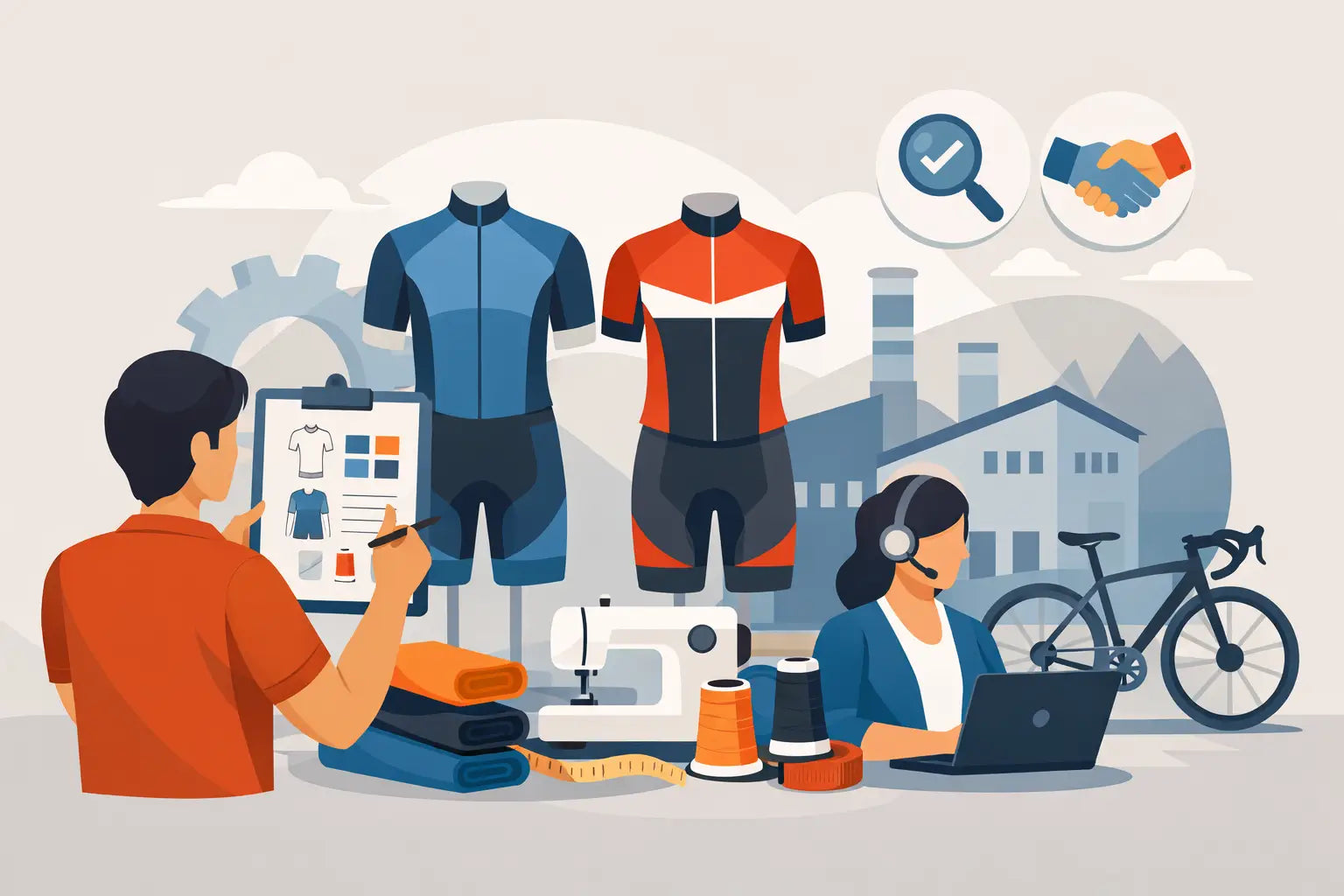
A custom cycling clothing manufacturer is more than a logo printer. The real job is product engineering, pattern development, production control, and repeatable delivery.
That distinction matters because cycling apparel is technical apparel. A jersey must manage heat and moisture without losing structure. Bib shorts must balance compression, support, mobility, and long-distance comfort. A skinsuit must reduce drag while staying stable in race position. Winter pieces need insulation and weather protection without becoming bulky or restrictive.
If a supplier is only decorating pre-made blanks, your options are limited from the start. You may get acceptable casual merchandise, but not true race-ready clothing. A manufacturer with in-house development and production control can adjust fit, construction, materials, and finish to match the demands of your riders.
Why in-house production changes the result
Not all custom programs are built the same. Some brands handle design and sales, then pass production to outside factories. Others control development and manufacturing directly. That difference affects quality, speed, and accountability.
When production is managed in-house, communication is tighter. Design files, fabric selection, panel layouts, testing standards, and finishing details stay connected instead of moving through multiple third parties. Problems are easier to catch early. Reorders are more consistent. Timelines are usually more predictable because fewer handoffs create fewer delays.
For team managers, this matters just as much as it does for riders. A factory-direct model often means faster turnaround, lower minimums, and better value because there are fewer layers between the manufacturer and the customer. It also means clearer answers when you ask practical questions about fit, construction, or delivery.
How to evaluate custom cycling clothing manufacturers
The first thing to assess is product quality, but not in the vague sense. Ask what the garments are built to do. A race jersey, endurance bib short, gravel overshort, and triathlon suit should not all be treated as the same product with different graphics.
Look closely at fit architecture. Is the cut designed for an on-bike position, or does it only look clean standing upright? Are sleeve lengths modern and stable? Do bib straps lie flat and stay comfortable under load? Is the chamois chosen for real riding duration, not just a sales sheet description?
Fabric matters too, but only in context. Lightweight mesh can be excellent in hot conditions, but too delicate for some use cases. Heavier compression fabrics may improve support and opacity, though they can feel warm for midsummer events. The best manufacturer will explain trade-offs clearly instead of pretending one fabric solves everything.
Printing quality is another checkpoint. Saturated colors, sponsor logos, gradients, and small text all need to remain sharp across stretch panels and repeated washing. A strong custom program should also produce consistency between original orders and reorders. Teams grow, riders replace pieces, and sponsors update logos. Your kit needs to remain visually coherent across seasons.
Fit is where good custom apparel becomes great
Most rider feedback comes back to fit. Not just size labeling, but how the garment performs once the pace rises.
A well-made jersey should feel close without restricting breathing or bunching at the chest and shoulders. Sleeves should stay in place. Rear pockets should remain accessible and stable when loaded. The hem should anchor the jersey without riding up when the rider rotates forward.
Bib shorts are even less forgiving. Leg grippers need enough hold to stay planted, but not so much that they pinch. Compression should support the muscles without limiting movement. The chamois has to sit correctly in pedaling position. If it shifts, folds, or creates pressure points, no amount of visual design will save the product.
This is where a serious custom cycling clothing manufacturer stands apart. Accurate pattern grading, tested cuts, and category-specific fit development reduce the guesswork. That becomes especially important when outfitting mixed squads with men’s and women’s styles, a wide size range, or riders across road, gravel, MTB, and triathlon disciplines.
Turnaround time is part of performance
Teams often focus on design first and schedule second. That is backward. If your event date, team launch, or sponsor activation is fixed, production timing needs to be part of the conversation from day one.
Fast turnaround only helps if the process is reliable. A manufacturer should be able to explain the path from concept to approval to production to shipment in plain terms. That includes artwork setup, fit confirmation, sample options when needed, payment checkpoints, and reorder procedures.
There is always a trade-off between speed and complexity. A simple reorder of an established design can move faster than a new program with multiple garment types and sponsor revisions. Low minimums help, especially for smaller clubs and emerging teams, but they should not come at the cost of quality control.
The best partners set realistic expectations and then hit them.
Ordering infrastructure matters more than most teams expect
Custom kit projects often break down in administration, not manufacturing. Riders miss deadlines. Sizing gets submitted incorrectly. Team managers chase payments and individual preferences. One person ends up carrying the entire burden.
A strong manufacturer helps remove that friction with organized team-ordering systems, clear approval flows, and repeatable reorder support. That can be the difference between a smooth seasonal rollout and a month of spreadsheet cleanup.
This is especially valuable for clubs with multiple collections, youth and adult sizing, or riders ordering across several product categories. Good apparel is essential. Good ordering infrastructure keeps the project manageable.
The value question: cheaper is rarely cheaper
Price always matters. Teams have budgets, and riders compare options. But the cheapest quote can become the most expensive choice once replacements, complaints, delays, and poor reorders start stacking up.
A better way to judge value is cost over use. If a jersey maintains fit, print quality, and comfort through heavy training and racing, it delivers more value than a lower-cost piece that fades, stretches, or loses shape halfway through the season. The same applies to bib shorts. Riders remember comfort long after they forget the price difference.
Factory-direct manufacturing can shift that equation in your favor. When you work with a partner that controls production instead of layering brokers and outsourced vendors into the process, you often get stronger performance at a more efficient price point. That is one reason teams worldwide look for direct relationships with experienced makers such as CCN Sport.
What the best partnership looks like
The best custom apparel relationships are built on clarity. You know what products are available, what they are designed to do, how long they take, and what support exists after the first order ships.
You also get honest guidance. Not every team needs the lightest race fabric or the most aggressive aero cut. Some need durability for weekly club use. Some need elite-level speed for competition. Some need a balanced program that works across abilities and body types. A capable manufacturer helps you choose based on how your riders actually ride.
That is the real standard. Not who has the flashiest mockups or the broadest marketing claims, but who can deliver precise fit, dependable construction, consistent branding, and on-time fulfillment across repeated orders.
When your kit performs on the road, in the bunch, and after a full season of hard use, riders notice. So do sponsors, team managers, and every new member deciding whether this is a group worth joining. Choose the partner that builds for that reality, not just for the first impression.

Share:
Custom Cycling Apparel Guide for Teams
How to Order Team Jerseys Without Mistakes