

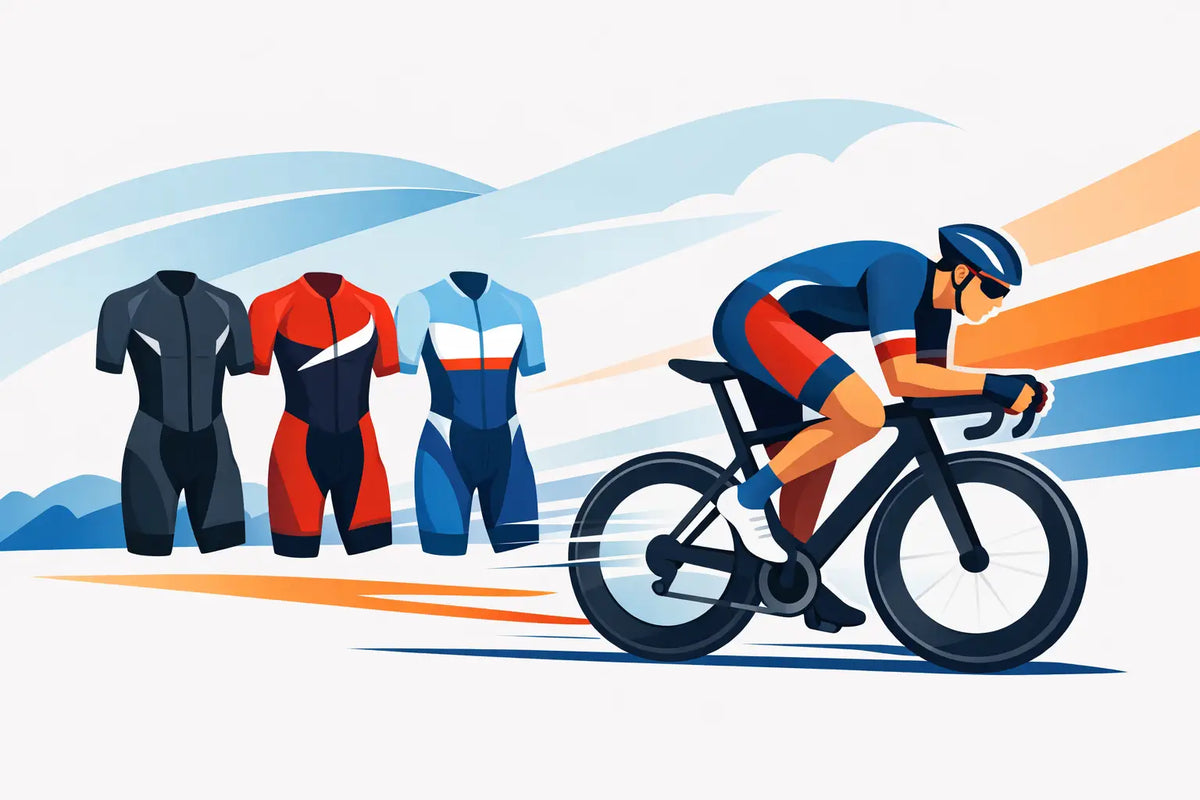
The final kilometer exposes every weakness in a race kit. A loose sleeve catches air, a shifting pad distracts from the effort, and a poorly placed logo can make a polished team look improvised. Custom cycling skinsuits design solves those details as one performance system: fit, fabric, construction, graphics, and race-day function working together.
For clubs, development programs, triathlon teams, and serious riders, a skinsuit is more than a jersey and bib short joined at the waist. It is a purpose-built race garment designed to stay stable at speed, manage heat under pressure, and present a clear team identity from the start line to the finish.
Start With the Race Discipline
The best design decisions begin with how and where the skinsuit will be used. A road racer spending hours in a breakaway needs a different balance of compression, storage, and temperature control than a criterium specialist attacking through short, high-speed corners. A time trial rider may prioritize the cleanest possible airflow, while a triathlete needs a suit that performs on the bike without becoming restrictive on the run.
Course profile and climate matter just as much. Hot, humid racing calls for breathable body panels and quick-drying fabrics. Cooler events may favor slightly more coverage and denser materials that protect the rider from wind without creating bulk. For gravel or mixed-surface racing, durability and practical pocket access can be more valuable than chasing marginal aerodynamic gains.
This is where a custom project should be specific. Rather than asking for a fast skinsuit in general, define the intended use: road race, criterium, time trial, triathlon, track, or multi-discipline competition. That direction informs every choice that follows.
Fit Is the Foundation of Aerodynamics
Aerodynamics do not start with a textured sleeve or a premium fabric. They start with fit. A skinsuit must sit close to the body without limiting breathing, shoulder movement, or power transfer through the hips. When fabric bunches at the lower back, rides up at the thigh, or pulls across the chest, airflow becomes less consistent and comfort declines.
A race fit should feel firm when standing and natural in the riding position. Riders spend most of a race bent forward, reaching for the bars, turning their shoulders, and moving in and out of the saddle. Patterning needs to account for that posture rather than relying on a standard upright garment shape.
Sizing is particularly important for teams. One rider may prefer a highly compressed race fit, while another needs more room through the shoulders or thighs. A reliable size range, clear measurement guidance, and access to samples when possible reduce the risk of a kit that looks correct on a design screen but disappoints on the road.
Fit also affects visual quality. Clean graphics look sharper when panels remain smooth. Team colors appear more deliberate, sponsor marks stay readable, and the overall kit has the composed appearance expected from a competitive program.
The Value of Disciplined Paneling
A well-designed skinsuit uses each panel with intention. Stretch fabrics belong where riders need mobility. Compression fabrics support the muscles and maintain a close silhouette. Breathable mesh panels can release heat in high-sweat zones, while more structured materials help stabilize the garment in the wind.
Panel placement also creates a practical canvas for graphics. A logo that crosses a seam, disappears under an arm, or stretches heavily across the chest loses impact. Designers should build the visual system around the garment pattern, not force artwork onto panels after the fact.
Choose Fabrics for the Conditions, Not Just the Catalog
Technical fabric names can be useful, but riders care about outcomes: Does the suit stay comfortable in a hard effort? Does it remain opaque under stretch? Does it dry quickly after rain or sweat? Does it keep its shape after repeated washing and racing?
For most race applications, the strongest approach combines multiple materials. Smooth, compressive fabric through the main body supports a close aerodynamic fit. A more textured sleeve material can help manage airflow where it matters. Breathable side or back panels improve ventilation, especially during hot starts and long climbs. Durable lower-body fabric must withstand saddle contact while retaining compression.
The chamois deserves equal attention. A skinsuit may be optimized for speed, but it still needs to perform after three hours in the saddle. The right pad depends on discipline, rider preference, and expected ride duration. A short criterium, a road stage, and a long-course triathlon place different demands on density, shape, and flexibility.
Do not assume that more compression is always better. Excessively tight fabric can restrict movement, create pressure points, and make a rider less comfortable late in the race. The goal is controlled support, not a suit that feels difficult to wear before the opening lap.
Custom Cycling Skinsuits Design Should Protect Team Identity
A fast skinsuit should be unmistakably yours. The most effective team graphics are confident, legible, and built for motion. They use color, contrast, and placement to create recognition from a distance, whether the team is lined up at a local criterium or represented at a national event.
Start with a clear hierarchy. Team name and primary marks should be visible first. Sponsor logos should remain readable without overwhelming the garment. Accent colors, stripes, gradients, and pattern elements can add energy, but they need to support the identity rather than compete with it.
Consider how the kit looks from every angle. The front is important for podium photos and start-line presence. The side profile matters in the racing position. The rear panel is often the most visible view in a group, so it should carry strong team recognition while respecting pocket placement and rider number requirements.
Color selection has a performance element too. Dark colors can feel warmer in direct sun, while lighter panels may help in hot conditions. High-contrast details can improve visibility in training and low-light rides. If a team has established brand colors, use them strategically instead of covering every panel in competing tones.
Design for Print Precision
Sublimation gives teams broad creative freedom, but artwork still needs professional preparation. Vector logos, correct brand colors, high-resolution source files, and clear sponsor approvals prevent delays and protect print quality. Fine lines, tiny text, and low-contrast marks may look acceptable on a laptop but disappear at speed or distort across a curved panel.
A factory-direct partner with in-house production can make this process more controlled. At CCN Sport, design and manufacturing work within the same production framework, helping teams move from approved artwork to race-ready apparel with greater consistency and fewer handoffs.
Small Construction Details Make a Large Difference
The details riders notice after 50 miles are often the ones that determine whether a skinsuit becomes a favorite or stays in the drawer. Leg grippers need to hold position without squeezing. Sleeve endings should stay flat and secure. A quality zipper should operate smoothly and remain stable under tension. Seams must be placed to reduce friction and avoid pressure in the riding position.
Pocket configuration is another decision that depends on use. Traditional rear pockets are valuable for road racing, training, and longer events. A stripped-down configuration may make more sense for time trials. Triathlon suits may require accessible nutrition storage without creating a loose, flapping profile on the bike.
Test the suit beyond the mirror. Riders should evaluate it during hard efforts, climbs, sprints, and time in the drops. Check whether the collar sits comfortably, whether the zipper creates pressure, and whether the chamois remains stable. A skinsuit earns its place through performance under load, not only through a clean first impression.
Build the Project Around a Reliable Timeline
Custom apparel projects work best when teams start before the race calendar becomes urgent. Artwork approvals, size collection, sponsor confirmation, sample review, and production all take coordination. Rushing can force compromises that are easy to avoid with a clear early plan.
Assign one decision-maker to collect logos, approve colors, organize sizing, and communicate feedback. This keeps the project moving and prevents conflicting revisions. Teams should also think beyond the first order. A design system that can support future riders, replacement pieces, and related garments creates a more consistent program over time.
The right custom skinsuit does not need to be overdesigned. It needs to fit precisely, manage the conditions, support the rider, and carry the team identity with confidence. When those priorities are built in from the first sketch, the result is race-ready apparel that looks fast because it is built to perform.

Share:
How to Prevent Cycling Bib Chafing on Long Rides
Custom Teamwear Results That Win Race Days