

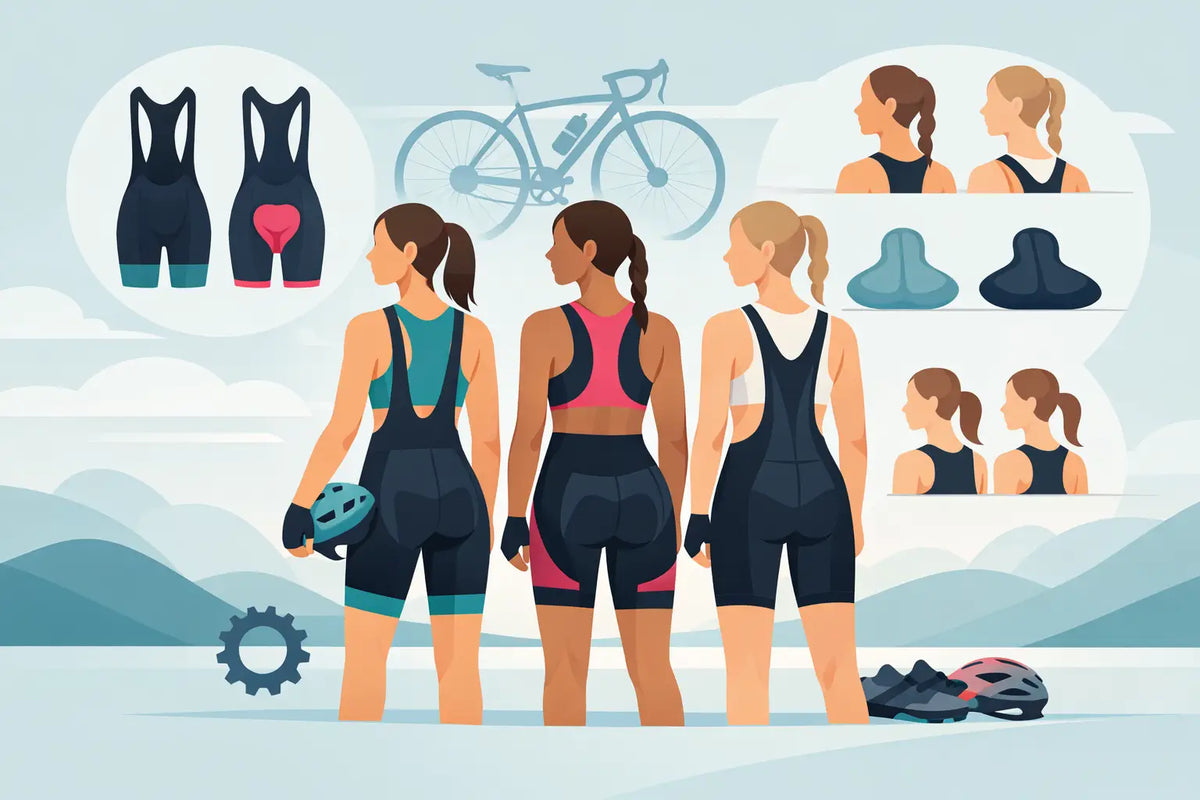
The wrong bib short makes itself known fast: a chamois that bunches at the first stoplight, leg bands that creep upward, straps that pull across the shoulders, or fabric that turns transparent under effort. A useful women cycling bib shorts comparison starts with these real ride pressures, not just fabric weight or a product photo. The best choice is the one that stays comfortable, stable, and supportive when your focus needs to stay on the road.
Bib shorts are one of the most personal pieces of cycling kit. A jersey can be slightly loose without ruining the ride. A bib short cannot. It sits at the center of every pedal stroke, every seated climb, and every hour in the saddle. For racers, club riders, gravel cyclists, and triathletes, the right pair can reduce distractions and make hard efforts feel more controlled.
Women’s Cycling Bib Shorts Comparison: Start With Ride Type
There is no single best bib short for every rider. The right construction depends on how long you ride, how aggressively you ride, and where you ride. A short built for a 45-minute indoor session has different priorities than one designed for a six-hour fondo or a race on rough pavement.
For short rides and training sessions, a lighter chamois and straightforward compression can be enough. These shorts should feel easy to wear, breathe well, and return to shape after repeated washing. They are often the practical choice for riders who train several times per week and want dependable performance without an overly thick pad.
For long-distance road riding, chamois quality becomes the deciding factor. Look for multi-density foam that supports the sit bones while reducing bulk through the center. A high-quality endurance pad manages pressure without feeling like a cushion that moves independently from your body. It should remain smooth against the skin, especially when you are changing positions or riding in a low, aerodynamic posture.
For racing, criteriums, and hard group rides, fit and compression move to the front of the conversation. Race-oriented bib shorts use supportive fabrics to stabilize the muscles and hold the chamois precisely in place. They should feel snug when standing still but never restrictive through the hip flexors or across the thigh at full pedal extension. If a pair feels comfortable only when you are walking around, it may not be built for performance on the bike.
Gravel and mixed-surface riders often need the same chamois support as endurance road riders, with extra attention to durability and stability. Vibration, frequent terrain changes, and time out of the saddle can expose weak leg grippers, thin fabrics, and poorly shaped pads. A more durable short with secure cuffs is often worth the slight trade-off in weight.
Fit Is Performance, Not a Sizing Detail
Women’s bib shorts should be designed around female-specific body shapes and riding positions, rather than simply scaled down from a men’s pattern. That means more than adjusting the waist measurement. The panel layout, chamois shape, strap placement, and leg opening all need to work together while the rider is bent over the bike.
Start with the waistband area, even though bib shorts do not have a traditional waistband. The front should sit flat without rolling or pressing into the stomach. The rear panel should provide coverage in an aggressive position, without loose material that can shift beneath a jersey. If the short pulls down at the back when you reach for the bars, the torso length or strap tension is wrong.
Leg length is partly preference, but it also affects stability. Longer inseams offer more coverage, greater fabric contact, and a more race-focused look. Shorter inseams can feel less restrictive in heat and may suit riders who prefer a more traditional silhouette. Neither is automatically better. What matters is that the cuff remains planted without digging in or creating a pronounced pressure line.
Try to assess fit in a cycling position. Bend at the hips, raise one knee, and mimic the top of the pedal stroke. A good bib short moves with you. Seams should not bite into the inner thigh, the chamois should not fold, and the straps should not feel like they are pulling you upright.
The Chamois Is the Deciding Component
A premium chamois is not necessarily the thickest one. Excess thickness can trap heat, retain moisture, and create friction as you pedal. The goal is targeted support: denser foam where pressure is highest, smoother transitions around the edges, and a surface fabric that stays dry and low-friction against the skin.
In a women’s cycling bib shorts comparison, look closely at pad width and shape. The pad should support your sit-bone area without extending so far forward that it bunches or creates pressure in a tucked position. Women-specific chamois designs generally account for different pelvic anatomy, but individual fit still matters. One rider may prefer a wider rear platform for endurance miles, while another may feel better on a narrower, lower-profile racing pad.
Moisture management matters just as much as foam density. Sweat, heat, rain, and repeated high-output efforts all raise the risk of chafing. A chamois cover should feel smooth and stay relatively dry, while the surrounding short fabric needs enough breathability to release heat. Chamois cream can help on long rides, but it should support a well-fitting pad, not compensate for a poor one.
Fabric, Compression, and Construction
Most performance bib shorts use stretch knit fabrics with a high level of recovery. The fabric should compress evenly rather than feeling stiff in one direction and loose in another. Good compression supports the leg and helps the short maintain its shape, particularly on long rides when lower-quality materials can begin to sag.
More compression is not always better. Riders with a powerful, race-focused position may appreciate a firmer feel, while endurance riders may want moderate compression that remains comfortable after several hours. If you see rippling behind the knee, loose material around the saddle area, or a cuff that loses grip during the ride, the short is likely too large or the fabric lacks recovery. If breathing feels limited or the thigh cuff causes numbness, it is too small or too restrictive.
Seam placement is another quiet indicator of quality. Flat seams reduce bulk and help prevent rubbing, particularly along the inner thigh and around the chamois. Fewer panels can create a clean, modern look, but smart panel construction often provides a more precise riding fit. The goal is not a certain number of seams. It is a pattern that follows the body under pedaling load.
Leg grippers deserve attention because they determine whether the short stays put. Wide silicone-backed cuffs can distribute pressure effectively, while raw-cut hems deliver a sleek, low-profile finish when the fabric has enough structure. The best cuff is the one you forget is there. It should hold its position through sprints, climbs, and sweat without pinching the leg.
Straps and Bathroom Break Practicality
Bib straps eliminate the pressure of a conventional waistband, which is why many riders prefer them for long days. They should be light, elastic, and stable across the shoulders. Wide straps can spread pressure well, while mesh sections improve breathability in hot conditions.
For women, bathroom-break design is a meaningful comparison point. Some bib shorts use a stretch-drop rear panel, magnetic closures, or other quick-release systems that allow riders to lower the shorts without fully removing a jersey. These features can be genuinely valuable for long events, travel days, and cold-weather riding when removing layers is inconvenient.
The trade-off is complexity. A quick-release mechanism should be easy to operate, secure while riding, and flat against the body. If it adds bulk, rubs, or creates a weak point in the fit, a traditional strap design may be the better choice. Riders who prioritize simplicity and race-day reliability may prefer conventional bib construction, while endurance and adventure riders may value easier access more highly.
How to Choose the Right Pair for Your Kit
Start with your longest regular ride, not your shortest one. If your usual weekend ride lasts three hours, choose a bib short that performs comfortably for three hours or more. Then consider climate, riding position, and how often you will wash and wear the short. One premium pair can be excellent, but riders who train frequently benefit from rotating two or more pairs to extend fabric and chamois life.
For teams and clubs, consistency matters alongside individual comfort. A coordinated kit should offer a women’s-specific fit, reliable sizing, and fabrics that hold their appearance through repeated training and racing. CCN Sport’s factory-direct approach makes that level of performance and custom identity accessible without treating women’s kit as an afterthought.
Do not judge bib shorts by price alone. Lower-cost shorts can work well for shorter rides, while premium construction often earns its place through a better chamois, stronger fabric recovery, and durability over hundreds of miles. The most expensive option is not automatically right, but the cheapest pair often reveals its compromises when the ride gets long, hot, or hard.
The right bib short should disappear beneath you. When the road gets rough, the pace rises, and the ride runs longer than planned, that is when precise fit, stable compression, and a well-shaped chamois prove their value.

Share:
What Makes Bib Shorts Comfortable on Long Rides?
Best Triathlon Suits for Clubs That Perform