

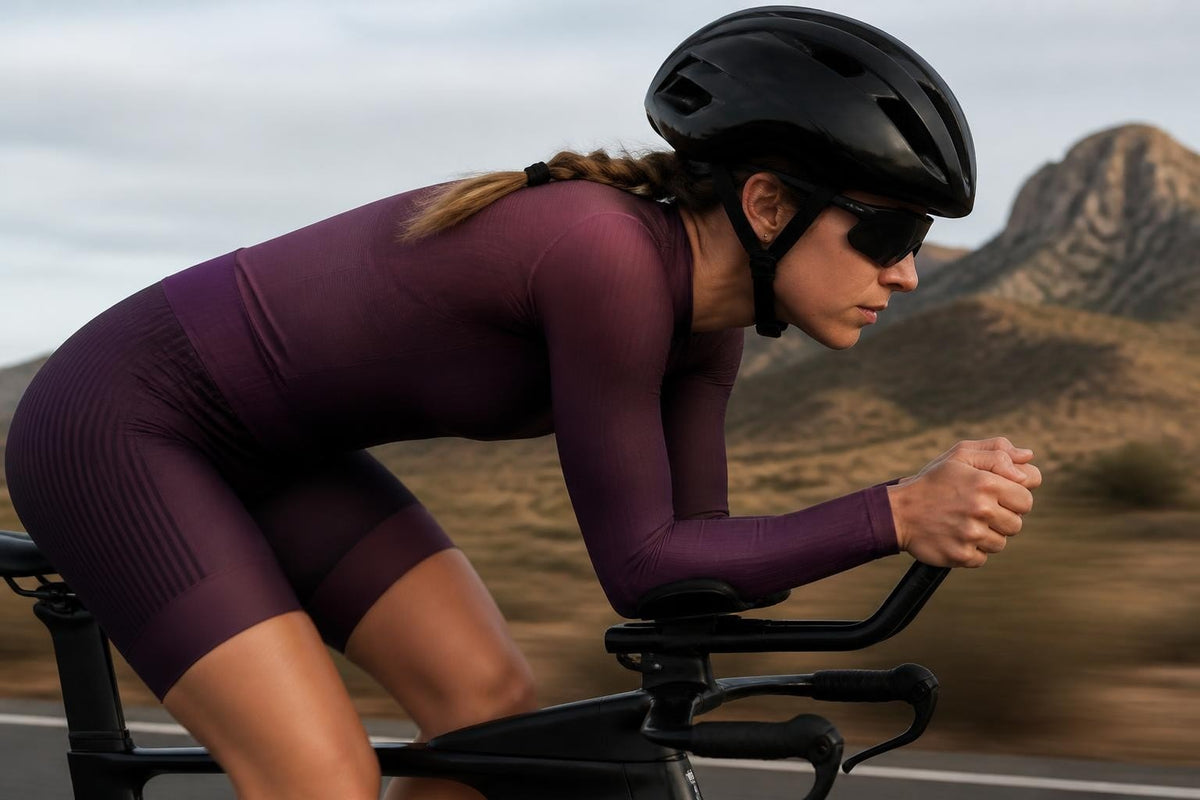
The women's cycling skinsuit represents one of the most specialized pieces of equipment in competitive cycling, combining aerodynamic efficiency with body-specific engineering. Unlike traditional jersey-and-bib combinations, a skinsuit integrates upper and lower garments into a single streamlined unit designed to minimize drag, eliminate fabric bunching, and provide a second-skin fit. For female cyclists competing in time trials, track events, or triathlon bike legs, understanding the technical considerations behind skinsuit design can translate directly into measurable performance gains. From fabric selection and panel construction to chamois placement and regulatory compliance, every detail matters when racing against the clock.
Understanding the Aerodynamic Advantage of Skinsuits
Aerodynamic drag accounts for approximately 70-90% of total resistance at racing speeds, making it the single largest factor affecting cycling performance. The womens cycling skinsuit addresses this challenge through seamless construction, engineered fabric placement, and body-conforming fit that traditional two-piece kits cannot match.
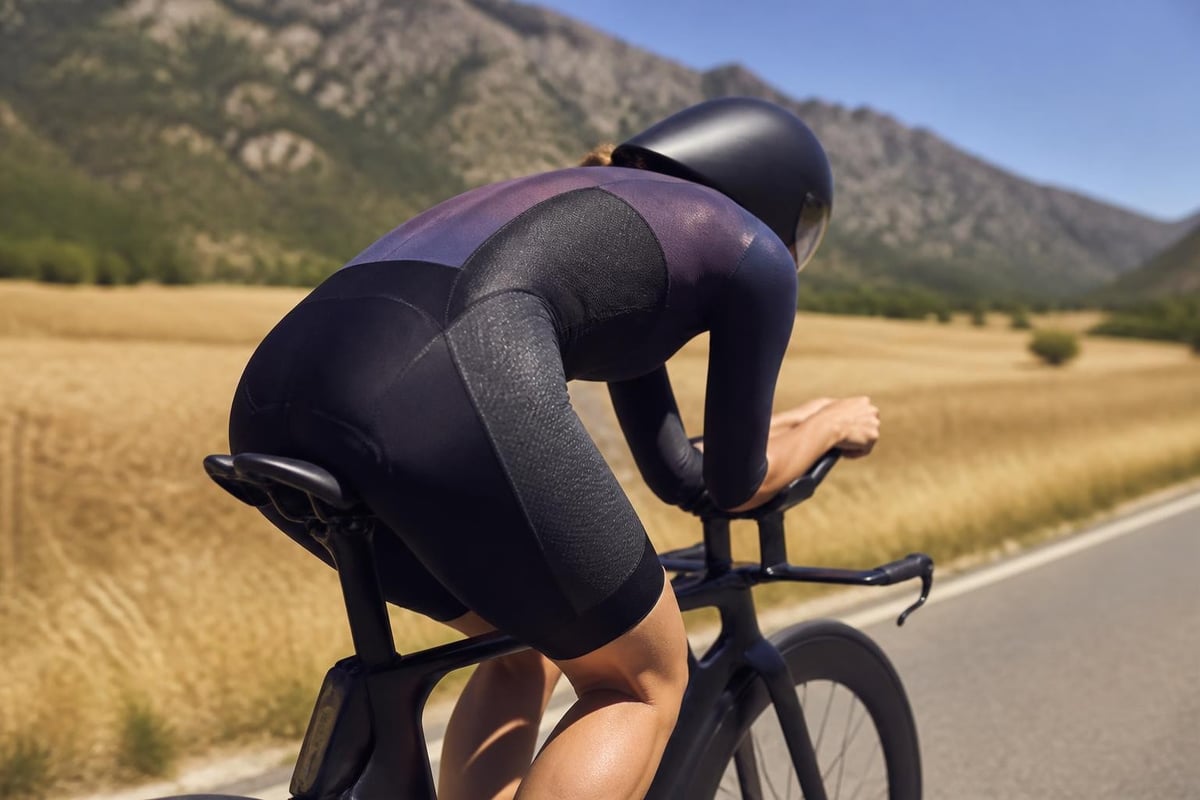
Wind tunnel testing has demonstrated that eliminating the gap between jersey and shorts can save 5-15 watts at threshold power, depending on rider position and speed. Recent computational fluid dynamics research confirms that even minor fabric wrinkles or seam placement changes can create measurable drag penalties across the torso and legs.
Fabric Technology and Surface Treatments
Modern skinsuits utilize multiple fabric types strategically positioned across different body zones:
- Dimpled or textured fabrics on the shoulders and upper arms trip airflow into a turbulent boundary layer, reducing separation
- Smooth lycra blends across the torso maintain close contact with skin
- Compressive knits on the legs reduce muscle vibration while maintaining aerodynamic profiles
- Lightweight mesh panels in low-airflow zones (underarms, lower back) enhance breathability
The choice between smooth and textured surfaces depends on the rider's position, event duration, and wind conditions. Professional teams often conduct individual wind tunnel testing to determine optimal fabric placement for each athlete's unique body shape and riding posture, as highlighted in CyclingNews coverage of pro team equipment testing.
Position-Specific Design Considerations
Time trial and track positions create distinct aerodynamic requirements. A womens cycling skinsuit designed for pursuit racing emphasizes shoulder and upper back aerodynamics to optimize the aggressive forward lean, while road time trial suits balance aerodynamics with comfort for 30-60 minute efforts.
| Event Type | Primary Aero Zone | Fabric Priority | Fit Tolerance |
|---|---|---|---|
| Track Pursuit | Shoulders, upper back | Maximum compression | Extremely tight |
| Road TT | Full torso, arms | Balanced aero/comfort | Race-tight |
| Triathlon | Legs, lower back | Breathability focus | Moderate compression |
Female-Specific Fit Engineering
Unlike men's skinsuits adapted with cosmetic changes, properly engineered women's cycling skinsuits account for fundamental differences in body geometry, muscle distribution, and biomechanics. These considerations extend far beyond simple sizing adjustments.
Torso and Shoulder Construction
Female cyclists typically have proportionally longer torsos relative to leg length compared to male riders, requiring adjusted panel lengths and strategic seam placement. The shoulder-to-waist ratio also differs significantly, necessitating:
- Narrower shoulder straps that distribute pressure without cutting into tissue
- Contoured chest panels that accommodate breast tissue without compression or excess fabric
- Adjusted side panel angles that follow the natural waist-to-hip transition
- Extended torso length to prevent riding up during aggressive positions
Chamois Design and Placement
The chamois pad in a womens cycling skinsuit requires careful engineering to address female-specific anatomical needs. Research published in a PubMed-indexed study on female-specific cycling pads demonstrates that women experience different pressure distribution patterns and require distinct foam densities and channel placements compared to male riders.
High-quality women's skinsuits incorporate:
- Wider sit-bone support zones with graduated density foam
- Anatomically shaped central channels that reduce soft-tissue pressure
- Seamless construction at critical contact points
- Antibacterial treatments and moisture-wicking surface materials
The chamois should be positioned slightly forward compared to men's shorts, accounting for differences in pelvic tilt and saddle contact patterns during aggressive time trial positions.
Sleeve and Leg Length Options
Competitive skinsuits are available in multiple sleeve and leg configurations, each offering distinct advantages:
Sleeve options:
- Sleeveless (maximum ventilation, slightly higher drag)
- Short sleeve (UCI-compliant, balanced performance)
- Long sleeve (cooler conditions, maximum aerodynamics)
Leg length options:
- Mid-thigh (track sprint, maximum leg cooling)
- Knee-length (standard road TT)
- Full-length (track endurance, cold weather road events)
Understanding cycling aerodynamics and fit optimization helps riders select the appropriate configuration for their specific event and conditions.

UCI Regulations and Competition Compliance
For riders competing in sanctioned events, understanding regulatory requirements is essential. The UCI's technical regulations for clothing specify precise requirements for skinsuits used in competition, including fabric thickness limits, seam placement restrictions, and permissible design elements.
Key Regulatory Requirements
The UCI mandates that all racing skinsuits must:
- Maintain fabric thickness below specified limits (typically 1.0-1.5mm for main body panels)
- Use smooth transitions between different fabric types without raised edges
- Avoid any three-dimensional elements that could act as aerodynamic devices
- Follow strict guidelines for sponsor logo placement and sizing
Recent debates around innovations like chest fairings, covered in Cycling Weekly's analysis of aero aids, highlight the ongoing tension between technological advancement and regulatory fairness in equipment design.
Logo and Branding Placement
The UCI's jersey and skinsuit visual guidelines provide detailed technical drawings showing exactly where sponsors, team names, and national identifiers must be positioned. For teams working with custom manufacturers, these specifications must be incorporated during the design phase to ensure competition eligibility.
Custom apparel manufacturers that specialize in competitive cycling understand these requirements thoroughly. At CCN Sport, our advanced sublimation process allows precise graphics placement while maintaining UCI compliance, ensuring your Custom Cycling Apparel meets all regulatory standards without compromising design vision.
Material Selection and Climate Considerations
Choosing the right fabric blend for a womens cycling skinsuit depends heavily on the intended use case, environmental conditions, and event duration. Modern skinsuits employ sophisticated material science to balance competing demands.
Performance Fabric Characteristics
| Fabric Type | Primary Benefit | Best Conditions | Trade-off |
|---|---|---|---|
| Lycra/Spandex blend | Excellent compression, recovery | Temperate, short events | Limited breathability |
| Polyester mesh panels | Superior ventilation | Hot, humid conditions | Slight aero penalty |
| Merino-synthetic blend | Temperature regulation | Variable conditions | Higher cost, special care |
| Ceramic-treated fabrics | Infrared reflection, cooling | Extreme heat | Limited long-term durability |
Temperature Management Strategies
Unlike road races where riders can adjust clothing mid-event, time trials and track events require pre-race commitment to a specific kit configuration. Experienced riders consider:
- Starting temperature versus expected conditions at finish time
- Core body temperature during sustained threshold efforts (typically rises 2-3°C)
- Event duration and whether initial comfort or sustained performance matters more
- Recovery timeline if racing multiple events in a competition block
For hot conditions, strategic mesh panel placement under the arms, across the lower back, and along the inner thighs can dramatically improve heat dissipation without significant aerodynamic cost. In contrast, cold-weather skinsuits may incorporate thermal fleece linings in low-airflow zones while maintaining aero fabrics on wind-facing surfaces.
Fit Testing and Personalization Process
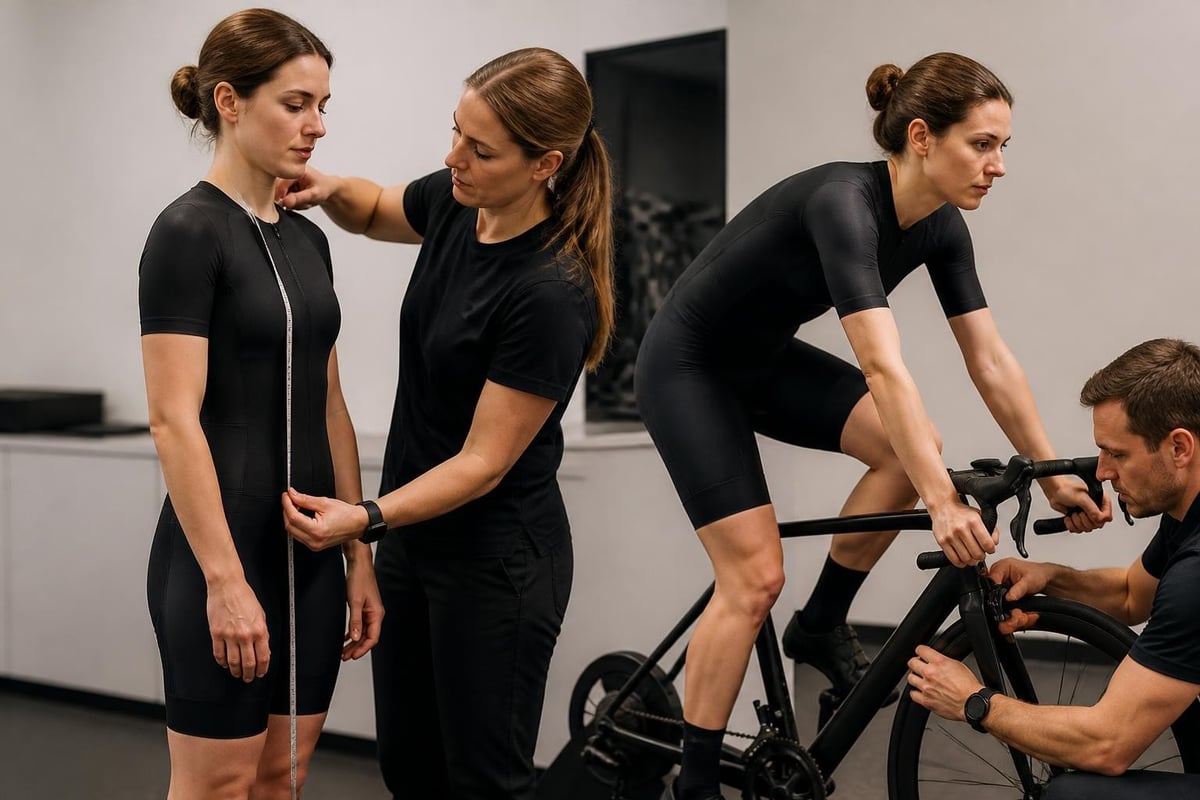
Achieving optimal performance from a womens cycling skinsuit requires methodical fitting and testing. Unlike casual cycling apparel where comfort dominates, racing skinsuits prioritize aerodynamics and power transfer, often at the expense of initial comfort.
Critical Measurement Points
Professional fit sessions capture specific measurements that standard sizing charts cannot accommodate:
- Shoulder width (actual bone-to-bone, not clothing size)
- Torso length (C7 vertebra to saddle contact point in riding position)
- Chest circumference at multiple points to ensure proper panel shaping
- Hip-to-waist ratio for optimal side panel construction
- Arm length from shoulder to wrist in time trial position
- Inseam measured in riding position, not standing
These measurements should be taken while wearing minimal undergarments and ideally in the rider's competition position to account for how the body changes shape when on the bike.
On-Bike Position Evaluation
Static measurements provide a starting point, but the true test occurs in riding position. A properly fitted womens cycling skinsuit should:
- Create no visible wrinkles or fabric bunching across the back when in aero position
- Maintain complete chamois contact without shifting during pedaling
- Allow full range of motion without binding at shoulders or hip flexors
- Stay in place without constant adjustment, even during maximum efforts
Research shows that individual aerodynamic and physiological optimization requires testing actual performance outcomes, not just visual assessment. Riders investing in high-end skinsuits often conduct coast-down tests or use power meters to quantify differences between suit options.
Break-In Period and Adaptation
Premium skinsuits typically require 2-3 rides before reaching optimal performance. The fabrics gradually conform to individual body contours, and riders adapt to the compression feel. Plan initial training rides in the skinsuit before race day to:
- Verify chamois comfort during sustained efforts
- Confirm no chafing points develop over time
- Test the suit in expected race conditions
- Build confidence in the equipment before competition
Care and Maintenance for Longevity
High-performance skinsuits represent significant investments, often ranging from several hundred to over a thousand dollars for custom or team-issue versions. Proper care extends their functional lifespan and maintains performance characteristics.
Washing and Drying Guidelines
Sublimated graphics and technical fabrics require specific care protocols:
- Rinse immediately after use in cold water to remove salt and body oils
- Hand wash or use delicate machine cycle in lukewarm water (never hot)
- Use sport-specific detergents designed for technical fabrics
- Avoid fabric softeners, which coat fibers and reduce moisture-wicking
- Air dry flat or hung gently, never in direct sunlight or heated dryers
- Store unfolded to prevent permanent creases in compression panels
The sublimation printing process bonds dye directly to fabric fibers, making properly printed designs virtually permanent. At CCN Sport, our advanced sublimation process ensures graphics remain vibrant through hundreds of wash cycles when proper care protocols are followed.
Inspecting for Performance Degradation
Even with excellent care, skinsuits eventually lose performance characteristics:
Signs of replacement need:
- Loss of compression (fabric feels loose or saggy)
- Visible pilling across high-friction zones
- Elastic degradation in arm or leg openings
- Chamois compression loss or permanent deformation
- Seam separation or stitching deterioration
Professional riders typically replace race skinsuits every 6-12 months of regular use, while recreational competitors may extend this to 2-3 years depending on frequency and care.
Custom Design Considerations for Teams
Team skinsuits present unique opportunities to create cohesive visual identity while optimizing performance for multiple riders with varying body types and preferences.
Design Elements That Work
Successful team skinsuit designs balance aesthetics with function:
- Bold, high-contrast graphics that remain visible at racing speeds and in photographs
- Strategic color blocking that flatters various body types and doesn't emphasize unflattering areas
- Sponsor integration that meets contractual requirements while maintaining visual appeal
- Sublimation-friendly designs that avoid complex gradients in areas of high fabric stretch
Sizing Strategy for Team Orders
Teams ordering multiple skinsuits face the challenge of accommodating diverse body types within standardized size runs. Best practices include:
- Collect detailed measurements from all team members using a standardized protocol
- Order sample sizes for riders at the extremes of your size range
- Conduct fit sessions with samples before finalizing the bulk order
- Consider offering multiple leg or sleeve length options within the same torso size
- Plan for 10-15% buffer inventory in most common sizes for new members or replacements
Working with manufacturers experienced in custom team orders streamlines this process. CCN Sport's team of over 250 skilled craftspeople brings expertise to sizing, customization, and quality control, ensuring consistent fit across large team orders while accommodating individual needs.
Performance Testing and Validation
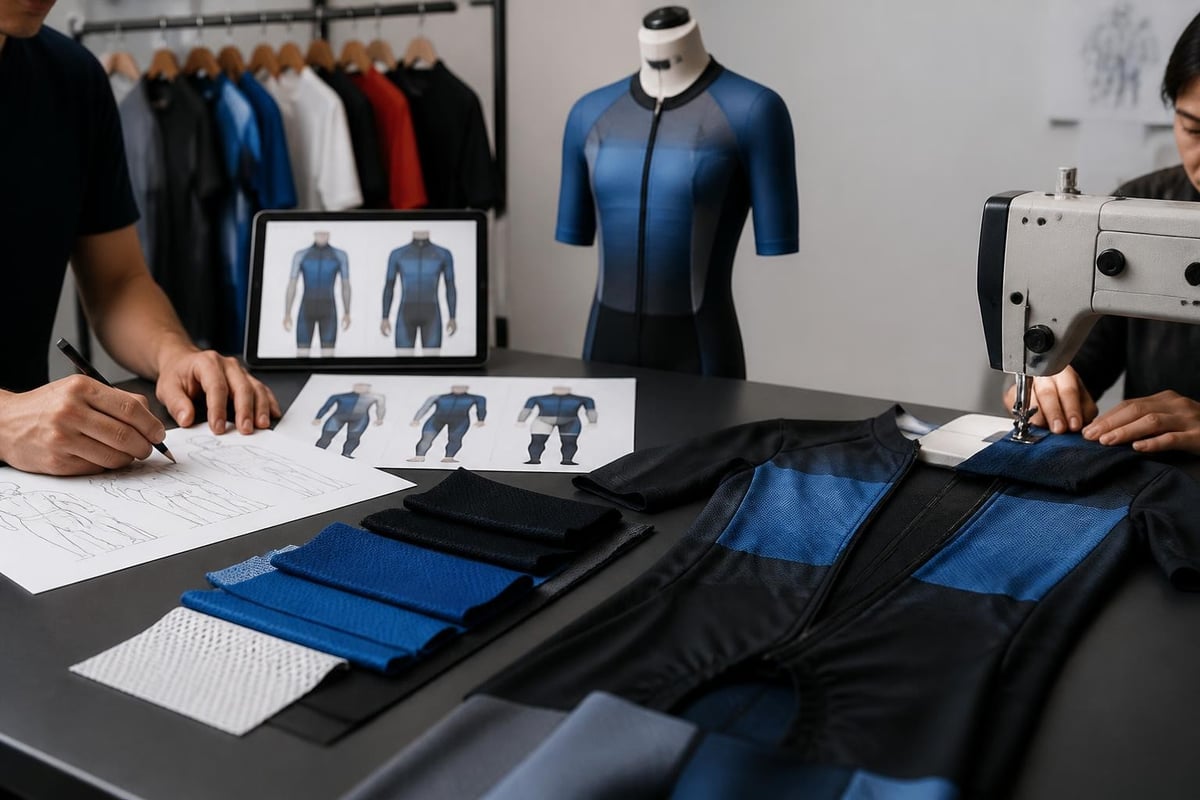
The gap between perceived and actual performance improvement makes objective testing essential when investing in a womens cycling skinsuit. While wind tunnel access remains limited for most riders, practical field testing can provide valuable insights.
Power-Based Testing Protocol
Riders with power meters can conduct repeatable tests:
- Select a flat, straight course approximately 2-3 kilometers long with minimal traffic
- Warm up thoroughly to ensure consistent physiological state
- Complete 4-6 runs at steady power output (typically 90-95% of FTP)
- Alternate between test skinsuit and baseline kit
- Record average speed for each run, accounting for wind direction
- Compare results using paired statistical analysis
Even small improvements of 0.3-0.5 km/h at the same power output indicate meaningful aerodynamic gains that accumulate significantly over race distances.
Subjective Performance Markers
Beyond measured data, experienced riders track qualitative indicators:
- Reduced perceived effort at race pace
- Improved comfort during sustained aero positions
- Enhanced confidence in equipment choices
- Better thermoregulation during varying conditions
- Reduced post-race fatigue from optimized muscle support
Emerging Technologies and Future Trends
The evolution of women's cycling skinsuits continues to accelerate as materials science, manufacturing techniques, and our understanding of aerodynamics advance.
Active Cooling Systems
Experimental designs incorporate phase-change materials and enhanced airflow channels that activate at specific temperatures. While still primarily in prototype phases, these technologies show promise for events in extreme heat where traditional cooling strategies prove insufficient.
Smart Fabric Integration
Emerging textiles with embedded sensors can monitor:
- Core body temperature and heat stress indicators
- Muscle activation patterns and fatigue levels
- Hydration status through bio-impedance measurement
- Position optimization through pressure mapping
As these technologies mature and regulations evolve, the distinction between equipment and wearable technology may blur significantly.
Sustainability Initiatives
Growing environmental awareness is driving development of recycled and bio-based performance fabrics. While early versions showed performance compromises, 2026 materials increasingly match petroleum-based fabrics in compression, durability, and aerodynamic characteristics while reducing environmental impact.
Selecting the right womens cycling skinsuit involves balancing aerodynamics, fit, regulations, and personal preferences to achieve maximum performance. Whether you're a track specialist chasing national records or a triathlete seeking every advantage in the bike leg, the right equipment makes measurable differences.
At CCN Sport, our precision manufacturing combines traditional craftsmanship with cutting-edge sublimation technology to deliver skinsuits that perform at the highest level. Our team's 20+ years of experience ensures every detail-from UCI-compliant design to female-specific fit engineering-meets the exacting standards competitive cycling demands. Transform your vision into race-winning reality with equipment built to perform and last.

Share:
Aero Jersey Review for Riders Chasing Speed
Mountain Bike Winter Clothing: Essential Guide for 2026