

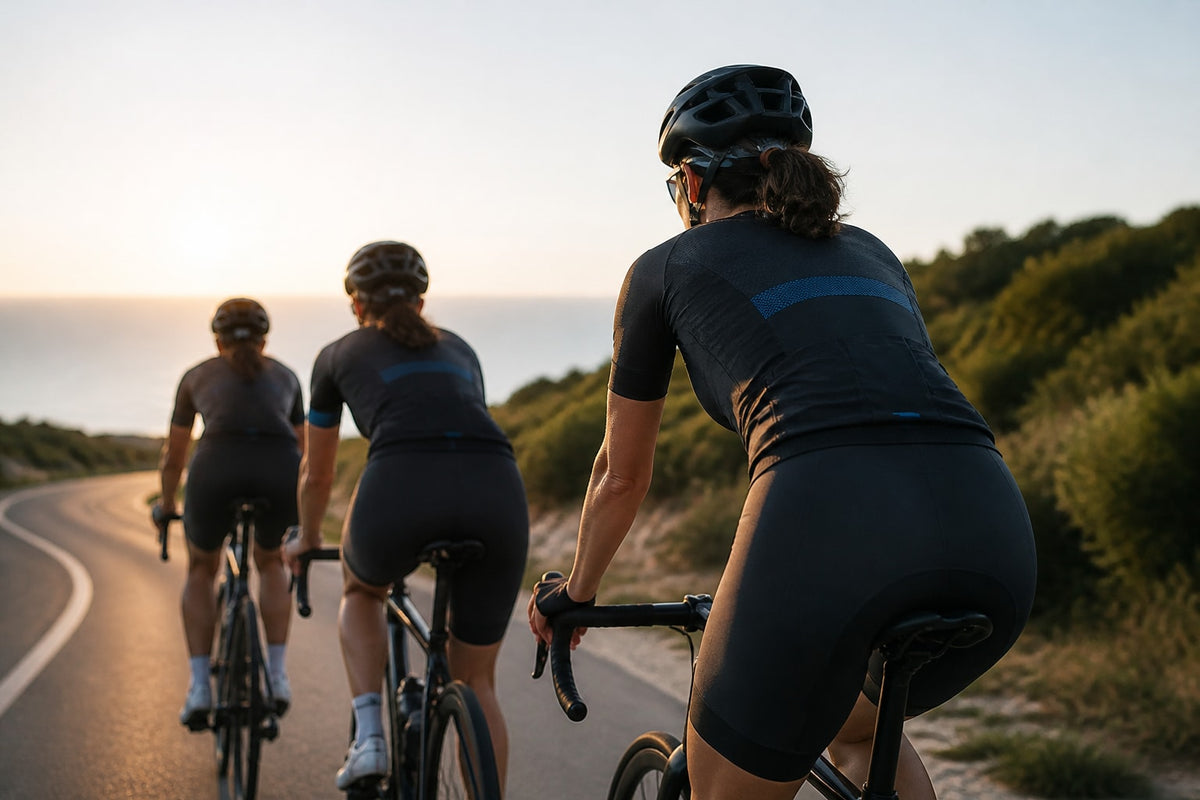
Womens biking comes down to three decisions: a bike frame that fits your proportions, a saddle matched to your sit bones, and kit that stays comfortable over long hours. Get those right and everything else, from speed to endurance, becomes easier to build.
This guide walks through each decision in order, starting with whether you need a women-specific bike at all. It then covers sizing, saddles, handlebar and brake setup, and the apparel that suits racing, club rides and triathlon training. If you manage a club or team, the final sections explain how to organize matching kit for a mixed group of riders.
Do You Need a Women-Specific Bike?
Not always: some riders fit well on unisex bikes, while others benefit from geometry and components designed around typical female proportions. BikeRadar reports that some brands use women-specific geometry, some use unisex sizing, and some use unisex frames with specification changes. Smaller 650b wheels are one approach on some smaller frames.
The difference usually appears in a handful of contact points:
- Frame proportions: Proportions vary between riders, and a shorter top tube may suit some women with a shorter torso relative to their legs.
- Handlebar width and reach: Narrower bars and shorter reach reduce strain on the shoulders and hands.
- Saddle shape: Pelvic structure varies, so saddle width and cutout design matter more than the label on the box.
- Crank length and brake lever reach: Shorter cranks and levers suit smaller hands and legs.
BikeRadar's explainer on women's and unisex bikes covers how these factors interact. The practical takeaway is to judge a bike by how it fits you, not by whether it carries a women's designation. Some riders choose a unisex frame and then adjust the saddle, bars and stem to suit them.
How to Choose the Right Bike Type
The right bike type is the one that matches where you ride most often and how hard you plan to push.
| Bike type | Best suited to | Typical riding position |
|---|---|---|
| Road bike | Club rides, racing, long-distance training | Low and aerodynamic |
| Triathlon or time-trial bike | Triathletes and time-trial events | Aggressive, forward, aero bars |
| Gravel bike | Mixed surfaces and endurance rides | Moderate, more upright |
| Mountain bike | Trails and off-road racing | Upright, wide bars |
| Endurance road bike | Long days with a relaxed fit | Taller head tube, less stretch |
For competitive road cyclists, a race-geometry road bike offers the best power transfer and handling. Triathletes need a bike that allows a sustainable aero position, which makes fit even more important than frame brand. If your riding includes sportives or multi-day events, an endurance geometry can reduce fatigue without costing much speed.
Finding Your Frame Size
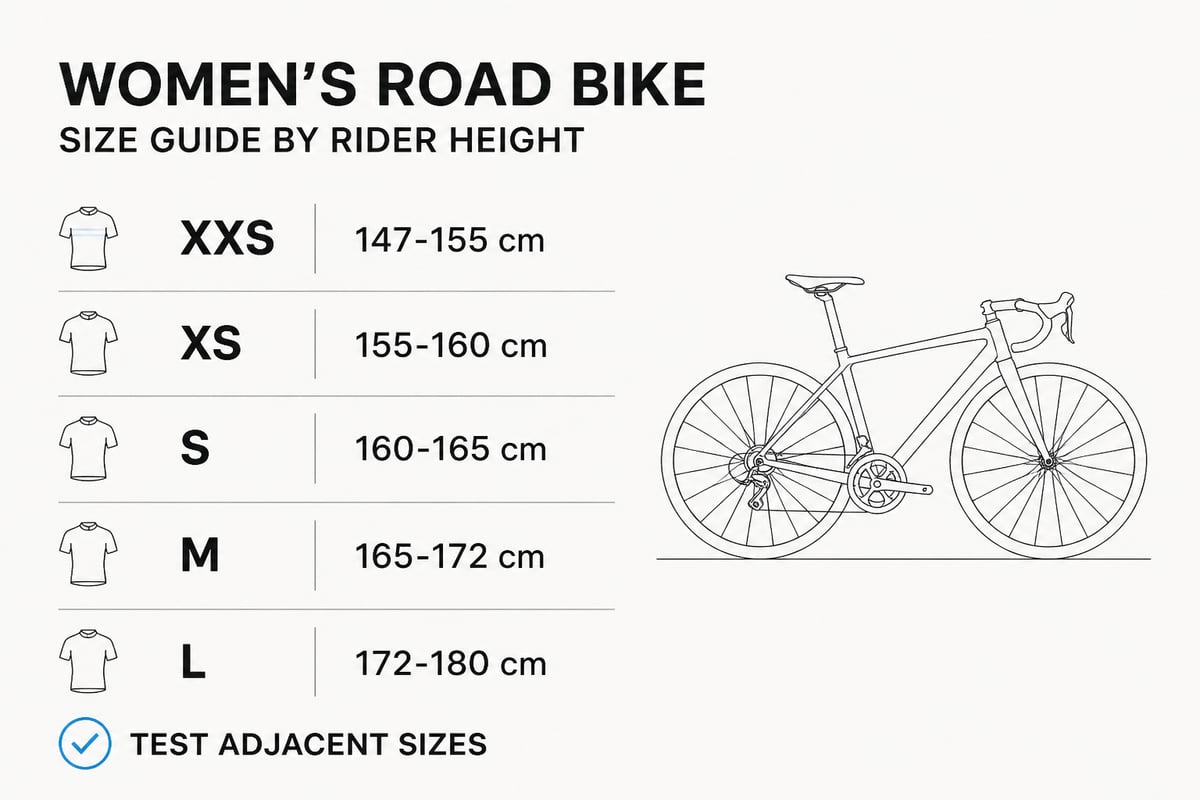
Frame size starts with height, but it should be confirmed with a test ride or a professional fit. For women's road bikes, BikeRadar's size chart suggests:
- XXS: riders 147 to 155 cm tall
- XS: 155 to 160 cm
- S: 160 to 165 cm
- M: 165 to 172 cm
- L: 172 to 180 cm
For women's mountain bikes, the same source suggests XS for 148 to 158 cm, S for 158 to 168 cm, M for 167 to 178 cm, and L for 178 to 185 cm or taller. These are starting points, and BikeRadar recommends trying nearby sizes, since the overlaps are deliberate.
Height alone misses inseam, torso length and arm length. If you fall between sizes, favor the one that lets you set a comfortable reach with a standard stem length rather than relying on an extreme stem to compensate.
Choosing a Saddle That Fits Your Anatomy
Saddle comfort depends on sit-bone width, not on height or weight. Liv Cycling recommends a width that supports the sit bones without compressing them together while pedaling.
A practical rule comes from Bicycling: choose a saddle about 25 mm wider than your sit-bone measurement. A 120 mm sit-bone width, for example, points to a saddle around 145 mm wide.
Once the saddle is chosen, position matters as much as shape:
- Set saddle height so your knee keeps a slight bend at the bottom of the pedal stroke.
- Keep the saddle level or tilted very slightly nose-down, then adjust in small steps.
- Adjust fore-aft position so your knee sits over the pedal axle when the cranks are horizontal.
- Ride for a week before changing anything else, since small changes take time to judge.
Setting Up Handlebars, Brakes and Cockpit
A comfortable cockpit prevents numb hands, sore shoulders and tight necks. Start with handlebar width: bars roughly matching your shoulder width give stable steering and open the chest. Bar width should be chosen from your own shoulder measurement rather than a standard size. Bars that are too wide pull the elbows out and tighten the shoulders, while bars that are too narrow make the steering twitchy and restrict breathing on climbs.
Then check brake lever reach. If you cannot comfortably pull the levers from the hoods while keeping your fingers wrapped around the bar, adjust the reach setting or choose levers with a shorter throw. A good test is to ride the hoods and pull each lever with one or two fingers; you should be able to brake firmly without sliding your hand forward. Stem length and spacers fine-tune reach and drop, and a shorter stem can bring the hoods closer without changing the frame. Crank length affects pedaling comfort for riders with shorter legs, since a crank that is too long forces the knee up high at the top of the stroke.
Make one change at a time and ride long enough to feel the result. Tape or marks on the seatpost and stem help you return to a known setting if a change does not work.
What to Wear: Kit That Performs Over Distance
Performance kit for women should fit close to the body, move moisture away from skin and stay comfortable in the saddle for hours. The biggest differences come from chamois design, cut and fabric.
- Bib shorts: A women-specific chamois is shaped for female anatomy, and bibs remove the waistband pressure that shorts create. Look at women's bib shorts with flat seams and a supportive, breathable pad.
- Jerseys: A race-cut jersey reduces flapping at speed, while rear pockets should hold food, a phone and a spare layer. Browse women's cycling jerseys for fit and fabric options.
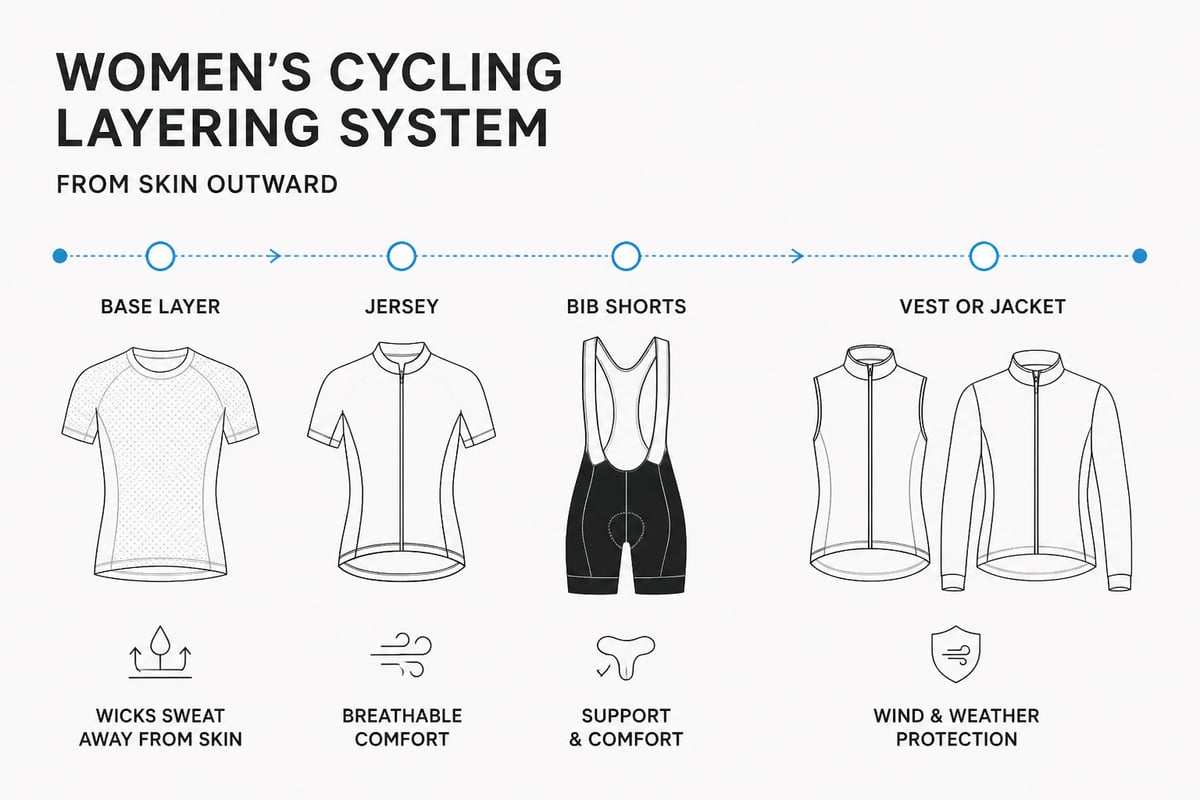
- Layers: A base layer manages sweat, and a vest or light jacket covers early starts and descents. Women's jackets and vests suit changeable weather.
- Helmet, gloves, shoes: Helmet fit depends on head shape and strap geometry, and gloves with light padding cut vibration on long rides.
For a deeper look at fabrics and fit, CCN Sport's articles on women's biking apparel and women's biking clothes cover the choices in more detail.
Matching Kit for Clubs, Teams and Programs
Matching kit builds identity, makes a group easy to spot in a bunch, and simplifies sponsor visibility. The challenge for women's riders is fit: a single unisex pattern rarely serves a whole squad, so a team order should include women's cuts alongside men's.
CCN Sport produces custom cycling apparel in its own facilities in China and the Philippines, and its in-house design team builds kits to an aerodynamic, comfort and style brief. More than a dozen pro teams, national programs and elite clubs rely on CCN gear every season.
Ordering features such as crash reorders and size reorders can help teams manage the realities of racing seasons, when riders crash, change size or join mid-season. For current product details and ordering terms, check CCN Sport's product pages or contact page.
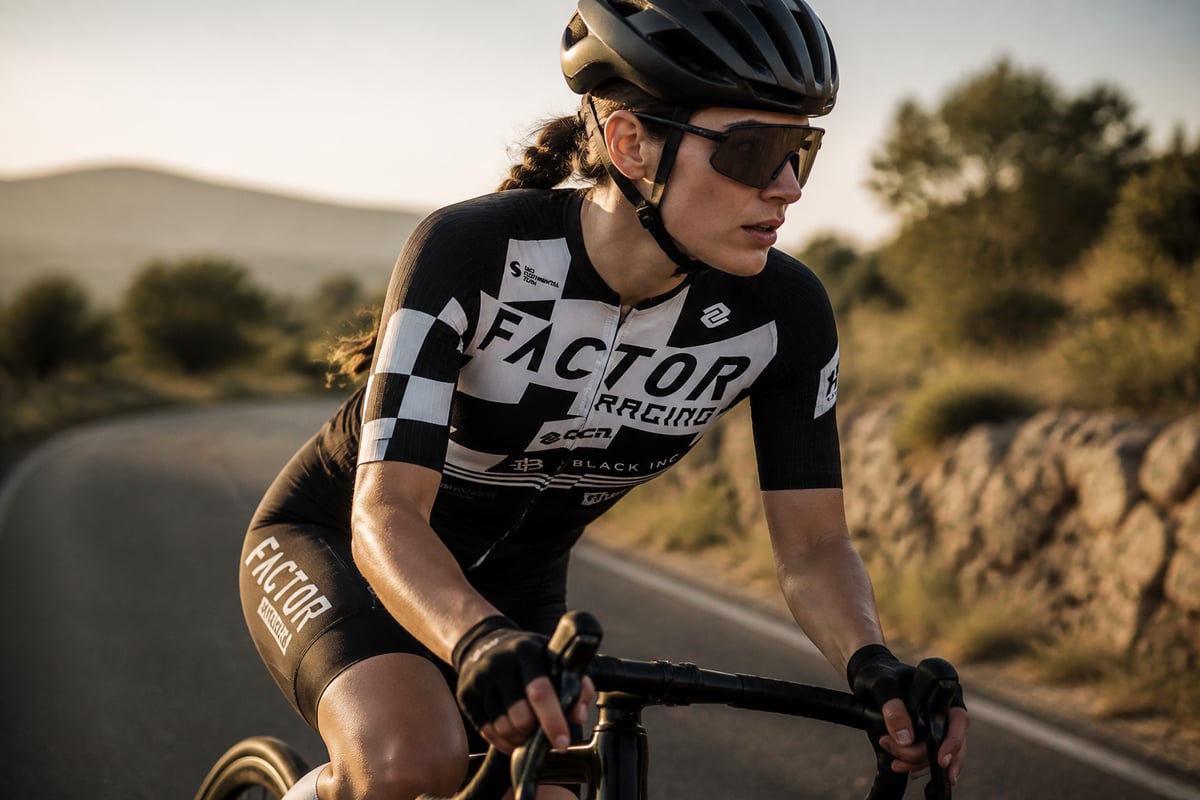
For a sense of what a race-tuned team kit looks like, the Factor Racing Team Kit pairs a race-focused fit with lightweight, breathable fabric, and it shows how a professional squad presents its identity on the road.
Planning a Team Order for Women Riders
A clean team order saves time and avoids reorders. Work through these steps before you submit a design:
- Collect measurements early. Ask each rider for chest, waist, hip and torso length instead of relying on guesses.
- Offer women's cuts to every female rider. Mixed cuts in one design keep the look consistent while fitting each rider properly.
- Choose the product range. Decide on jerseys, bibs, vests and base layers, and check whether riders want short or long sleeves for your climate.
- Finalize the design. Confirm logos, sponsor placements and colors with your committee before production, since custom products are non-refundable.
- Plan reorders. Keep a record of sizes so that replacements and new members can be matched later.
Working from a written spec protects the whole group, and a size log helps when you need to add riders next season.
Training and Riding Tips for Women Cyclists
Good equipment pays off only when it supports consistent riding. A few habits deliver most of the gains for road cyclists and triathletes:
- Build volume gradually. Increase weekly riding time in small steps and include an easier week every third or fourth week.
- Fuel during rides. Eating regularly on rides longer than an hour keeps power steady and recovery faster.
- Ride in a group. Club rides improve bike handling, pacing and confidence in a bunch.
- Strengthen your core and legs. Two short gym or bodyweight sessions per week support pedaling efficiency and reduce injury risk.
- Recheck your fit. Revisit saddle height and cleat position after a change in shoes, flexibility or training load.
Many athletes also combine road riding with other training. Triathletes in particular should rehearse race kit and nutrition before event day, since untested gear is a common cause of discomfort.
Common Questions About Womens Biking
How do I know if my bike fits? You should reach the bars without overstretching, keep a slight bend in your elbows, and extend your legs fully without rocking your hips. Numbness, back pain or knee pain suggest an adjustment is needed. Pain in the hands or neck usually points to reach or bar height, while pain at the front of the knee often traces back to saddle height or fore-aft position. If adjustments do not resolve it, a professional fit can pinpoint the cause.
Should I buy a women-specific saddle? Choose by sit-bone width and comfort. Some riders prefer women-specific shapes, while others do better with a unisex saddle in the right width. Because width is set by sit-bone structure rather than height or weight, measure first and add roughly 25 mm to find a starting size.
What should a team order include? Plan for jerseys and bibs in women's cuts, optional layers such as vests or base layers, and a sizing log for future reorders. Recording each rider's size alongside the product it applies to makes replacements and new members much simpler to handle.
Can small clubs order custom kit? Yes. CCN Sport can work with small squads, so contact the team for current minimum order details.
Start by measuring your riders and drafting the pieces your club or team needs, from jerseys and bibs to base layers, so your design brief is complete before you speak with a manufacturer. CCN Sport can then turn that brief into race-ready apparel, and the Factor Racing Team Kit shows the standard of fit and fabric you can expect. When you are ready to move forward, start your custom kit with CCN Sport and bring your team's vision to the road.

Share:
Cycling Chamois Guide for Better Long Rides
Team Stores That Keep Cycling Kits Moving