

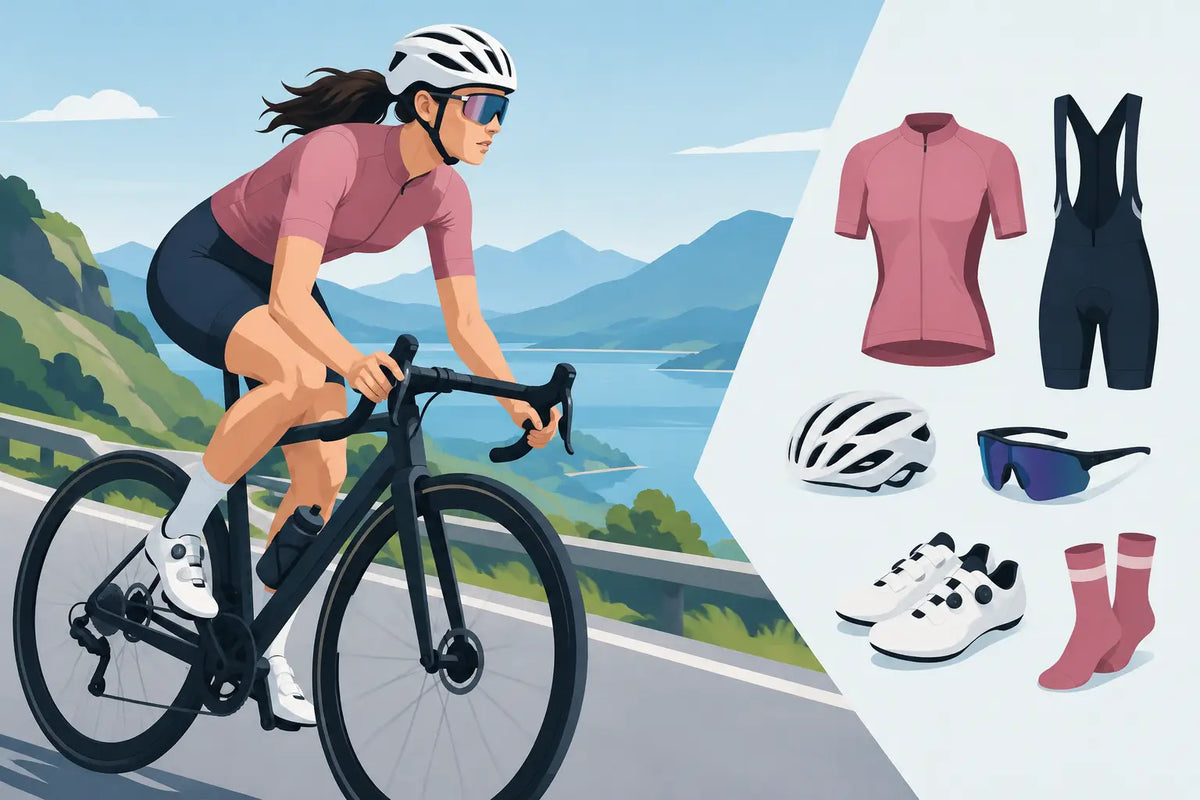
A good race kit disappears once the effort starts. It stays planted through hard accelerations, keeps its shape when you are low over the bars, and lets you focus on the wheel ahead instead of a chafing strap or shifting chamois. This women's cycling racewear guide breaks down what creates that feeling, from fit and fabrics to the details that matter after mile 50.
Racewear is not simply tighter cycling clothing. It is apparel built to manage speed, heat, movement, and fatigue under pressure. The best setup should feel precise without feeling restrictive, whether you are lining up for a criterium, racing a road stage, riding gravel at threshold, or training with your club.
Start With Fit, Not the Size Label
Women's racewear should follow a riding position, not a standing pose. A jersey can feel snug across the shoulders when you first pull it on, then sit perfectly once you reach for the bars. Bib shorts can feel firm around the waist and thighs before a ride, then become supportive rather than distracting when you begin pedaling.
That is why the size chart is a starting point, not the final answer. Use your chest, waist, hip, and inseam measurements, then consider how you prefer a kit to fit. A race cut is intentionally close to the body, minimizing loose fabric that can catch air or bunch under wind layers. If you are between sizes, the right choice depends on your proportions and use case. Riders with a longer torso may prioritize jersey length. Riders with stronger quads may need more room through the leg, even if their waist measurement suggests a smaller size.
Fit also changes across categories. A skinsuit should feel like a second skin because it is designed for speed and stability. A short-sleeve jersey can allow slightly more flexibility while still staying aerodynamic. For long endurance events, many riders prefer a performance fit that retains a clean profile without the compression of an all-out race piece.
Check Your Kit in the Riding Position
Before removing the tags, get on your bike or mimic your riding posture. Check that the jersey hem remains low enough at the back, the pockets are reachable, and the shoulders do not pull when your arms are extended. In bib shorts, look for even compression, flat seams, and leg grippers that stay in place without creating pressure points.
A few minutes of movement tells you more than a mirror does. Squat, reach, pedal on a trainer if possible, and assess the kit after 15 minutes rather than 15 seconds.
Choose Bib Shorts Around the Chamois
For most racers, bib shorts are the most consequential piece of kit. A premium jersey can improve comfort and aerodynamics, but a poorly matched chamois can derail a race. The goal is not the thickest pad. It is a pad with the right density, shape, and placement for your position on the saddle.
A race-focused chamois should support the sit bones while remaining low-profile enough to move naturally as cadence rises. Excess bulk can trap heat, hold moisture, and feel intrusive during repeated transitions from seated efforts to sprinting. Multi-density foam and targeted relief channels can reduce pressure where it builds most, especially on longer rides.
Women-specific bib shorts should also account for pelvic anatomy and the way a rider contacts the saddle. This is not a cosmetic distinction. Chamois shape, seam placement, and panel construction affect comfort over time. If you regularly experience numbness, friction, or pressure, do not assume more miles are the answer. Reassess saddle setup, short fit, and chamois design together.
The bib upper matters as much as the short itself. Wide, breathable straps distribute tension better than narrow straps, while a supportive front and back panel keeps the pad from moving under load. Bathroom-break convenience is worth considering, particularly for long events. Some designs use stretch panels or quick-release constructions that make stops easier without compromising a secure race fit.
Build a Jersey System for Conditions and Effort
Your jersey needs to handle more than the temperature at the start line. Racing creates rapid swings in body heat. A cool neutral roll-out can become a high-output climb, then a fast, exposed descent. The right fabric system moves moisture away from the skin, dries quickly, and avoids feeling heavy when the pace is high.
For warm conditions, prioritize light, open-knit fabrics through the torso and sleeves that stay close to the body. Mesh panels can increase ventilation where heat accumulates, while a full-length zipper gives you direct control on long climbs. A structured collar and well-finished sleeve hem help preserve the jersey's shape when you are moving at speed.
For cooler races, start with a close-fitting base layer rather than immediately reaching for a heavier jersey. A base layer regulates the microclimate next to your skin and keeps sweat from cooling you too quickly on descents. Add arm warmers, a vest, or a lightweight jacket based on the forecast and race duration. These pieces provide useful flexibility because they can be removed or opened as effort rises.
Pocket design deserves attention. Three rear pockets should sit flat when empty but remain stable when loaded with nutrition, a tube, and a light layer. If pocket contents bounce, the jersey can pull upward and become distracting. For race day, carry only what the course and support plan require.
Aerodynamics Are Built From Details
Aerodynamic gains do not come from one magic fabric. They come from a system that fits cleanly at speed. Wrinkled sleeves, loose hems, sagging pockets, and a jersey that balloons at the chest all create unnecessary drag. More importantly, they can make a rider feel less composed when the pace gets aggressive.
Racewear uses panel shaping to follow the body in a forward position. Set-in sleeves, low-profile seams, raw-cut edges, and textured fabrics can all contribute to a smoother airflow profile. The benefit is most noticeable when the kit stays stable. A sleeve that rides up or a bib leg that twists has already lost the point of its design.
There is a trade-off. The most aerodynamic race cut may feel less forgiving than a club-fit jersey, especially if you are new to close-fitting apparel. That does not mean racewear should feel uncomfortable. It means it should be selected for your event, body shape, and performance goal. If comfort is compromised, you will not hold an aerodynamic position long enough to benefit from it.
Don't Ignore Coverage, Visibility, and Durability
Race-ready clothing has to work in real conditions, not only in a product photo. Dark colors may feel fast and look sharp, but contrast details and reflective elements can add valuable visibility during early starts, poor weather, and rides home after training. For hot events, lighter colors can reduce heat absorption. For muddy gravel or cyclocross, darker bib shorts may be easier to live with.
Fabric durability matters when a kit is used week after week. Look for materials that recover their shape, retain compression, and resist transparency when stretched. High-quality leg grippers should hold without relying on excessive silicone, which can irritate skin during longer rides. Flatlock or carefully bonded seams reduce friction in high-motion zones.
Care plays a role in lifespan. Wash racewear promptly after use, close zippers, turn garments inside out, and skip fabric softener. Heat is hard on elastic fibers, so air drying is the safer choice. A well-made kit deserves the same discipline you give your bike maintenance.
Women's Cycling Racewear for Teams and Clubs
For teams, racewear is both performance equipment and a shared identity. A coordinated kit creates a professional presence on the start line, but the real test is whether every rider can find a fit that works. Ordering one unisex cut and hoping for the best often leads to compromise. Women-specific patterns, size samples, and clear fit guidance help teams avoid that problem.
Custom racewear also needs to preserve function after the graphics are applied. Colors should remain sharp, logos should sit across stable panels, and the chosen garment platform should suit the discipline. A crit team may prioritize aerodynamic jerseys and race bibs. A gravel group may need more storage and tougher fabrics. A triathlon program has entirely different needs around swim-to-bike transitions and all-day comfort.
CCN Sport approaches custom production from the performance garment outward, so teams can build a distinct look without treating fit, chamois quality, and fabric choice as afterthoughts.
Make Your Race-Day Kit Predictable
Never make a new pair of bib shorts or a new skinsuit its first outing on race day. Test your complete setup in training, including socks, base layer, gloves, and outer layers. Learn where you store nutrition, whether the jersey pockets stay stable, and how the kit feels during your hardest efforts.
The right racewear will not replace fitness, tactics, or smart pacing. It will give those things room to show up. Choose gear that fits your body, matches your event, and stays dependable when the race stops being comfortable. Then you can put your attention where it belongs: on the next move.

Share:
Men's Road Cycling Jersey: Complete 2026 Buyer's Guide
Sale Cycling: Maximize Apparel Profits with Smarter Markdowns