

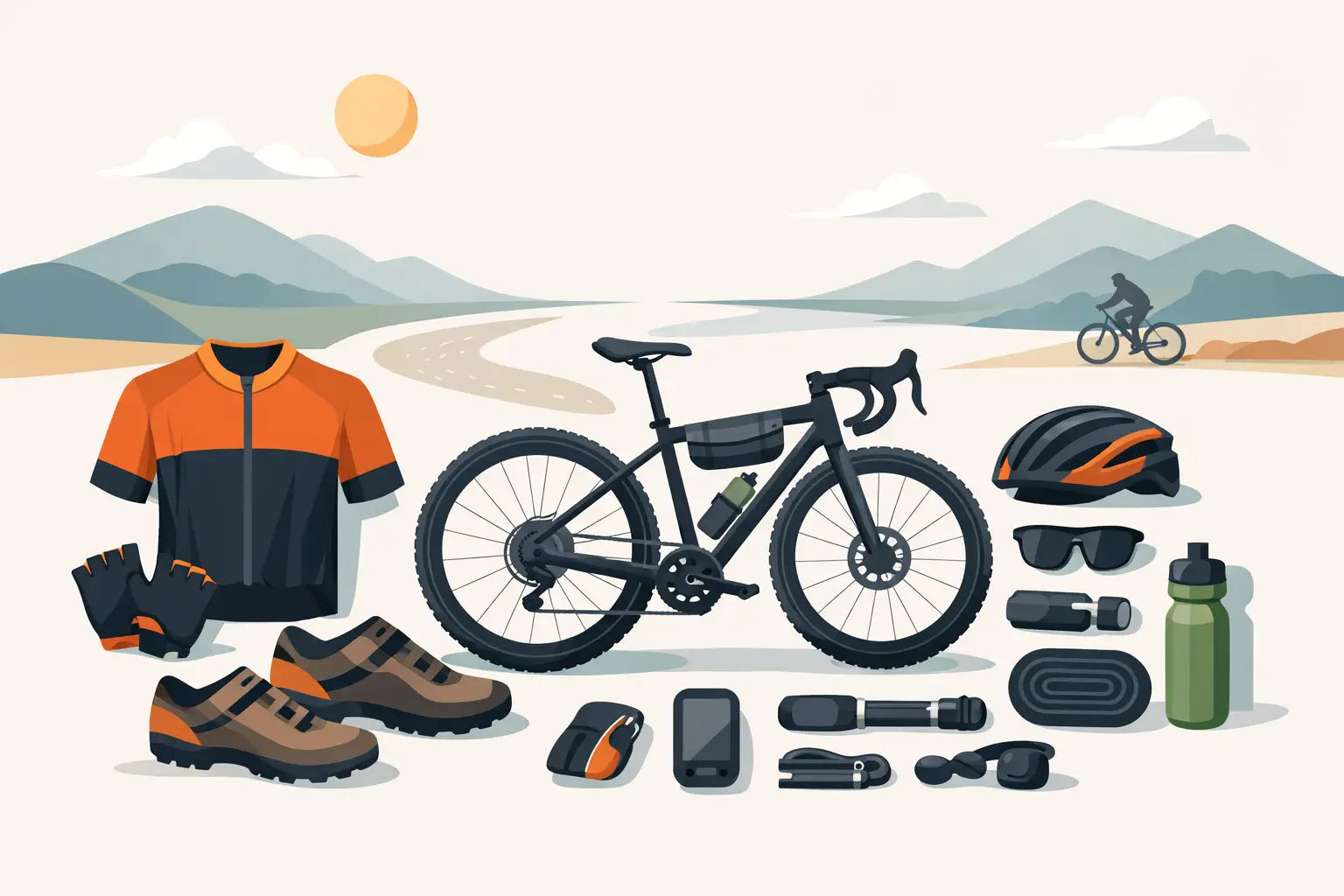
The first time a gravel ride runs long, the weak points in your setup show up fast. A jersey that works on smooth road miles can feel overloaded by hour three. Bibs that feel fine on a training loop can become a problem when the surface turns rough. Gravel cycling kit essentials are not about packing more. They are about wearing the right gear for unpredictable terrain, changing pace, and longer days in the saddle.
Gravel asks more from apparel than most road rides. You are dealing with vibration, dust, temperature swings, and the constant trade-off between speed and utility. That means your kit needs to manage movement, regulate temperature, and carry what you need without getting in the way. The goal is simple: stay comfortable enough to keep riding hard.
What makes gravel cycling kit essentials different?
Road kit is built around efficiency, close fit, and repeatable conditions. Gravel still rewards aerodynamic, well-fitted apparel, but the riding environment is less controlled. Surfaces change. Efforts spike on steep loose climbs, then settle on long open sectors. You may be hours from a resupply point. That changes what matters.
The best gravel setup balances three things: stability on the bike, comfort over rough ground, and practical storage. If one of those is missing, performance drops. An overly relaxed jersey can flap and shift when pockets are loaded. An aggressive race fit with no cargo support can leave you short on capacity. Heavy fabrics might feel secure early in the morning but become a liability once the temperature rises.
This is why fit remains the starting point. Gravel gear should move with the body, stay planted under load, and avoid pressure points that get amplified by constant chatter from the ground.
Start with bib shorts built for long, uneven miles
If there is one place to invest first, it is your bib shorts. Gravel puts repeated micro-impact into the saddle area, so chamois quality and bib stability matter more than flashy details. A good gravel bib should feel compressive without being restrictive, with straps that disappear once you are riding.
The chamois should support long seated efforts, but thicker is not always better. An overly bulky pad can bunch when you are shifting weight on loose terrain or climbing out of the saddle. What works best is a pad engineered for sustained contact, moisture management, and consistent support across mixed riding positions.
Leg grippers also deserve attention. On rough surfaces, shorts that creep up or twist create friction fast. A clean, stable leg finish helps keep the fit locked in place without hot spots. Durability matters too. Gravel riders spend more time brushing against dust, grit, and occasional trail-side obstacles, so fabric resilience is part of performance, not an afterthought.
Choose a jersey that can carry more without sagging
A gravel jersey has to do more than fit well. It needs usable storage. That usually means secure rear pockets, supportive fabric, and enough structure to handle food, tools, and a vest or arm warmers without bouncing.
This is where minimal road jerseys can fall short. If the pocket construction is too soft, the load pulls the jersey backward and changes the fit through the shoulders and chest. A better option is a technical jersey with a close performance cut and reinforced pocket support. Breathability still matters, especially on slower climbs where airflow drops, but the jersey also needs enough substance to hold shape under load.
Depending on the route, some riders prefer cargo bibs over relying on jersey pockets alone. That can be the smarter choice for technical terrain or events where pocket access needs to be quicker and more stable. There is no single correct answer. It depends on how much you carry, how aggressive the terrain is, and whether you want weight centered higher on the torso or lower on the thighs.
Layering wins on gravel
Conditions change quickly on open roads, forest sectors, and long descents. A kit that only works at one temperature will eventually work against you. The smarter approach is modular layering.
Start with a base layer that manages sweat instead of trapping it. Even in mild weather, this matters. Gravel often includes low-speed climbing and repeated effort changes, so moisture control is essential for keeping core temperature steady. A lightweight base layer helps on warm rides, while a slightly more insulating version makes sense when the start is cold and the finish is uncertain.
Add a packable vest or lightweight jacket when conditions call for it. Wind protection across the chest can make a major difference early in the ride or on long descents, but full insulation is not always necessary. The key is packability. If a layer is too bulky to stash easily, riders tend to leave it behind, which defeats the point.
Arm warmers and knee warmers still earn their place in gravel kit because they let you adapt without overhauling the whole setup. For shoulder-season riding, they often provide a cleaner solution than guessing wrong with a heavier jersey.
Gravel cycling kit essentials also include the contact points
Apparel gets most of the attention, but the supporting pieces matter just as much. Gloves are one of the biggest examples. On gravel, they are not just about grip. They reduce hand fatigue, improve control on washboard surfaces, and offer protection in the event of a slide. The right glove should feel secure and breathable, not bulky.
Socks are another detail that can change ride quality more than expected. Height is often a style choice, but fabric is functional. A sock that manages heat and moisture well will outperform a thicker option that holds sweat. On dusty rides, a taller cuff can also help reduce grit contact around the ankle.
Eyewear is part of the kit conversation too. Gravel means dust, debris, insects, and changing light. Lenses that work across mixed conditions are usually more useful than ultra-dark tints that only excel in bright sun. If the route moves between exposed roads and shaded tree cover, versatility beats specialization.
Fit should stay race-ready, not oversized
There is a myth that gravel kit should be loose because the riding is more relaxed. In practice, that usually leads to more movement, more drag, and less stability once pockets are loaded. Gravel apparel still performs best when it is cut precisely.
That does not mean every rider needs an ultra-aggressive race fit. It means the garment should be anatomically shaped, supportive, and stable in riding position. A good fit reduces friction, improves moisture transfer, and keeps cargo from shifting. For competitive riders, that translates directly to speed and reduced fatigue. For everyday riders, it means finishing stronger and feeling better the next day.
For clubs and teams, fit consistency matters even more. Group orders work best when the apparel platform is engineered with repeatable sizing, technical patterning, and real riding feedback behind it. That is where a performance brand with in-house manufacturing control has a real advantage. CCN Sport, for example, builds around that precision because serious riders and organized teams need dependable results, not guesswork.
What to prioritize if you are building your kit from scratch
If you are starting fresh, build from the saddle outward. Bib shorts come first, then jersey, then base layer and weather protection. After that, focus on gloves, socks, and eyewear. This order matters because the biggest gains come from comfort, support, and temperature control.
If you already own solid road apparel, you may not need a completely separate gravel wardrobe. Many riders can adapt their existing setup with a better storage solution, a more capable outer layer, and bibs designed for longer rough-surface rides. The exact mix depends on your terrain. Fast gravel events with steady support may favor lighter, racier kit. Remote all-day routes usually demand more carrying capacity and more flexibility across conditions.
The common mistake is buying for the image of gravel instead of the reality of your rides. Not every route requires extra cargo pockets or heavy overshorts. Not every event needs the lightest summer jersey. The best kit matches the terrain, temperature range, ride length, and intensity you actually face.
Performance on gravel comes from control, not excess
The strongest gravel setups are rarely the most complicated. They are the ones that let you ride hard without distraction. Stable bibs. A jersey that carries what you need. Layers that adapt quickly. Contact-point accessories that improve comfort and control.
That is what gravel cycling kit essentials really come down to. Every piece should earn its place by helping you stay efficient over rough miles, not by adding bulk or compromise. When the fit is right and the function is proven, you stop thinking about gear and start focusing on the road ahead, whatever surface it turns into next.

Share:
Best Winter Cycling Apparel Layers
How to Order Custom Skinsuits for Racing