

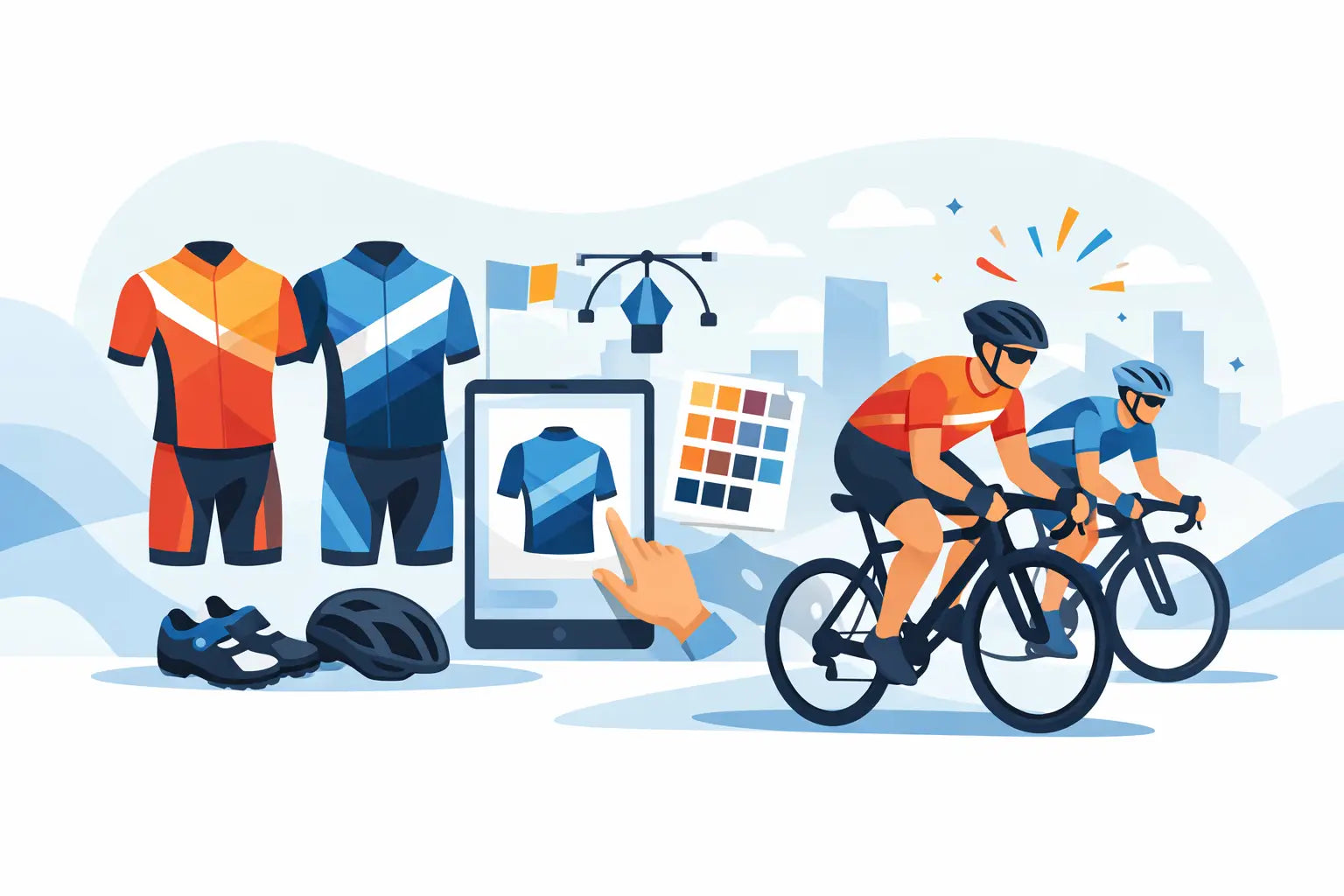
A new jersey design can get plenty of compliments in the parking lot. That does not mean riders will actually place an order. A strong custom club kit launch example is not just about graphics or a clean reveal. It is about timing, fit confidence, ordering clarity, and making sure the whole club sees the kit as something built to ride in - not just something that looks good on a mockup.
For cycling clubs, the launch phase is where good custom apparel programs either gain momentum or stall out. Riders want technical performance, but they also want a process that feels simple. Team managers want fewer back-and-forth emails, fewer sizing mistakes, and fewer late questions the night before the order window closes. If the launch is handled well, adoption improves. If it is rushed, even a strong design can underperform.
A custom club kit launch example for a cycling club
Picture a 120-member road and gravel club preparing for its spring season. The club wants a full kit refresh with race jerseys, bib shorts, a wind vest, and an optional thermal layer for early-season riding. The goals are straightforward: create a more professional team identity, improve comfort across long rides, and simplify ordering for both race-focused riders and weekend members.
The club does not start by posting a single jersey image and asking for orders. Instead, it builds the launch in stages.
First, leadership aligns on the product mix. That matters more than many clubs realize. A launch gets weaker when the range is too broad too early. If riders are looking at ten garment options, three chamois choices, and multiple cuts before they even understand the design direction, hesitation goes up. In this example, the club keeps the core offer focused: one premium jersey, one bib short, one gilet, and one optional cold-weather piece.
Next comes rider input, but with limits. The club gathers feedback from racers, endurance riders, and newer members on fit preferences, visibility, and storage needs. It asks practical questions. Do members want a more compressive race fit or a slightly more forgiving club fit? Are rear pocket capacity and reflective details important? How many members ride in mixed spring conditions? This gives the launch performance context instead of turning it into an open-ended design debate.
Then the club presents two finalized design directions, not six. That is a key part of a useful custom club kit launch example. Riders engage more when the decision is curated. They feel included, but the process still moves.
What made the launch effective
The design reveal was only one part of the rollout. The club announced the new kit four weeks before the order window opened. That lead time gave members time to talk about it on rides, ask sizing questions, and build intent before they ever had to check out.
When the reveal went live, it included more than a flat rendering. Members saw front and back views, close-up callouts on technical features, and a short explanation of why each product was selected. The jersey was positioned around breathability and stable pocket support. The bib short was explained in terms of compression, chamois comfort, and long-ride durability. That product language mattered because cyclists do not buy kit the way they buy casual team merch. They want evidence that the gear is built to perform on the bike.
The messaging also separated mandatory and optional items. Race team riders needed the jersey and bib short. Club members could choose the same core pieces and add layers based on how they ride. That balance kept the club image unified without forcing every rider into the same purchase size.
Most importantly, the launch answered the practical objections early. It addressed sizing, order deadlines, delivery timing, and expected use. Riders were told exactly when the ordering portal would open, how long it would stay live, and when kit was expected to ship. Uncertainty kills conversions. Precision builds trust.
The launch timeline that clubs can actually use
A high-performing club launch usually works best when it follows a simple cadence.
1. Pre-launch alignment
This stage happens before any public reveal. Club leadership confirms budget expectations, the garment assortment, logo hierarchy, and who has final approval. This is also the point where the club should decide whether the goal is broad member adoption, race team uniformity, or a mix of both. Those are not identical goals, and they shape the launch differently.
2. Internal preview
Before opening the launch to the full membership, the club shares final designs and product specs with a smaller internal group - typically board members, captains, and ride leaders. This catches confusion early. If core leaders do not understand the fit or ordering process, general members will not either.
3. Public reveal
This is where many clubs focus all their energy, but it should be clean and brief. Show the kit. Explain why it was built this way. Highlight the products that matter most on the bike. Strong launches avoid overexplaining the artwork and spend more time on comfort, performance, and how to order.
4. Ordering window
The order window should feel open enough to be convenient, but not so long that riders keep postponing. In many cases, 10 to 14 days is the sweet spot. Less than that can create panic. Much longer and urgency drops.
5. Mid-window reminder
A reminder halfway through the order period consistently helps. Not because riders forgot the launch happened, but because many are waiting on a paycheck, checking sizing, or deciding between one piece and a full set. A clear reminder often converts that hesitation into action.
Where club kit launches usually go wrong
The most common problem is treating the launch like a design event instead of an apparel program. Riders care about the look, but purchase decisions usually come down to fit confidence, product trust, and timing.
Another issue is too many choices. More customization sounds attractive, but it can slow the order cycle. If a club offers multiple jersey models, several bib tiers, and too many optional add-ons in the first launch, members can struggle to compare options. A tighter range often performs better, especially for annual club orders.
Sizing communication is another make-or-break factor. Telling riders to order carefully is not enough. A better launch gives a clear fit framework. Is the jersey race cut or standard club cut? Does the bib short run compressive through the leg? Is the thermal piece meant for layering over the jersey or wearing as a standalone fit? These details reduce sizing mistakes and cut down on post-order stress.
There is also the issue of leadership silence after the reveal. Once the design goes live, riders often have small but important questions. If nobody answers them quickly, enthusiasm fades. The strongest launches have one clear point of contact and one clear process.
Why product positioning matters more than hype
Cyclists are highly detail-aware buyers. They compare fabrics, construction, pad quality, and garment cut because those factors affect every mile. That is why a custom club kit launch example should always sound more like a performance briefing than a generic merch drop.
If the jersey is built for hot-weather riding, say that. If the bib short is selected because it can handle long saddle time and repeated washing without losing structure, say that too. If the club chose fewer items because it wanted to keep the launch simple and protect consistency across members, that is not a weakness. It is a sign of discipline.
This is where a factory-direct custom partner can change the outcome. Better communication between design, production, and ordering leads to fewer surprises and better control over timelines. For clubs that care about reliability as much as appearance, that matters. CCN Sport has built its custom program around that kind of control - performance-first product selection, streamlined ordering, and production oversight that supports both elite teams and local clubs.
A better way to measure launch success
A club kit launch is successful when riders wear the gear often, not just when the first order total looks strong. Repeat wear tells you the fit is right, the comfort is there, and the club made smart product choices. That is what builds adoption for the next order cycle.
So measure more than order count. Look at how many first-time buyers joined the program. Look at whether members ordered core items or only the cheapest add-on. Ask riders what they thought after real use, especially after harder training days and longer events. Those responses will do more for the next launch than another round of design polling.
The best custom club kit launch example is not flashy. It is clear, disciplined, and built around how cyclists actually buy apparel. Start with the right products, communicate fit and timing with precision, and make the ordering experience easy enough that riders can focus on the season ahead.

Share:
How to Choose Race Skinsuits That Fit Fast
9 Custom Race Jersey Design Examples