

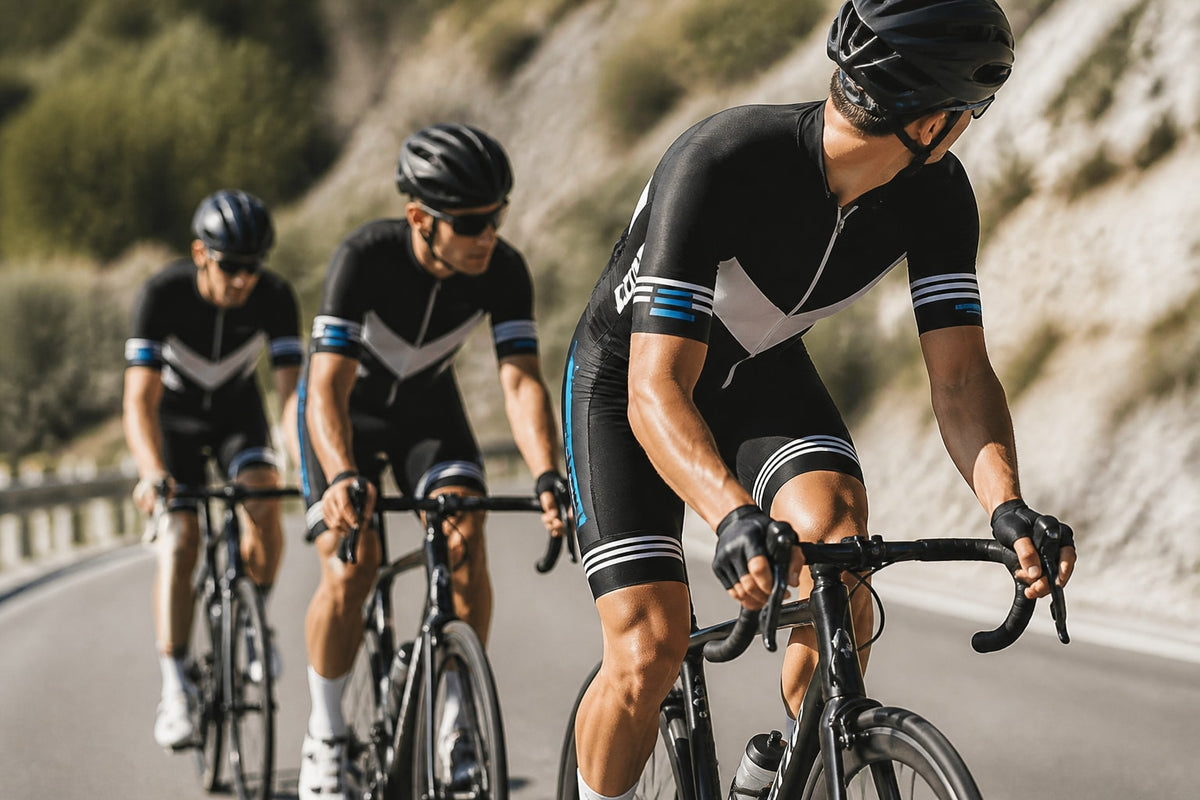
To wear cycling clothes correctly, start with snug bib shorts, add a fitted jersey, and layer up or down for the temperature, so that nothing flaps, chafes or traps sweat. Wear cycling kit as a system rather than a set of separate garments, and each piece does its job: shorts protect, jerseys move moisture, outer layers manage weather, and bright colors keep you seen.
This guide walks through every piece in the order you put it on, then covers seasonal layering, visibility, and how a club or team can keep a whole squad dressed consistently.
What should you wear for cycling at the most basic level?
At its simplest, a cycling outfit is padded shorts or bibs, a fitted jersey, cycling socks, a helmet, and cycling shoes or sturdy footwear. Everything else is an addition for temperature, weather or light conditions.
Cycling clothing is cut differently from everyday clothing. It is shaped for a forward-leaning, pedaling posture, which means longer backs on jerseys, higher waists on shorts, and fabrics that stretch in all directions without bunching. Loose cotton, by contrast, absorbs sweat, stays wet and rubs against skin over long rides.
A reliable core kit looks like this:
- Bib shorts or shorts with a chamois pad for comfort on the saddle
- A short-sleeve jersey with rear pockets for food, tools and a phone
- Cycling socks that sit snugly and do not slip inside the shoe
- A helmet that meets the standard in your country
- Gloves and eyewear as conditions and preference dictate
How do you wear a cycling jersey properly?
A cycling jersey should fit snugly across the chest and shoulders, with the back hem sitting a few inches below your waistline when you are on the bike. It should feel slightly tight when you stand upright and comfortable when you are in the riding position.
Fit matters for more than looks. A baggy jersey flaps at speed, adds drag and lets wind in around the torso. A jersey that is too tight restricts breathing and rides up your back. Check that the sleeves end at mid-bicep without cutting in, the collar lies flat, and the full-length zipper moves freely so you can ventilate on climbs.
Use the three rear pockets deliberately. Heavy items such as a phone go in the center pocket to keep the load balanced, with lighter items like bars or gels in the side pockets. For a closer look at fabrics that keep you cool, the CCN Sport story on breathable and lightweight cycling clothing explains what to look for.
Should you wear anything under cycling shorts?
No. Cycling shorts and bib shorts are designed to be worn directly against the skin, without underwear. A seam or waistband from regular underwear creates a pressure point and a friction line under the chamois, which is a common source of saddle sores on longer rides.
Bibs add straps that hold the shorts in place, eliminating the waistband that can dig into your stomach in a tucked position. Many riders find bibs more comfortable for any ride over an hour, and they are the standard choice in racing and club riding.
Put your shorts on, then pull the straps over your shoulders before you add the jersey. Wash the shorts after every ride and let them dry fully, since a damp chamois left in a bag encourages bacteria and skin irritation.
What goes under the jersey when the weather turns cooler?
A base layer is the garment that goes directly under your jersey, and its job is to pull sweat away from your skin so you stay dry and regulate your temperature. It is the single most useful addition once temperatures drop.
Choose a thin, close-fitting base layer in a synthetic or merino fabric. Avoid cotton, which holds moisture and chills you on descents. In mild weather a sleeveless base layer is enough, while in cold conditions a long-sleeve version adds meaningful warmth without bulk.
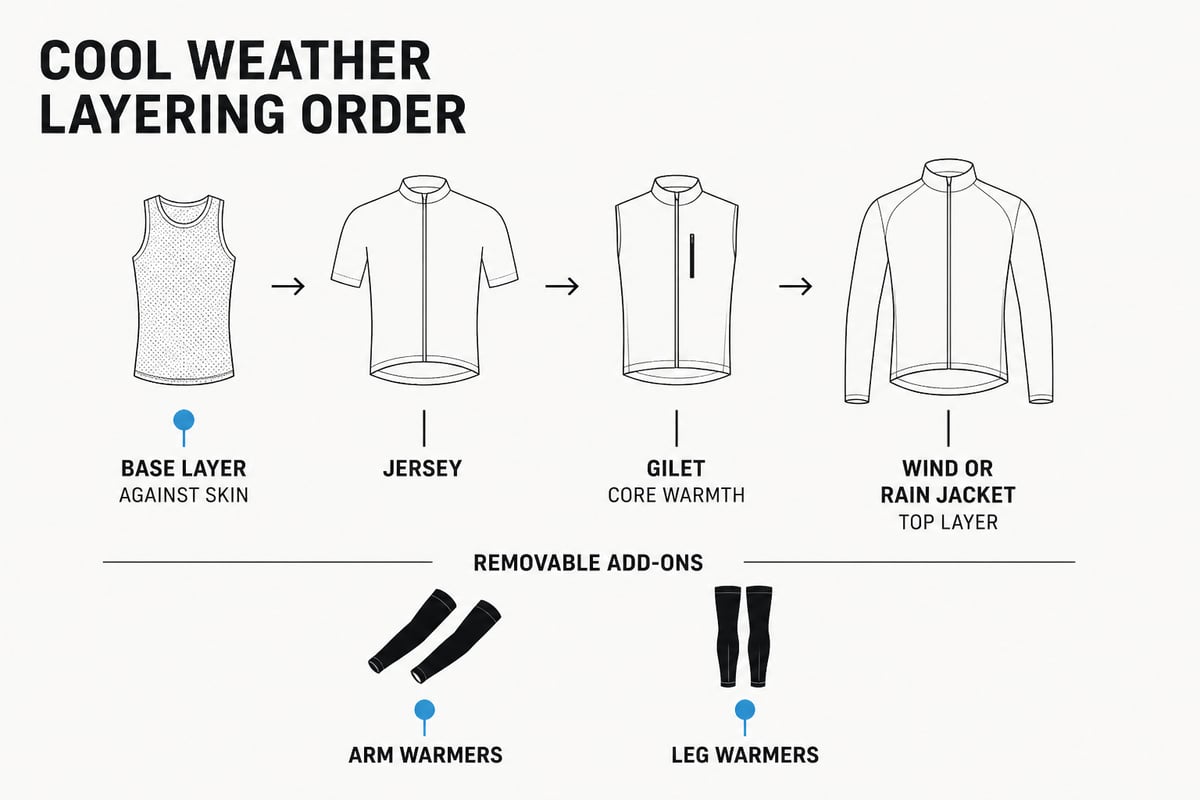
Then build up in this order:
- Base layer against the skin
- Jersey (short or long sleeve, depending on temperature)
- Gilet or vest for core warmth without restricting your arms
- Jacket for wind and rain protection
How do you dress for cycling in each season?
You dress for each season by adjusting layers around the same core of bibs and a jersey, rather than buying a different wardrobe for every month. Think in terms of removable parts that you can add or shed as the ride changes.
| Season | Legs | Torso | Extras |
|---|---|---|---|
| Spring | Bib shorts with leg warmers or knee warmers | Short-sleeve jersey, arm warmers, light gilet | Lightweight gloves, packable jacket |
| Summer | Bib shorts | Light, breathable short-sleeve jersey | Sunglasses, cap under helmet, sunscreen |
| Fall | Bib tights or shorts with leg warmers | Long-sleeve jersey over base layer | Thermal gloves, shoe covers |
| Winter | Thermal bib tights | Thermal base layer, thermal jersey, insulated jacket | Winter gloves, thermal cap, overshoes |
The rule that holds in every season is to start slightly cool. Your body warms quickly once you are pedaling, and overdressing leads to sweat that later chills you. Arm warmers and gilets are popular because they fold small into a pocket when you no longer need them.
What should you wear when it rains?
In wet weather, wear a waterproof or water-resistant jacket with a longer rear hem, along with mudguards on the bike if you can fit them. The NSW Government advises carrying a weatherproof jacket and waterproof pants for wet conditions.
Rain gear for cycling is different from a standard rain shell. It is cut with a dropped tail to cover your lower back, a high collar, and sleeves long enough to stay covered when your arms are extended on the bars. Look for ventilation panels, because a fully sealed jacket traps heat and leaves you wet from the inside.
Keep a thin, waterproof shell in your jersey pocket on any ride where showers are possible. For more on technical outerwear, see this guide to cycling rainwear that performs.
What shoes, socks and gloves complete the kit?
Cycling shoes with stiff soles transfer more of your leg power to the pedals, while socks and gloves handle comfort and contact points. Together they make a noticeable difference over long rides.
Shoes. Road shoes use cleats that clip into the pedals and have a stiff, flat sole. Flat-pedal riders can use any firm-soled shoe. Whatever you choose, leave enough room in the toe box for your feet to swell slightly on long rides.
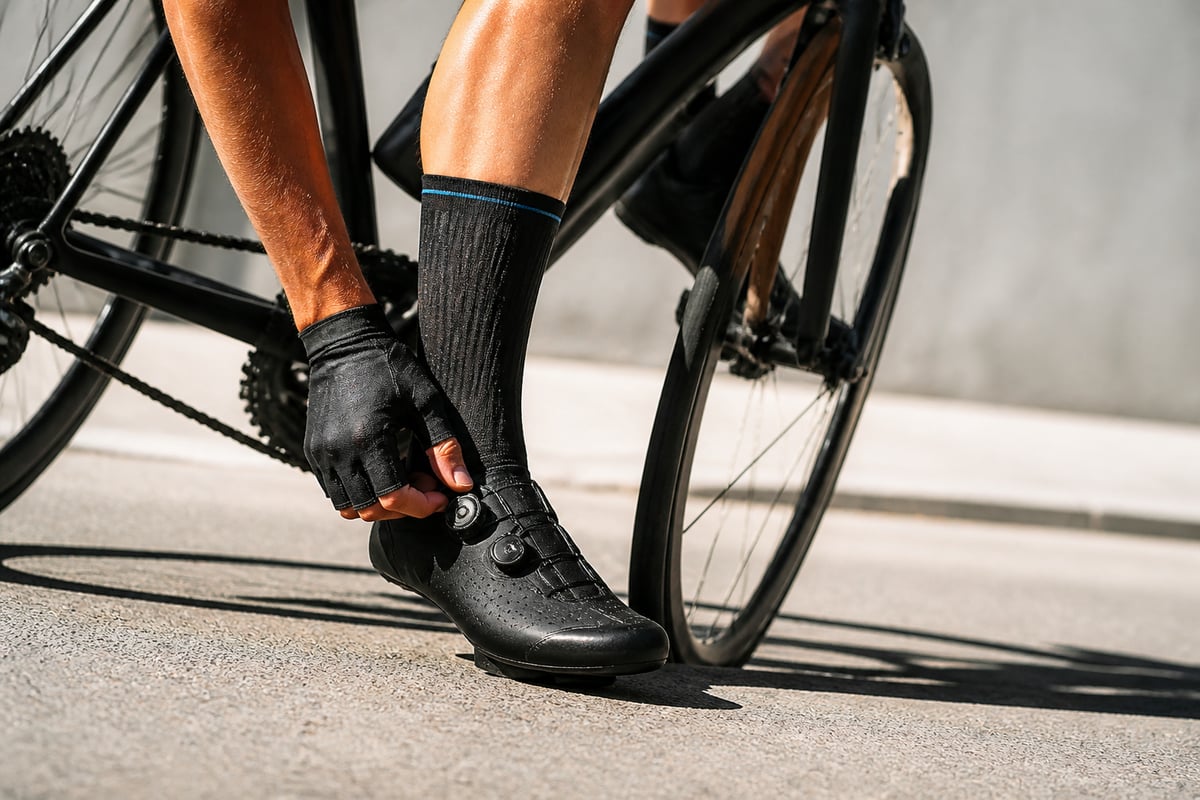
Socks. Choose breathable, moisture-wicking socks that fit without bunching. Length is a style choice, though higher cuffs are common in road racing.
Gloves. Padded gloves reduce pressure on the ulnar nerve and offer protection in a fall. Fingerless versions suit warm days. If you are choosing aero-styled options, the Swift Denim Blue Aero Cycling Gloves are a good example of a close-fitting design for riders who want a clean look with the kit.
How do you stay visible when you wear cycling kit on the road?
You stay visible by wearing bright or light-colored clothing in the daytime and reflective or fluorescent items at night or in poor light. This guidance comes from Hong Kong's 1823 service, which also recommends reflective gear when visibility drops.
Clothing is only part of the picture. The UK Department for Transport's THINK! cyclist advice recommends using bicycle lights after dark or when visibility is poor. Treat lights and clothing as a pair: reflective details on the ankles and arms catch headlights because they move, which helps drivers recognize a cyclist earlier.
Practical visibility habits:
- Choose jerseys with high-contrast panels rather than all-black designs
- Add reflective piping or trim on the rear of the jersey and on shorts
- Wear a bright helmet or cover for winter commutes
- Run a rear light even in daylight on busy roads
Why does team kit need extra attention when you wear cycling clothes as a group?
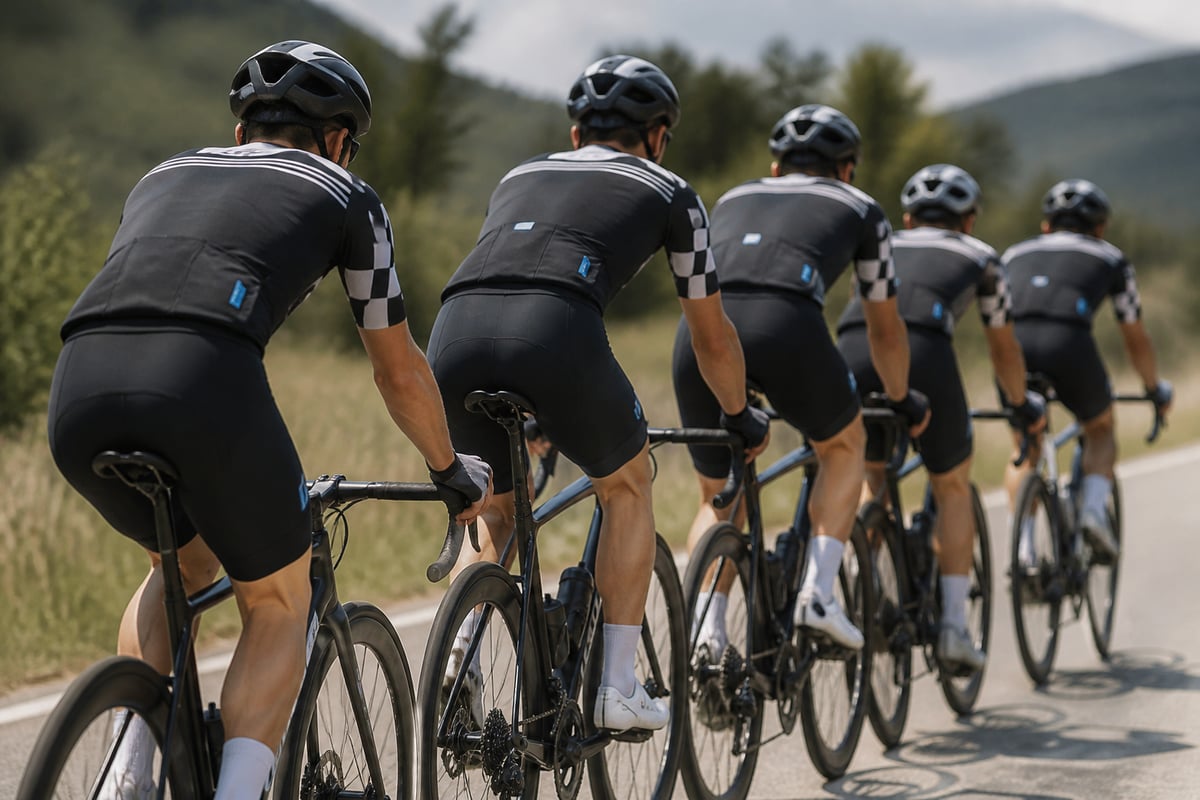
When a whole group wears the same design, consistency in fit, fabric and print is just as important as the look. Mismatched sizing or fabric weights across a squad cause comfort problems for individuals and a patchy appearance in the pack.
This is the practical side of wearing cycling kit as a team. Riders vary in build, so the same cut needs a range of sizes, and women's fits need proper patterning rather than a scaled-down men's design, a point covered in CCN Sport's women's cycling racewear guide. Print durability also matters, since a design that fades after a handful of washes undermines a season of racing.
Clubs and national programs that order matching kit usually weigh a few questions before committing:
- Does the fit suit the full range of rider body types on the roster?
- Can the supplier handle low quantities for small squads or a new junior group?
- Is there a plan for replacing damaged items after a crash or a size change?
- Will the fabric hold up to sun, sweat and repeated washing?
CCN Sport builds custom kits in its own factories in Shenzhen and Dasmarinas, with low minimum order quantities, a crash reorder program at a reduced price, and a size reorder program at a reduced price. The reasoning behind ordering matching kit is laid out in this piece on why teams use custom teamwear for cycling.
What does a race-ready team kit look like in practice?
A race-ready team kit combines a tuned fit, lightweight breathable fabric and a design that is recognizable at a glance from the roadside or on television. Skin-tight cuts reduce drag, and the print needs to stay vivid after repeated washes.
The Factor Racing Team Kit shows the approach: a UCI team jersey built with a race-tuned fit and lightweight breathable fabric, finished in the distinctive Factor Racing look.
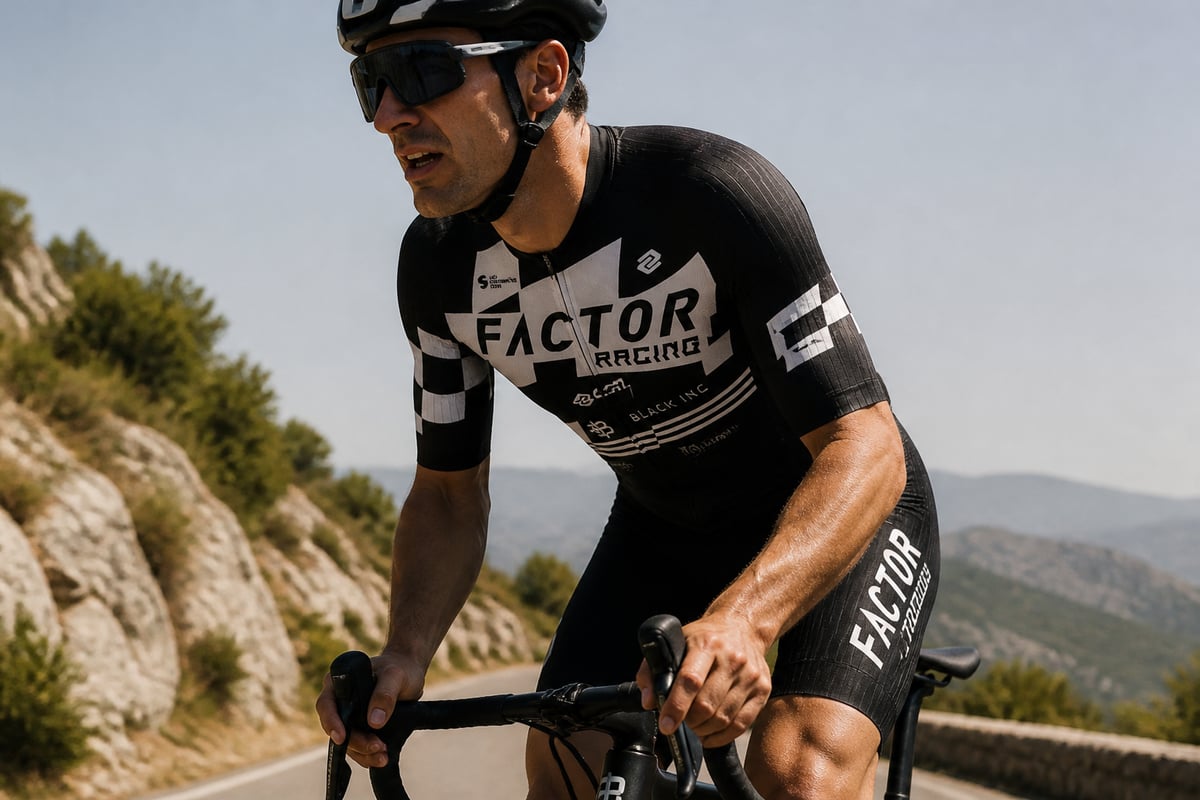
Teams that want to see how kit performs under race pressure can read about cycling teamwear that performs under pressure, which covers what separates race wear from casual riding clothing.
How do you care for cycling clothes so they last?
Wash cycling clothes after each ride, in cool water, with a mild detergent and no fabric softener. Softener coats technical fibers and reduces their ability to wick moisture, which dulls the performance you paid for.
Follow these steps for longer life:
- Turn jerseys and shorts inside out before washing to protect the print and chamois
- Close zippers and fasten any hook-and-loop closures so they do not snag other items
- Wash in cool water, or at the temperature on the care label
- Air dry away from direct heat, since tumble dryers shorten fabric life
- Rotate between two or three pairs of shorts so each gets time to recover
Sublimated designs, where the dye is bonded into the fabric rather than printed on top, tend to resist cracking and peeling, which helps them hold their color across a season.
What are the most common mistakes when you wear cycling clothes?
The most common mistakes are wearing underwear beneath padded shorts, overdressing for the first kilometers, choosing sizes that are too loose, and ignoring visibility. Each is easy to correct once you know it.
- Wearing cotton. It stays wet and chills you. Switch to synthetic or merino fabrics.
- Wrong size. Loose kit flaps and chafes, and overly tight kit restricts movement. Test the fit in the riding position.
- Skipping the base layer in cold weather. Without it, sweat sits against your skin.
- Packing nothing for changing weather. A packable shell and arm warmers cost almost nothing to carry.
- Forgetting the small items. A cap under the helmet, clean gloves and well-fitting socks affect comfort more than most riders expect.
For beginner-friendly habits that carry over to what you wear, these cycling tips from beginners are a practical companion.
Frequently asked questions
Do you need special clothes to start cycling?
You do not need a full kit to start. Comfortable, close-fitting athletic clothing works for short rides. Padded shorts and a breathable jersey become worthwhile as rides get longer.
Should cycling jerseys be tight?
They should be snug, not restrictive. A fitted cut prevents flapping in the wind and keeps pockets stable, but you should be able to breathe and move your arms freely.
What is the best color to wear when cycling?
Bright or light colors work best during the day, with reflective or fluorescent elements added for dusk, night and poor weather.
How many sets of cycling kit does a rider need?
Having at least two or three pairs of shorts and a few jerseys lets you ride regularly without washing every day, and it spreads the wear across items.
The next step is to audit what your riders already wear against the checklist above, noting gaps in fit, layering and visibility, and then decide which of those gaps a matching kit can close. When your club or program is ready to order, CCN Sport can design and produce race-ready kit in its own factories, backed by a limited lifetime warranty, with the Factor Racing Team Kit as an example of the standard to expect. Share your roster size and design brief and start your custom kit with a team that has been building custom cycling apparel since 2005.

Share:
Cycling Apparel Guide: How to Choose Kit That Lasts