

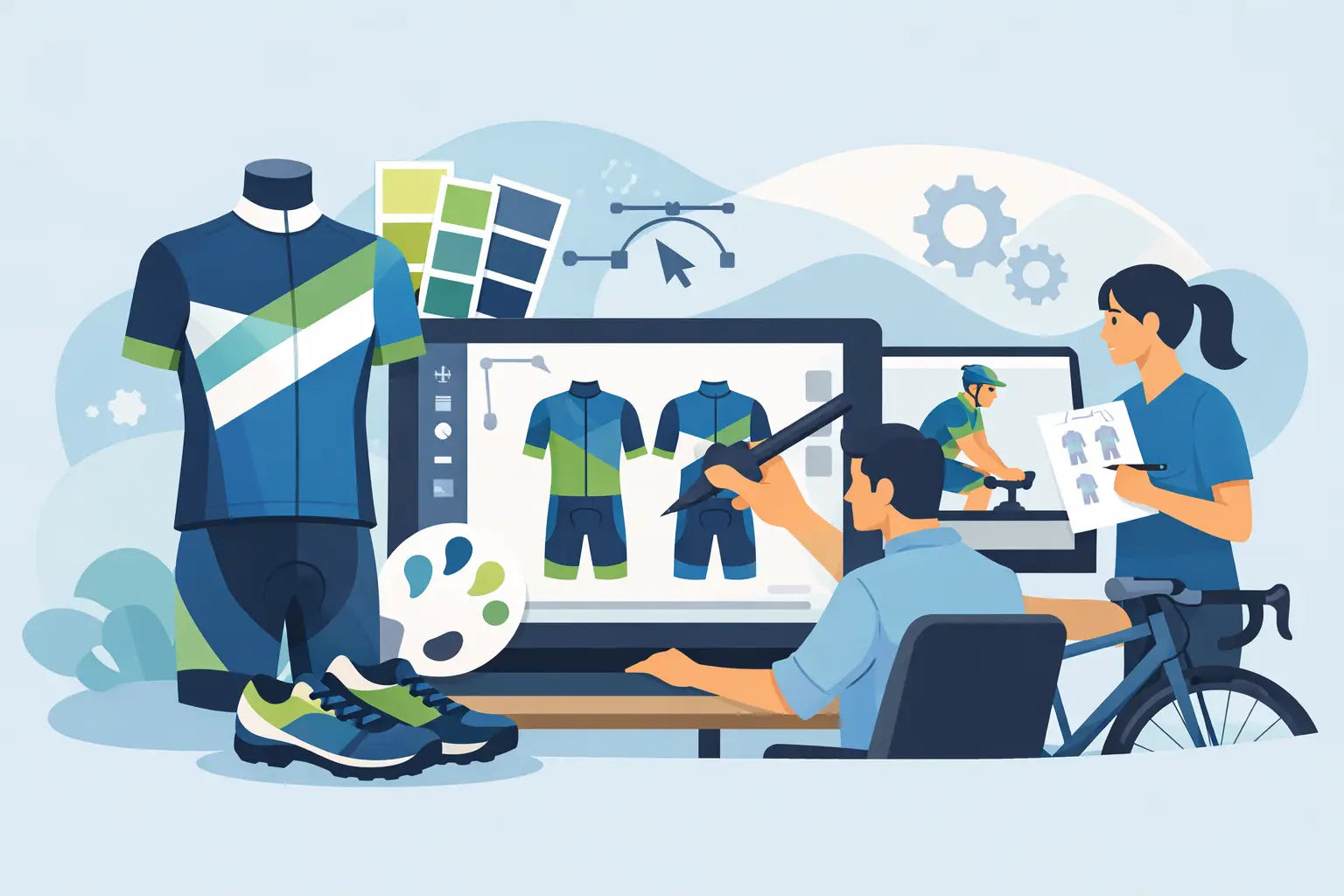
A fast team kit can lose its edge before the race even starts. The wrong fabric runs hot. A loose sleeve catches wind. A great-looking jersey prints poorly and suddenly your sponsor logos look soft at speed. That is why the custom cycling kit design process matters. It is not just about choosing colors and adding a badge. It is about building apparel that fits the way your team rides, races, and represents itself.
For clubs, race teams, and event organizers, the best results come from treating kit development like performance equipment. Every decision affects comfort, aerodynamics, durability, and lead time. When the process is handled well, the final kit looks sharp, feels dialed, and holds up through a full season of training and racing.
What the custom cycling kit design process should actually deliver
A custom kit has to do three jobs at once. It has to perform on the bike, create a clear team identity, and arrive on schedule without turning ordering into a headache. If one of those pieces breaks down, the project usually gets more expensive, slower, or less effective than expected.
That is why strong kit development starts with function, not decoration. A race-focused team may prioritize aerodynamic jersey panels, compressive bib support, and lightweight fabrics for high-output riding. A club with a wider range of body types may care more about fit consistency, comfort on longer rides, and easy reorders. A gravel team might lean toward durability and pocket stability over the most aggressive cut.
There is no single right answer. The right kit depends on how your group rides, who will wear it, and what matters most once the wheels are turning.
Step 1: Define the riding use case before the artwork starts
The biggest early mistake is jumping straight into graphics. Good design begins with the riding application. Road racing, club riding, triathlon, mountain biking, and endurance events place very different demands on apparel.
A road race jersey built for close fit and speed may feel perfect in a fast peloton but too aggressive for casual club riders who want more room through the torso. A skinsuit suited to elite competition is a different product from a training jersey, even if the visual branding is similar. Winter pieces add another layer of planning because insulation, breathability, and weather resistance have to be balanced against bulk.
This stage is where teams should decide what garments are needed, what level of fit they want, and whether the priority is race day performance, all-around versatility, or a mix of both. If your group spans new riders and experienced racers, it often makes sense to choose a collection that can satisfy both, rather than forcing everyone into the most aggressive pattern.
Fit is a performance decision
Fit is often treated as a preference issue. In reality, it changes how a rider moves, how the garment manages airflow, and how comfortable the rider stays after several hours in the saddle. A tighter cut can improve efficiency and reduce excess fabric movement, but only if the pattern and fabric are engineered well. Too tight, and the jersey pulls at the pockets or the bib straps create pressure points.
For team buyers, this is where reliable size guidance and proven garment blocks matter. A supplier with in-house production control can usually offer more consistency because patterning, testing, and manufacturing are aligned under one system instead of split across multiple vendors.
Step 2: Match fabric and construction to the goal
This is where the custom cycling kit design process separates premium apparel from generic teamwear. Fabric selection should never be an afterthought. It determines breathability, compression, stretch recovery, print clarity, and long-term wear.
Lightweight jersey fabrics help with heat management and race-day feel, but they may not be the best choice for every climate or rider group. Heavier or more structured textiles can offer better durability and support, especially for training kits that will see frequent washing. Sleeve and side panel materials also affect aerodynamics and body contouring, which matters more as speeds rise.
The same logic applies to bib shorts. Chamois choice, leg gripper design, strap construction, and panel layout all influence stability and comfort. Teams riding long road miles may prioritize saddle support and compression. Short-course racers may want a more aggressive feel. There is always a trade-off between minimal weight, long-distance comfort, and price point.
Step 3: Build the visual system around movement
Once the product direction is set, artwork can do its job properly. The best custom kit graphics are designed for curved panels, body position, and motion. A digital mockup may look clean on a flat template and fall apart when stretched across seams, zippers, and pockets.
Strong kit design accounts for print zones from the start. Logos need room to stay legible. Team names should remain visible in riding posture, not just standing upright. Color transitions should work across front, side, and rear panels without awkward breaks. Fine details can look impressive on a screen but lose clarity when printed on technical stretch fabrics.
That is why experienced apparel design teams push for practical adjustments. Sometimes a sponsor mark needs to scale up. Sometimes a gradient needs simplifying. Sometimes a dark side panel works better for visual shaping and durability than a full-wrap graphic. These are not compromises that weaken the design. They are the changes that make it perform on the road.
Why print method and color control matter
Custom cycling apparel lives or dies on execution. Rich color, clean edges, and stable reproduction across reorders are essential for teams that want a professional look. If your navy shifts on the second order or the red comes out muted on one garment type, the full team image suffers.
Consistent production standards matter here, especially for organizations planning repeat orders through the season. Factory-direct manufacturing can offer an advantage because artwork handling, sublimation, cutting, and sewing are coordinated more tightly. That reduces handoff errors and helps preserve the original design intent.
Step 4: Review samples and approvals with real-world eyes
Approval is the point where many teams either protect the project or rush it. A mockup is useful, but it is not the same as checking an actual garment or at least reviewing detailed production-ready artwork against the chosen garment pattern.
This is the stage to confirm logo placement, sponsor hierarchy, garment sizing, spelling, colors, and rider names if they are included. It is also the time to catch issues that seem small on screen and feel much bigger in use, like a back pocket graphic being blocked by cargo, or a zipper line cutting awkwardly through a key visual element.
For larger teams, one clear point of contact helps. Too many conflicting opinions can drag out approvals and increase the chance of mistakes. The strongest process usually involves gathering internal feedback first, then sending one organized round of revisions.
Step 5: Plan ordering, timelines, and reorders early
A good-looking kit delivered late is still a failed project. Lead time should be treated as part of the design brief, not a final detail. If your event date is fixed, backwards planning is essential. Artwork revisions, size collection, approval windows, production, and shipping all take time.
This is especially important for clubs and organizations managing mixed rider rosters. New riders join. Existing riders need replacement pieces. Some teams want open ordering windows rather than one bulk order. The more organized the ordering system, the easier it is to keep riders in matching kit without constant manual admin.
This is one reason many teams prefer working with a partner that handles both manufacturing and team-order infrastructure. It simplifies communication and reduces the friction between design approval and final fulfillment. For growing clubs, that operational side matters almost as much as the garment itself.
Common mistakes in the custom cycling kit design process
Most kit problems are not dramatic. They are small misses that stack up. Teams choose a race cut for riders who needed a more forgiving fit. They overload the artwork with too many logos. They approve colors from a laptop screen without checking consistency expectations. They wait too long to finalize size collection and put the whole delivery date at risk.
Budget can also distort decisions. Going too cheap on bib shorts to preserve the visual package is usually the wrong move. Riders remember discomfort long after they stop noticing a premium graphic treatment. If trade-offs are needed, invest first in fit, fabrics, and construction. That is where performance and satisfaction live.
Why process quality shows up on the road
You can tell when a team kit was built with discipline. The jersey sits correctly in riding position. The bibs stay stable under load. The graphics look crisp, aligned, and intentional. Riders wear the kit because it performs, not just because they were told to buy it.
That is the real value of a refined custom cycling kit design process. It reduces guesswork and turns a branding project into functional equipment. For clubs, race programs, and brands, that means fewer problems, better rider buy-in, and apparel that holds up under real use. At CCN Sport, that standard starts with the same idea every serious rider understands: if it is built for performance, every detail counts.
The best custom kit does more than match your team colors. It gives riders one less thing to think about when the pace lifts, the weather shifts, and the day gets hard.

Share:
Performance Cycling Apparel That Works
Custom Teamwear Buying Guide for Cyclists