

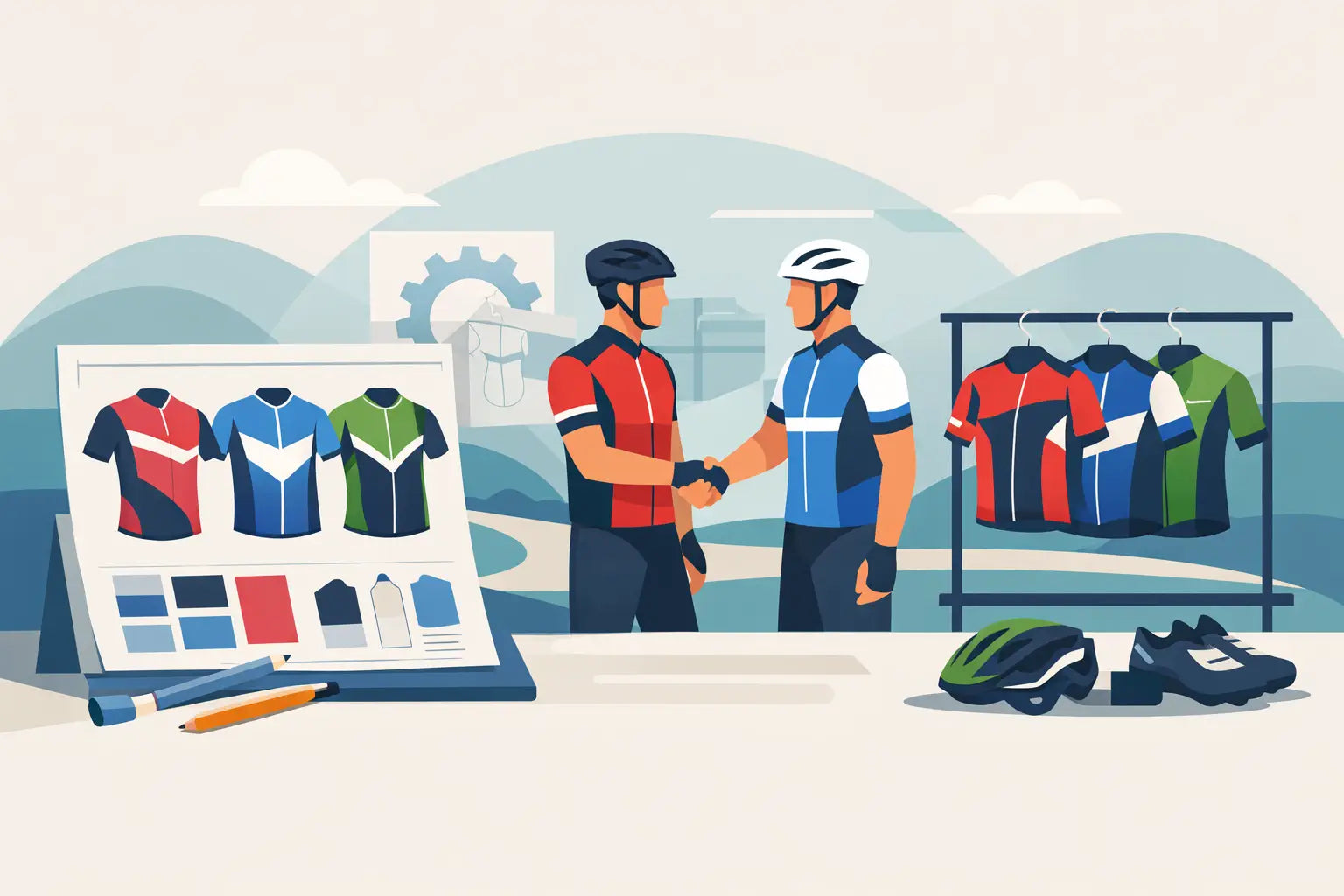
If your team kit looks sharp on launch day but rides poorly by midsummer, the problem usually starts long before the first order is placed. A good custom cycling apparel guide is not really about picking colors and adding logos. It is about making smart decisions on fit, fabric, construction, and ordering so every rider gets gear built for performance, not just appearance.
For clubs, race teams, and event organizers, custom apparel has to do several jobs at once. It has to represent your identity, hold up through repeated use, and feel right across long training days, race efforts, and changing weather. That is why the best buying process starts with how the kit will be used, not how it will look on a mockup.
What a custom cycling apparel guide should help you decide
The right kit program starts with a clear use case. A road race team usually needs a close aerodynamic fit, stable pocket construction, and fabrics that manage heat under high effort. A club with mixed rider experience may need a broader fit range, more forgiving cuts, and a lineup that covers men, women, and seasonal layers without making ordering complicated.
That difference matters. Many buyers make the mistake of choosing one product line for everyone because it feels simpler. In practice, it often creates friction. Competitive riders want race-ready compression and precise patterning. Recreational riders may prioritize comfort on longer rides and easier sizing. The best custom apparel setup balances both instead of forcing one compromise across the whole team.
Start with fit before graphics
Fit is the first performance feature. If a jersey bunches at the shoulders, flaps at speed, or rides up when riders are in the drops, the design quality will not save it. The same applies to bib shorts. A strong chamois and premium fabric still fall short if leg grippers shift or the torso length is off.
For race-focused riders, a more compressive cut often makes sense. It reduces excess material, supports muscle movement, and improves the feel on the bike. For club and community programs, a slightly more forgiving fit may increase adoption because more riders feel comfortable ordering without worrying that the kit will be too aggressive.
Sizing support is where many custom projects are won or lost. Teams with broad membership should think beyond small through extra large and consider whether the supplier offers enough fit consistency across mens and womens ranges. Reliable sizing matters because reorders, exchanges, and rider satisfaction all trace back to the original fit decision.
Race fit vs club fit
This is one of the most practical decisions in any custom order. Race fit is ideal when speed, aerodynamics, and a second-skin feel are priorities. Club fit is often better when the rider group includes new cyclists, endurance riders, or members who prefer slightly more room through the torso and sleeves.
Neither is automatically better. It depends on who is wearing the kit and what the group expects from it.
Fabric selection changes how the kit performs
Not all performance fabrics do the same job. Lightweight jersey materials can improve cooling and moisture transfer in hot conditions, but some teams need more structure and durability because their kits will be used heavily across a full season. A thin summer fabric may feel fast and breathable, while a denser knit may last longer under frequent washing and everyday use.
This is where a custom cycling apparel guide should go deeper than surface-level claims. Ask how the fabric handles stretch recovery, sweat management, UV exposure, and repeated laundering. A jersey that loses shape after months of hard use is not a good value, even if the initial price looks attractive.
Bib short fabrics deserve even more attention. Riders notice panel support, compression, and abrasion resistance quickly. Strong fabric selection helps shorts stay stable under load and maintain comfort over several hours. For teams doing race blocks or high weekly mileage, that consistency matters more than almost any visual detail.
Chamois quality is not a minor detail
If the jersey gets the attention, the bib short does the real work. Chamois construction has a direct effect on comfort, fatigue, and whether riders keep choosing the team kit for long rides. Density, shape, ventilation, and placement all matter.
There is no universal best option here. A crit racer and a gravel rider may want different support characteristics. What matters is choosing a pad that matches typical ride duration and riding style, not just the cheapest upgrade path.
Design for visibility, identity, and longevity
Strong custom design is not only about brand presence. It also affects readability on the road, sponsor visibility, and how current the kit will feel a year from now. Overloaded artwork can date quickly and create production issues when details do not translate cleanly across sizes and garments.
The best team kits usually keep the message clear. Distinct team identity, clean logo placement, and color choices that remain visible in motion are more effective than trying to fit every idea into one jersey. This is especially true for clubs that want a design riders will be proud to wear outside official events.
Color choice also has a practical side. Dark panels can hide road grime and improve long-term appearance, while lighter sections may improve visibility in certain conditions. Some teams want a pure race look. Others need their kit to perform just as well on open-road training rides where being seen matters.
Think in systems, not single pieces
A successful custom program usually extends beyond jersey and bib shorts. Riders need options for temperature changes, event formats, and different parts of the season. Base layers, vests, jackets, arm warmers, skinsuits, and triathlon pieces can all fit into the same visual system if the apparel partner has the range to support it.
This matters because piecing together products from different suppliers often leads to mismatched colors, inconsistent fit, and uneven quality. A coordinated range creates a more professional look and a simpler experience for riders ordering multiple items across the year.
For clubs and teams, it also helps to think about reorder needs early. New members join. Existing riders want replacements. Junior programs grow. If a supplier cannot support repeat ordering efficiently, the initial project may look good but become difficult to maintain.
Ordering structure matters as much as product quality
Custom apparel projects often fail on logistics, not garments. Teams need a clear quoting process, realistic lead times, dependable communication, and an ordering method that reduces admin work. That is especially important for club managers and team staff who already juggle memberships, events, and sponsorship obligations.
Low minimums can make a real difference for smaller groups, while larger teams usually need scalable ordering tools that allow each rider to select size and items without creating a spreadsheet problem for one volunteer. Faster turnaround also matters, particularly when the team is working toward a race calendar, camp, or sponsor deadline.
Factory-direct production can be a major advantage here because it gives buyers more control over timelines, quality, and customization flexibility. It can also reduce the pricing pressure that comes from stacked markups. For teams that want pro-level kit without unnecessary friction, that model is worth serious attention. Brands such as CCN Sport build around that approach, which is one reason custom buyers often prioritize manufacturing capability as much as design support.
How to evaluate a supplier in this custom cycling apparel guide
The right supplier should be able to answer performance questions clearly. Not just what the garment is called, but how it fits, what fabric it uses, which riders it suits, and how the ordering process works from approval to delivery.
Look for signs of real production knowledge. That includes confidence around patterning, garment construction, print quality, and product segmentation for different types of riders. Teams should also pay attention to whether the supplier can support both elite expectations and everyday club needs. That range usually signals stronger product development and better long-term partnership value.
It also helps to ask the less exciting questions. What happens with size issues? How are reorders handled? Are there mens and womens options across the line? Can the same design be applied to winter gear and race apparel without compromise? Those answers tell you more than a polished mockup ever will.
The best kit is the one riders keep choosing
A custom kit should do more than show your logo in the bunch. It should become the jersey riders pull from the drawer for hard training days, race weekends, and long club miles because it feels right every time. That kind of loyalty comes from details done well - fit that stays stable, fabrics that perform under pressure, bibs that hold up, and an ordering process that respects everyones time.
When you approach custom apparel as performance equipment instead of branded merchandise, the decisions get clearer. Build around the riders, the riding, and the long season ahead. The result is not just a better-looking kit. It is a stronger team identity backed by gear that earns its place on every ride.

Share:
KINAN Racing Team Dominates Marimo Holdings Hiroshima Criterium with 1-3 Podium Finish
Choosing a Custom Cycling Clothing Manufacturer