


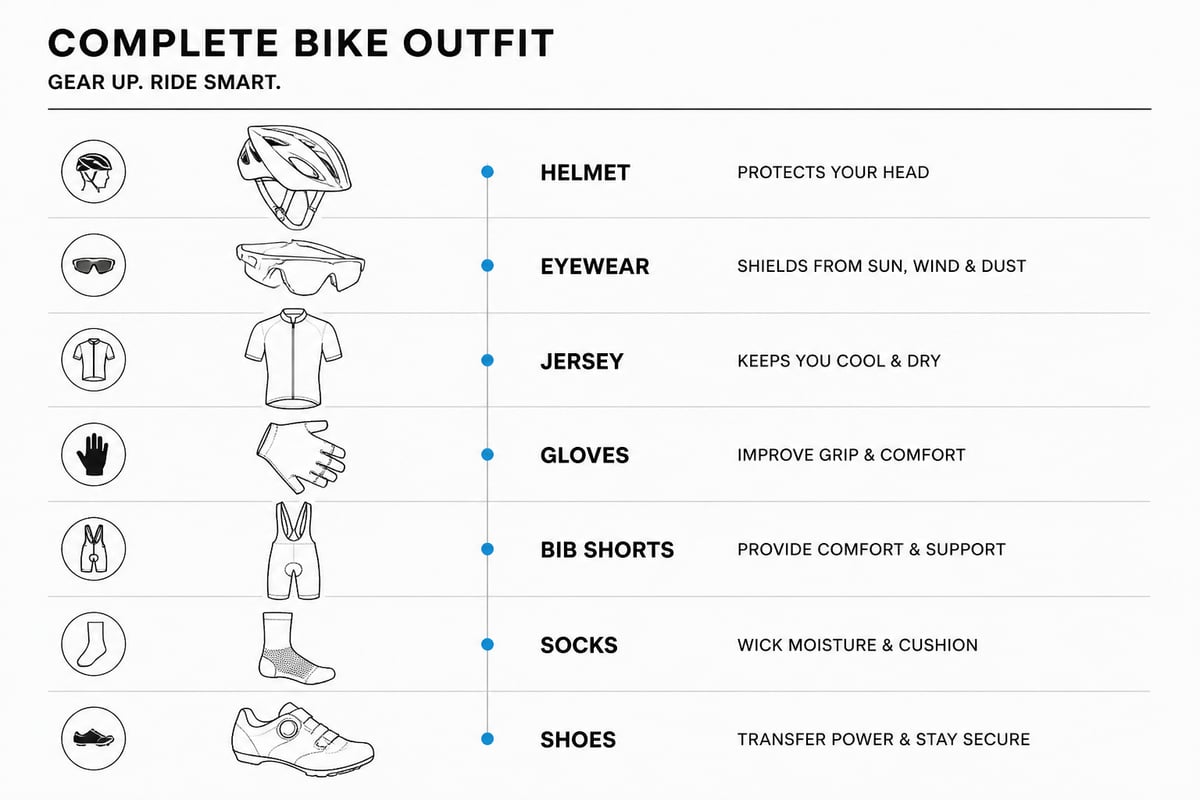
A good biking outfit starts with a snug, breathable jersey, padded bib shorts or shorts, a helmet, gloves and cycling socks, then adds or removes layers to suit the temperature. Each piece is designed to manage sweat, reduce chafing and keep you visible, which is why everyday clothing rarely performs well past the first hour. For a club or team, the same logic applies at scale: a matching kit needs to fit well, perform in changing weather and look consistent across every rider.
What Is a Cycling Outfit Called?
A cycling outfit is called a cycling kit, and a full set usually means a jersey, bib shorts, socks, gloves and a helmet worn together. Riders and teams use the word "kit" for both the complete set and the matching team version, so "club kit" or "race kit" simply means the coordinated outfit a group wears.
Terms you will meet when shopping:
- Jersey: the fitted top, short or long sleeve, with rear pockets.
- Bibs: shorts held up by shoulder straps, with a padded chamois.
- Skinsuit: a one-piece race suit for time trials and criteriums.
- Base layer: a thin, moisture-wicking shirt worn under the jersey.
- Warmers: removable arm, leg and knee sleeves.
What Should You Wear When Biking?
Wear fitted, moisture-wicking clothing with a padded short, a helmet and gloves, and choose your outer layers by temperature. The goal is to stay dry, protected and free of pressure points over the full length of the ride.
The core pieces, in order of importance:
- Helmet. Helmets matter because many bicyclists killed on US roads were not wearing one, according to the Insurance Institute for Highway Safety.
- Padded shorts or bibs. The chamois reduces friction and pressure, and bibs stay in place without a waistband digging in.
- Jersey. Rear pockets carry food, a phone and a spare tube.
- Gloves. They cushion the palms and protect them in a fall.
- Cycling socks and shoes. Thin, breathable socks prevent hot spots on long rides.
- Eyewear. Protection from sun, grit and insects.
Cotton is the one fabric to avoid. It holds sweat, turns cold in the wind and rubs against skin. Synthetic and merino blends move moisture away from the body, which is what keeps you comfortable.
How Should You Dress for a Bike Ride by Temperature?
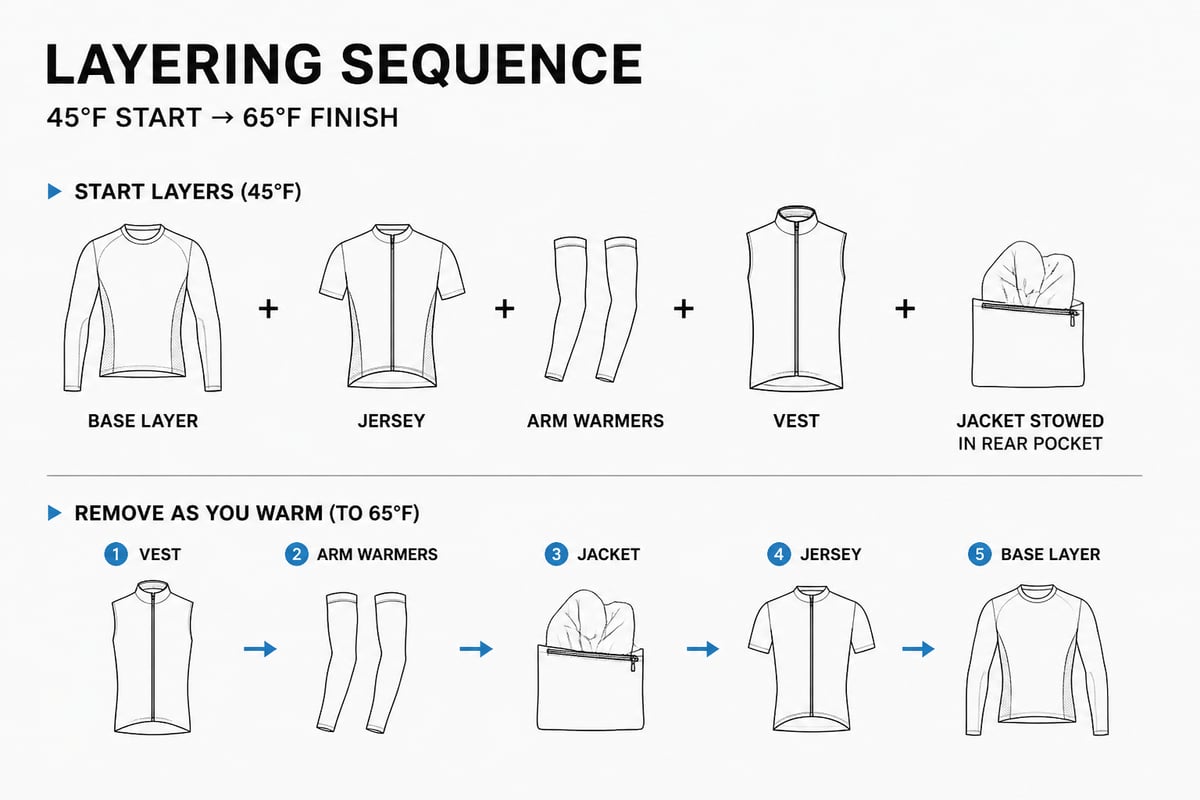
Dress for how warm you will feel ten minutes into the ride, not how you feel at the door, and adjust your layers as the temperature changes. Starting slightly cool is correct, because pedaling generates heat quickly.
A practical guide:
| Temperature | Suggested biking outfit |
|---|---|
| Hot | Light, ventilated jersey and bibs, sunscreen, sunglasses |
| Mild | Short-sleeve jersey, bibs, light gloves |
| Cool | Short-sleeve jersey with arm warmers, optional vest |
| Cold | Long-sleeve or thermal jersey, base layer, leg warmers, full-finger gloves |
| Very cold | Thermal jacket, thermal base layer, tights, shoe covers, headband or skull cap |
For rides above 86°F, Cyclingnews recommends lightweight dedicated cycling clothing rather than improvised gym wear.
The 75% Rule in Cycling
A common rule of thumb is to dress for the finish rather than the start, so you begin a little underdressed. It is not an official standard, but the principle matches the advice above: pedaling adds heat, so dressing for the warm middle of the ride prevents overheating and sweat-soaked layers.
Which Pieces Matter Most in a Biking Outfit?
Padded shorts and the jersey matter most, because they sit against your skin for the whole ride and determine comfort more than any accessory. Everything else adds incremental gains.
Jerseys
A cycling jersey is cut longer at the back so it stays covered when you lean forward, and a fitted shape limits flapping at speed. Full-length zippers help ventilate on climbs, and three rear pockets handle the basics. For riders who want to see styling options, the CCN Sport guide to the jersey for biking covers what to look for in cut and fabric.
Bibs and shorts
Bibs are the better choice for most road riders because the straps remove the waistband and keep the chamois positioned. Look for a chamois density suited to ride length, flat seams and leg grippers that hold without squeezing. A pair such as the Factor UCI Team men's bib short shows the race-oriented construction typical of team orders.
Layers and outerwear
A thermal jacket handles cold starts, while a vest keeps your core warm without trapping heat in the arms. The Factor Racing thermal fleece jacket is an example of the insulated outer layer many clubs add to their kit lineup for early spring and late fall.
Warmers and accessories
Arm warmers, leg warmers and shoe covers extend the range of a summer kit by several degrees. They roll down into a jersey pocket when the day warms up, which makes them more flexible than a single heavy garment.
What Should You Avoid Wearing on a Bike?
Avoid anything loose enough to catch in the chain or wheels, anything that blocks your lights, and any fabric that stays wet against your skin. The UK Highway Code, in Rule 59, specifically advises against clothing that could get caught or that obscures lights.
Common mistakes:
- Cotton t-shirts and gym shorts. They absorb sweat and cause chafing.
- Underwear under padded shorts. Seams create friction; a chamois is designed to be worn directly against the skin.
- Baggy trouser legs. Use a strap or choose tights.
- Ill-fitting gloves or shoes. Both cause numbness on long rides.
- Dressing too heavily. A sweat-soaked layer turns cold on the first descent.
How Do You Stay Visible in Your Biking Outfit?
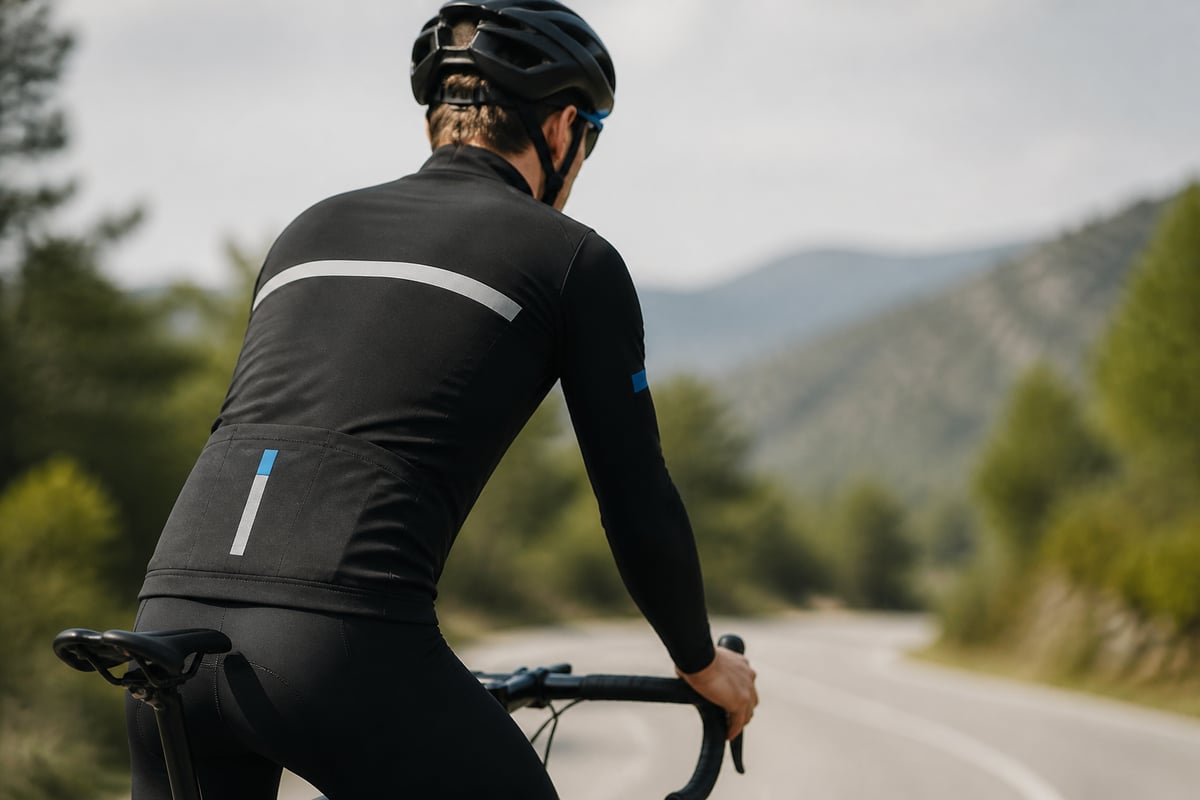
Choose bright or fluorescent colors for daytime riding and add reflective elements for low light, because contrast with the background is what makes a rider detectable. The Highway Code notes that light-colored or fluorescent clothing can help in daylight and poor light, while reflective clothing or accessories improve visibility in the dark.
Visibility checklist:
- Wear at least one high-contrast color near the torso and one near the legs or feet, since moving limbs draw the eye.
- Add reflective trim on the rear of the jersey, shoes and ankles.
- Use a lit front white light and rear red light. Under UK rules, night riding requires both, plus a red rear reflector.
- Consider a reflective vest, such as the gradient reflective vest, for early-morning or dusk rides.
Dark team colors look sharp but are harder to see. Many clubs compromise with a dark base and bright panels on the sleeves and back, which keeps the design strong without sacrificing safety.
How Do You Choose Fit and Fabric?
A good fit is snug without restricting movement, with no bunching behind the knees and no gaping at the neck while you are in the riding position. Try or measure in a riding posture, not standing upright.
Fabric priorities:
- Moisture-wicking and quick-drying for the jersey and base layer.
- Breathable mesh panels for hot-weather kits.
- Brushed thermal fabric for cold-weather jerseys.
- Compression or stretch fabric in bibs for muscle support and chamois stability.
- UV-protective weaves for long days in direct sun.
Seams matter as much as fabric. Flat or bonded seams reduce chafing, and silicone grippers on the hem keep jerseys and shorts from riding up. Women's cuts differ in shoulder width, bust shaping and chamois profile, so teams with mixed rosters should order gender-specific patterns. CCN Sport's guides to women's biking apparel and the biking outfit for women cover those differences in more detail.
How Do Clubs and Teams Build a Matching Biking Outfit?
Clubs and teams build a matching kit by choosing one design, a consistent fabric spec and a size run that covers every rider, then ordering the full set from one maker so colors and cuts align. Mixed batches from different suppliers are the most common reason a team kit looks uneven on the road.
A practical order of operations:
- Define the use case. Road race, criterium, gravel or time trial each call for different cuts. Time-trial and track events often use a one-piece skinsuit, such as the Factor Racing men's Komsa skinsuit.
- Pick the season range. Most teams need short-sleeve jerseys, bibs, a thermal layer and accessories like warmers and socks.
- Agree on the design. Limit the palette, place sponsor logos where they stay visible when riding, and keep reflective elements on the rear.
- Collect sizes. Run a sizing session before ordering so you avoid reorders.
- Plan for replacements. Crashes, wear and new members are inevitable.
CCN Sport builds this kind of order in its own factories in Shenzhen, China and Dasmarinas, Philippines, with custom kits shaped by an in-house design team to an aerodynamic, comfort and style brief. Minimum order quantities start at 5 main pieces, which suits small clubs as well as larger programs. The company also offers a crash reorder and a size reorder program at reduced prices, which helps with the replacement planning above. Confirm sizing and artwork carefully before you approve production. For specifics on fabrics, lead times and options, check the product pages or contact CCN Sport directly.
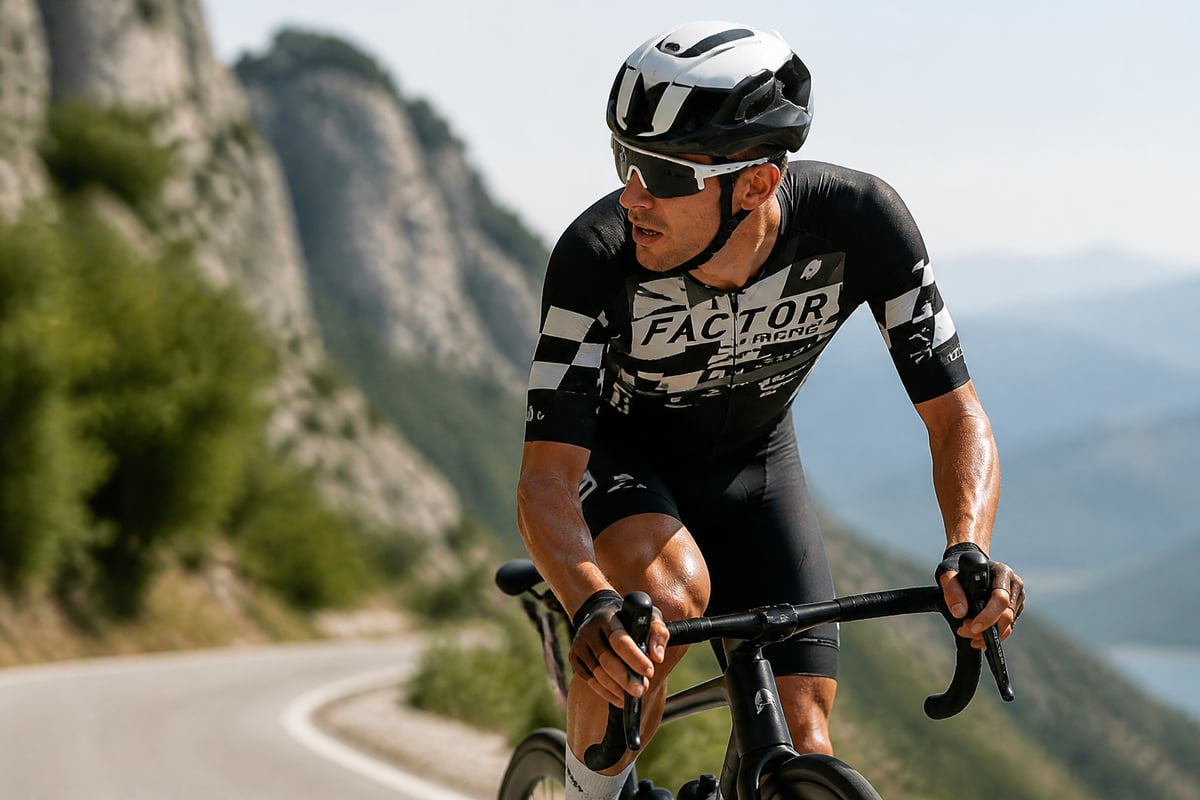
The Factor Racing team kit shows what a race-tuned team set looks like, with a performance fit, lightweight breathable fabric and a cohesive look across the roster.
Teams with mountain bike programs can also look at the CCN Sport guide to custom mountain biking jerseys for fit and durability notes specific to off-road riding.
Which Accessories Complete the Outfit?
Gloves, socks, a cap or skull cap, eyewear and shoe covers complete the outfit, and each one solves a specific problem. Treat them as part of the kit rather than afterthoughts, since mismatched accessories are the quickest way to break the team look.
- Gloves: padded for road comfort and crash protection; full-finger for cold weather.
- Socks: thin and breathable; aero socks suit race days.
- Caps and headbands: a cap under the helmet shades the eyes and absorbs sweat; a thermal skull cap helps in winter.
- Shoe covers: block wind and light rain, and add aerodynamic benefit in races. Options like the Pro aero shoe covers match kit colors.
- Arm warmers: the professional arm cover extends a summer kit into the shoulder seasons.
For wet-weather days, pack a light, packable rain shell to keep wind and rain off on the ride.
FAQ
Do you need cycling-specific clothing to ride a bike?
For short, casual rides, no. For anything beyond an hour, cycling-specific clothing is worth it because padded shorts, moisture-wicking fabric and rear pockets solve problems that regular clothing creates, mainly chafing, sweat retention and nowhere to carry food.
Should you wear anything under bib shorts?
No. A chamois is designed to be worn directly against the skin, and layering underwear beneath it adds seams and friction. Wash bibs after every ride to keep them hygienic.
How many kits does a rider need?
Most riders do well with a few sets of jerseys and bibs, so one is always clean and dry. Teams typically add thermal and wet-weather pieces on top of that core set.
Start by listing every rider's size and the seasons your club rides in, then sketch the jersey, bib and accessory set you want to see on the road. From there, CCN Sport can turn that plan into a matching kit made in its own factories with low minimums, factory-direct pricing and a limited lifetime warranty, and you can review the Factor Racing team kit as a reference for what a race-tuned set looks like. When you are ready to move from brief to production, start your custom kit with CCN Sport and share your design, quantities and timeline.

Share:
What Is a Bicycle Outfit? Cycling Kit Explained