

A jersey that feels fine in the kitchen can feel completely wrong 20 miles into a ride. Sleeves creep up, bib straps pull, chamois placement shifts, and what looked like a clean fit standing still turns into distraction under load. That is why a cycling apparel sizing guide matters - not for vanity, but for comfort, efficiency, and performance.
Cycling kit is built for a riding position, not a casual stance. That changes how every panel, seam, and fabric should sit on the body. A proper fit supports movement on the bike, manages moisture, reduces drag, and stays stable when effort goes up. Too loose, and the kit moves around and catches air. Too tight, and it can restrict breathing, create pressure points, or wear you down over long hours.
How to use a cycling apparel sizing guide
Start with one rule: measure first, then compare. Guessing from your T-shirt size is where most fit problems begin. Cycling apparel uses technical fabrics, body-mapped construction, and discipline-specific cuts, so the right size in a casual top or gym short often tells you very little.
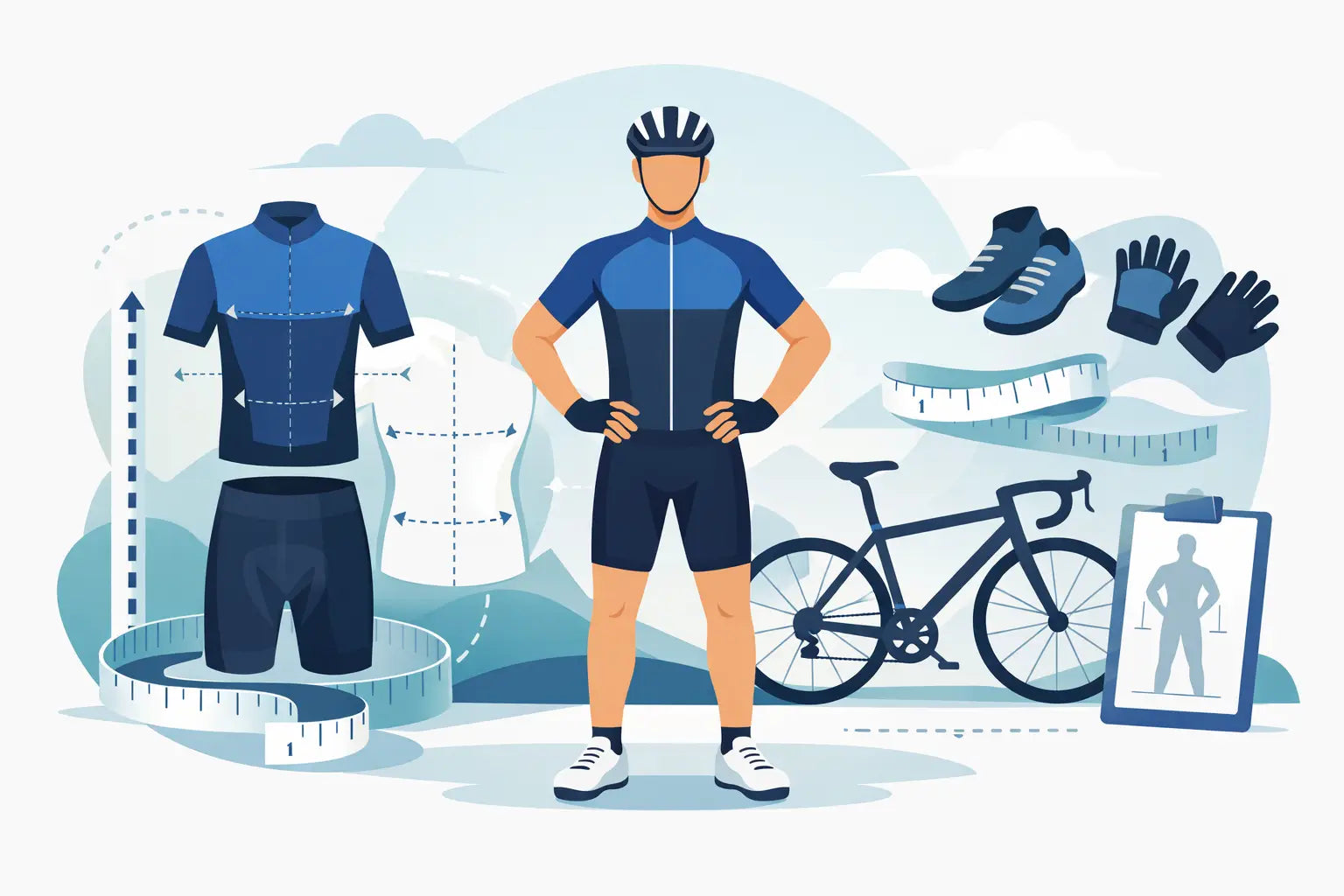
Use a soft tape measure and check your chest, waist, and hips. For tops, chest is usually the lead measurement. For bib shorts and shorts, waist and hips matter most. If you are between sizes, the correct choice depends on how you ride and how the garment is designed. A race fit usually favors a closer, more compressive feel. A club or endurance fit often allows slightly more room without looking oversized.
Height and weight can help as a secondary reference, but they should not override body measurements. Two riders can weigh the same and need very different sizes because of shoulder width, torso length, or leg shape. That is especially true with bib shorts and skinsuits, where length and compression have to work together.
Why cycling fit is different from everyday clothing
Cycling apparel is cut around a forward, bent position. Jerseys are typically shorter in the front and longer in the rear so they do not bunch over the stomach or expose the lower back on the bike. Bib straps are designed to sit under tension when you are riding, not standing upright in a fitting room. That can make new kit feel unfamiliar at first, even when the size is correct.
Fabric also changes the fit equation. High-stretch materials can feel tight in the hand and still perform exactly as intended once worn. Compression panels in bib shorts or skinsuits should feel supportive, not restrictive. Lightweight summer jerseys may sit close to the body by design, while winter jackets and thermal layers need enough room to work over base layers without limiting mobility.
There is always a balance. Riders chasing speed usually prefer a second-skin fit because excess fabric costs watts and shifts under load. Riders prioritizing all-day comfort, gravel versatility, or colder-weather layering may want a little more space. Neither approach is wrong. The right fit is the one that matches the ride.
Jersey sizing: close, stable, and breathable
A cycling jersey should sit close to the body without pulling across the chest or flaring at the waist. The shoulders should lie flat, the sleeves should stay in place, and the rear pockets should remain stable when loaded. If the zipper waves or the chest feels strained, the jersey is likely too small. If the fabric bunches around the torso or the pockets sag when filled, it is probably too large.
Pay close attention to sleeve and torso length. A performance jersey often uses longer sleeves and a streamlined body for better aerodynamics. That can feel more fitted than recreational tops, but it should not limit your reach to the bars. On the bike, the hem should stay planted at the rear and not ride up when you move between tops, hoods, and drops.
If you are between sizes, think about use case. For race days and fast group rides, the smaller of the two may deliver the cleaner fit. For long training days or riders who prefer less compression through the midsection, the larger size may be the better call.
Bib shorts sizing: support matters more than squeeze
Bib shorts do more than cover the lower body. They stabilize the chamois, manage muscle support, and reduce friction where it matters most. Fit is critical. If bib shorts are too loose, the pad can move and create chafing. If they are too tight, the leg grippers can dig in, the straps can over-pull on the shoulders, and longer rides become harder than they need to be.
The chamois should sit exactly where it belongs when you are in your riding position. Standing still, the front may feel higher than expected. On the bike, it should disappear into the ride. The straps should hold the short in place without excessive pressure. A good bib fit feels secure and stable, not pinned down.
Leg length is another detail riders often miss. Race-oriented bib shorts may use a longer inseam for coverage, compression, and aerodynamics. That is normal. The leg opening should feel firm and even, with no rolling or sharp pinch points. If the hem cuts aggressively into the thigh, sizing up may help, but sometimes the issue is body shape rather than size alone.
Base layers and outerwear: fit changes with conditions
Base layers should fit close. Their job is to sit next to the skin, move sweat, and help regulate temperature. If they are baggy, they cannot do that efficiently. Lightweight summer base layers should feel almost invisible under a jersey. Cold-weather versions may feel more substantial, but they still need a body-hugging fit to perform.
Outerwear is where riders often size incorrectly. A rain jacket, thermal jacket, or wind vest should be trim enough to avoid flapping, but not so tight that it compresses the layers underneath. Think in systems. If you ride in cold conditions with a base layer and thermal jersey under a jacket, size with that combination in mind.
This is also where discipline matters. Road riders often want a sharper, lower-drag silhouette. Gravel and endurance riders may accept a bit more room for layering and pocket access. The right answer depends on weather, ride duration, and intensity.
Men, women, and body-shape differences
A good cycling apparel sizing guide does not stop at small through extra large. Cut matters. Men’s and women’s cycling apparel are shaped differently through the chest, waist, hips, and inseam because performance fit depends on panel placement, not just overall garment volume.
Within those categories, body shape still varies. Some riders have broader shoulders and a narrow waist. Others need more room through the hips or thighs. That is why one piece may fit perfectly while another in the same labeled size feels off. Jerseys, bibs, and outerwear each interact with the body in different ways.
For team managers ordering custom kits, this is worth planning for early. Do not assume everyone on the roster will fit one sample size range the same way. A reliable sizing process reduces exchanges, shortens decision time, and helps every rider start with confidence.
Common sizing mistakes that cost comfort
The biggest mistake is choosing based on everyday clothing size. The second is judging fit only while standing. Cycling gear needs to be assessed in a riding posture. If possible, try the jersey with hands forward and check bib shorts while seated on a saddle.
Another common mistake is sizing up to avoid a race fit. Sometimes that works, but sometimes it creates new problems like unstable pockets, shifting chamois placement, or fabric abrasion. Going smaller can also backfire if it causes pressure at the straps, zipper, or leg grippers. Better fit comes from accurate measurements and understanding intended use, not from chasing a number on the tag.
Shrinkage worries can also push riders into the wrong size. Most modern technical cycling apparel is built to hold shape when cared for properly. Focus more on current fit and fabric behavior than on trying to future-proof with extra room.
When you are between sizes
If your measurements split across two sizes, start with the garment category. For jerseys, chest usually takes priority. For bib shorts, hips and overall lower-body fit tend to matter more than waist alone. Then consider your preferred ride feel. A race-focused rider may choose the closer option. A rider planning long endurance days, mixed-terrain riding, or heavier layering may prefer the larger one.
It also helps to think about your tolerance for compression. Some riders want a locked-in fit. Others perform better with a little less squeeze, especially in hot weather or on very long rides. There is no universal answer. Precision fit is personal, even at a high-performance level.
At CCN Sport, that performance-first thinking matters because sizing is not just about appearance. It is about how the kit works at speed, under effort, and across hours in the saddle.
The best cycling apparel disappears once the ride starts. If you are not adjusting hems, tugging straps, or thinking about seams, the fit is doing its job. Measure carefully, match the size to the ride, and let the kit support the work ahead.

Share:
Low Minimum Custom Cycling Kits That Perform
Performance Cycling Apparel That Works